. 2012 Sep 1:2:245-262.
doi: 10.1002/9780470942390.mo110168.

Genetically Engineered Mice by Pronuclear DNA microinjection

Affiliations

Genetically Engineered Mice by Pronuclear DNA microinjection

Janet L Demayo et al. Curr Protoc Mouse Biol. .

Abstract

The generation of transgenic mice by DNA microinjection is a powerful tool to investigate the molecular regulation of gene expression, development, and disease. The power of this technology is that foreign DNA can be introduced into every cell of a developing organism and the phenotypic impact of this genetic modification can be investigated in a system under the constraints of normal development and physiology. The generation of transgenic mice requires the preparation of the transgene DNA construction, collection of one-cell fertilized mouse embryos, injection of the transgene into mouse embryos, and transfer of the surviving embryos. Mice born from such manipulations are then screened for the presence of the transgene. The execution of these procedures requires a highly efficient system otherwise the cost of the generation of these mice can be cost prohibitive. However, the production of these animals can serve as an invaluable research resource.


Figures
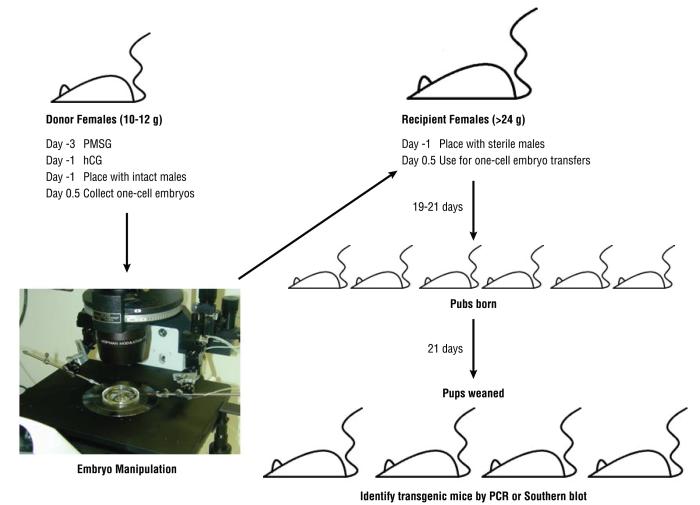
Figure 1
Figure 1
The overall scheme for the generation of genetically engineered mice.
Figure 2
Figure 2
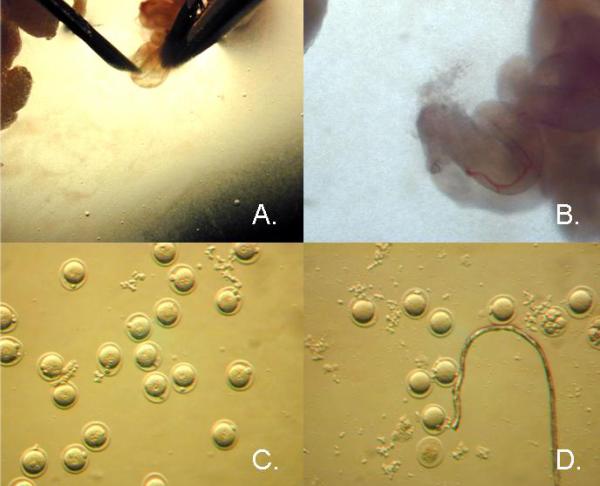
Embryos Collection. (A.) Ampulla of the mouse oviduct being gently torn to release embryos. (B.) Embryos being released from ampulla. (C.) Fertile one-cell embryos. (D.) Unfertilized ova and fragmented cells.
Figure 3
Figure 3
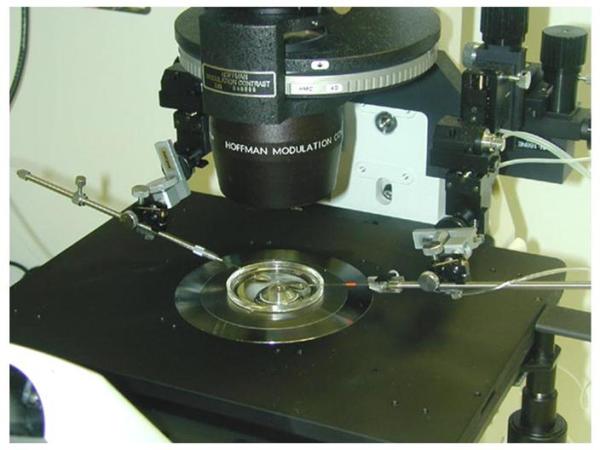
Inverted microscope with Hoffman objective lenses and micromanipulators. Holding and injection needles are in place and lowered into injection dish containing embryos.
Figure 4
Figure 4
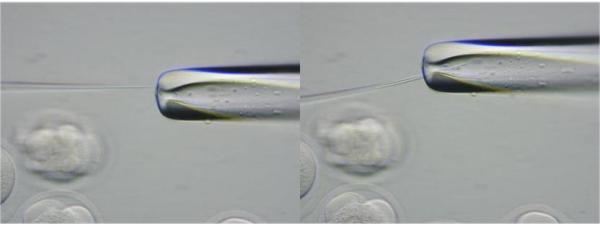
Enlarging opening of injection needle by brushing needle against the polished holding needle.
Figure 5
Figure 5
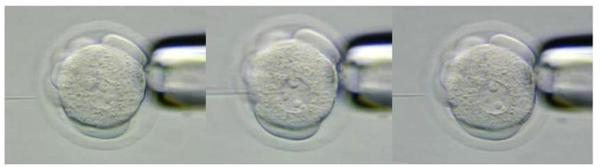
DNA microinjection into the male pronucleus of the one-cell mouse embryo.
Figure 6
Figure 6
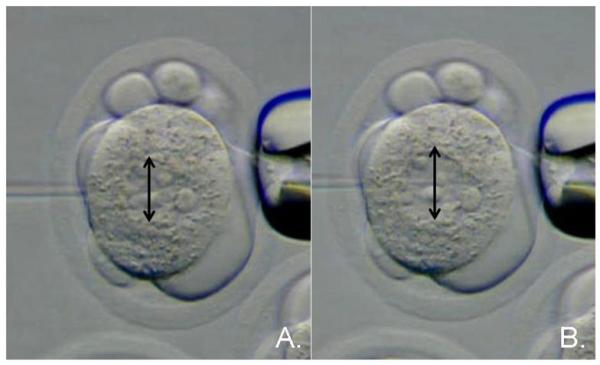
DNA microinjection into the male pronucleus of the one-cell mouse embryo. (A.) Injection needle moving into the male pronucleus of the one-cell embryo. (B.) Expansion of the male pronucleus upon delivery of DNA under hydrostatic pressure. The black arrows show that the pronucleus diameter increases in size by approximately 50%.

References

    1. Auerbach AB, Norinsky R, Ho W, Losos K, Guo Q, Chatterjee S, Joyner AL. Strain-dependent differences in the efficiency of transgenic mouse production. Transgenic Res. 2003;12:59–69. - PubMed
    1. Brinster RL. In vitro culture of mammalian embryos. J Anim Sci. 1968;27(Suppl 1):1–14. - PubMed
    1. Brinster RL, Chen HY, Trumbauer ME, Avarbock MR. Translation of globin messenger RNA by the mouse ovum. Nature. 1980;283:499–501. - PMC - PubMed
    1. Brinster RL, Chen HY, Trumbauer ME, Yagle MK, Palmiter RD. Factors affecting the efficiency of introducing foreign DNA into mice by microinjecting eggs. Proc Natl Acad Sci U S A. 1985;82:4438–4442. - PMC - PubMed
    1. Brinster RL, Palmiter RD. Introduction of genes into the germ line of animals. Harvey Lect. 1984;80:1–38. - PMC - PubMed

LinkOut - more resources