. 2012 Oct:Chapter 12:Unit 12.15.
doi: 10.1002/0471142727.mb1215s100.

Engineering designer transcription activator-like effector nucleases (TALENs) by REAL or REAL-Fast assembly

Affiliations

Engineering designer transcription activator-like effector nucleases (TALENs) by REAL or REAL-Fast assembly

Deepak Reyon et al. Curr Protoc Mol Biol. 2012 Oct.

Abstract

Engineered transcription activator-like effector nucleases (TALENs) are broadly useful tools for performing targeted genome editing in a wide variety of organisms and cell types including plants, zebrafish, C. elegans, rat, human somatic cells, and human pluripotent stem cells. Here we describe detailed protocols for the serial, hierarchical assembly of TALENs that require neither PCR nor specialized multi-fragment ligations and that can be implemented by any laboratory. These restriction enzyme and ligation (REAL)-based protocols can be practiced using plasmid libraries and user-friendly, Web-based software that both identifies target sites in sequences of interest and generates printable graphical guides that facilitate assembly of TALENs. With the described platform of reagents, protocols, and software, researchers can easily engineer multiple TALENs within 2 weeks using standard cloning techniques.


Figures

Figure 1
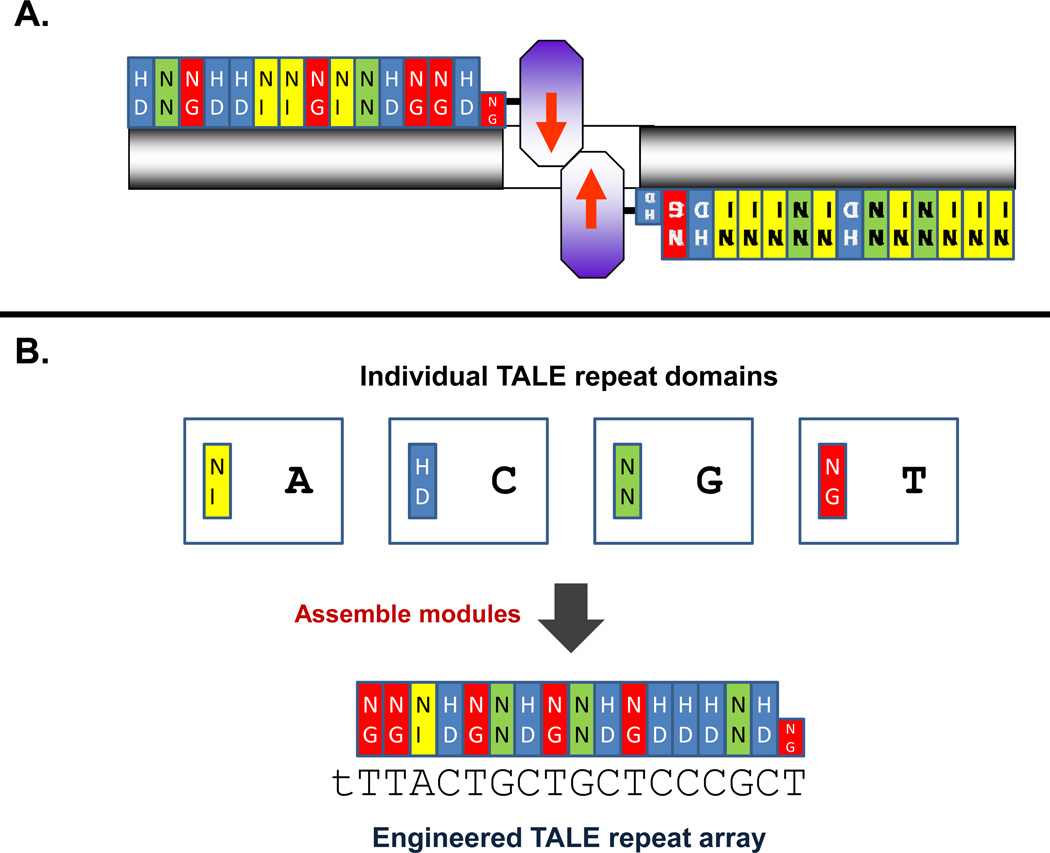
Figure 1. Engineered TALE Nucleases
(A) Schematic illustrating engineered TALE nucleases. Colored rectangles represent individual TALE repeat domains with the identities of the repeat variable di-residues (RVDs) shown. FokI nuclease domains are represented as purple octagons. TALENs bind as dimers with each monomer binding a “half-site” (grey rectangles) and cleavage occurring in the “spacer” sequence (white rectangle) between the two half-sites. (B) Assembly of individual TALE repeat domains into engineered TALE repeat arrays. TALE repeat domains (colored rectangles) with different RVDs bind to different single bases. Assembly of individual repeats generates arrays capable of binding to extended DNA sequences.
Figure 2
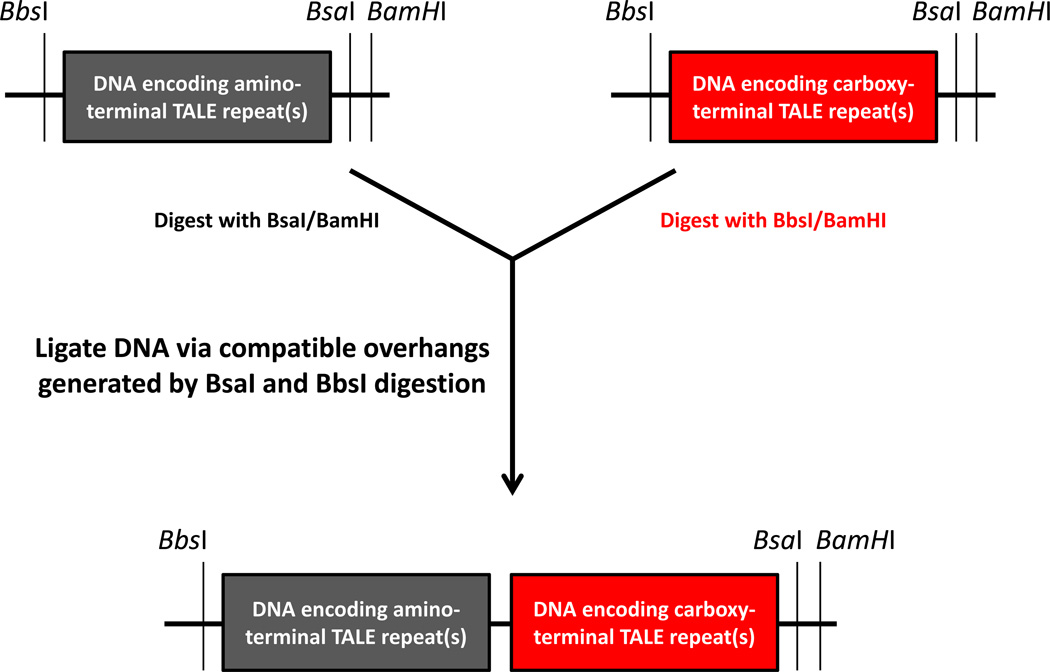
Figure 2. Overview of ligation strategy used to join together DNA encoding TALE repeats
A fragment of DNA encoding carboxy-terminal TALE repeat(s) created by digestion with BbsI and BamHI restriction enzymes is ligated to a vector backbone of DNA encoding amino-terminal TALE repeat(s) created by digestion with BsaI and BamHI. Ligation occurs via compatible DNA overhangs created by the TypeIIS enzymes BbsI and BamHI. The resulting plasmid can be used in subsequent iterative ligations of the same type shown here.
Figure 3
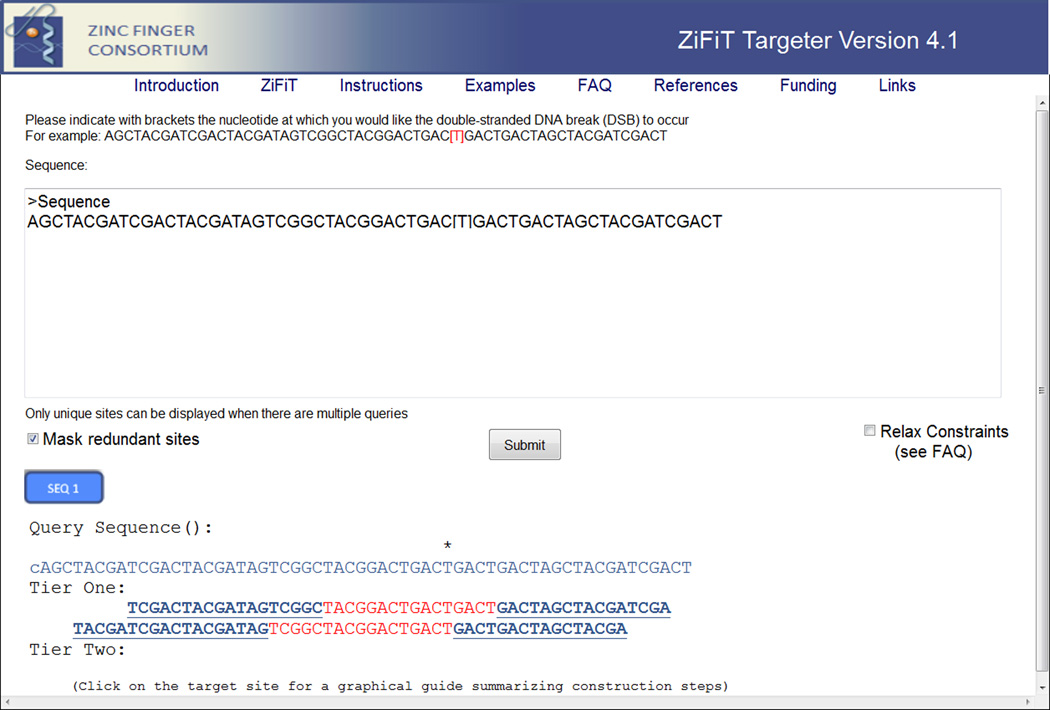
Figure 3. ZiFiT Targeter output
A screen shot of a typical output from ZiFiT Targeter is shown. In the example shown, a query sequence has been submitted and an output with five potential target sites has been returned below. Note that for reference the original sequence is shown in the output as a “Query Sequence” with the original bracketed nucleotide marked with an asterisk. In the example shown, two of the sites are “First Tier” sites and three are “Second Tier” sites (see text for additional details). For each target site, the half-sites are shown in blue text while the spacer sequence is shown in red text. The target half-sites are hyperlinks that can be clicked to open a new page with a customized graphical guide for assembling the TALEN that binds to that half-site. As described in the text, users can also choose to relax search criteria further to allow identification of additional potential TALEN target sites by checking the box for “Relax Constraints” and/or unchecking the box for “Mask Redundant Sites” and then clicking the Search button again.
Figure 4
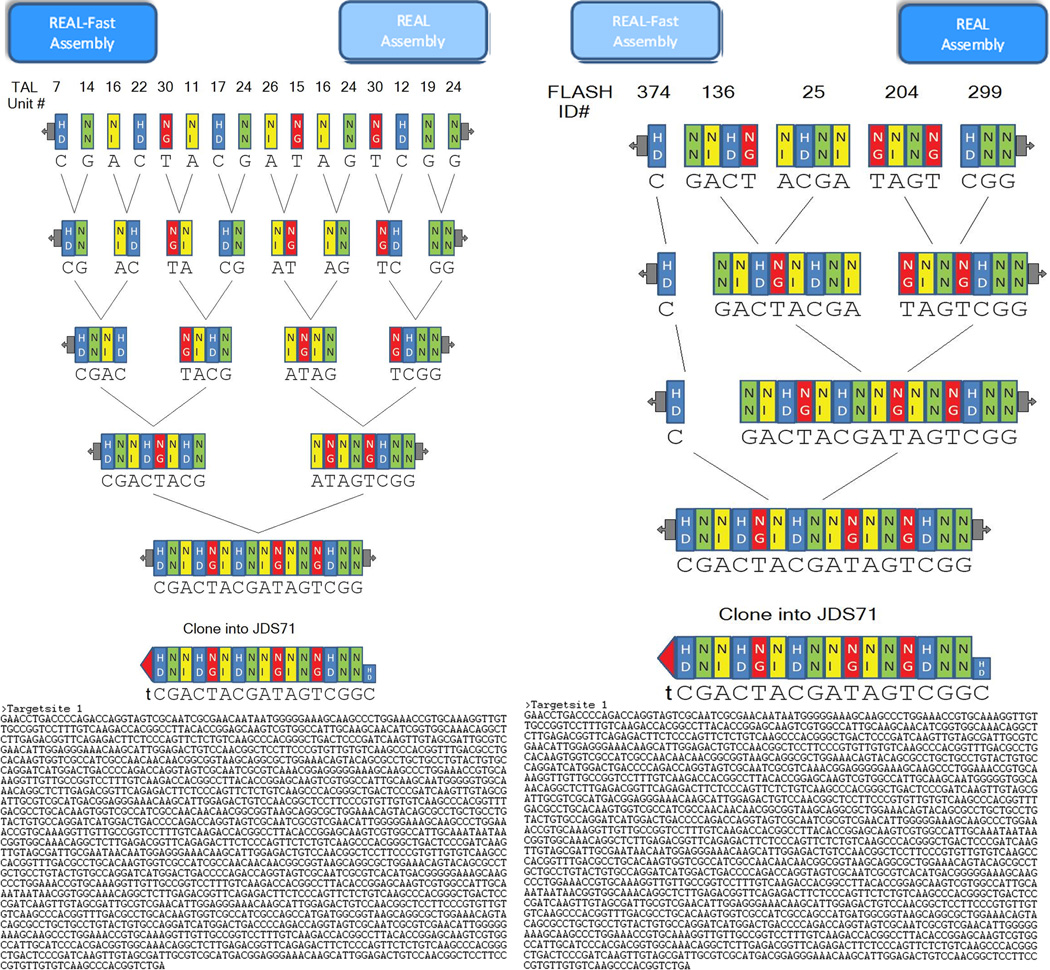
Figure 4. Example of a customized graphical guides generated by ZiFiT Targeter for construction of an engineered TALEN
This particular guide illustrates the construction of a TALE array consisting of 15.5 repeats. TALE repeats are represented as colored rectangles with the identities of their RVDs shown in two letter code within the rectangle. Bases bound by each TALE repeat are shown beneath the rectangle. Ligations of units to be performed are indicated by black lines. The numbers of plasmids used to perform the initial ligations are shown above the first row. The final assembled array is cloned into the pJDS-series TALEN expression vector indicated at the bottom. Cloning into this vector adds the required carboxy-terminal 0.5 TALE repeat domain and fuses the assembled TALE repeat array to the wild-type FokI nuclease domain, thereby generating a TALEN expression plasmid. A) Graphic for TALEN assembled using REAL B) Graphic for TALEN assembled using REAL-Fast

References

    1. Baker M. Gene-editing nucleases. Nature methods. 2012;9:23–26. - PubMed
    1. Boch J, Scholze H, Schornack S, Landgraf A, Hahn S, Kay S, Lahaye T, Nickstadt A, Bonas U. Breaking the code of DNA binding specificity of TAL-type III effectors. Science. 2009;326:1509–1512. - PubMed
    1. Bogdanove AJ, Schornack S, Lahaye T. TAL effectors: finding plant genes for disease and defense. Curr Opin Plant Biol. 2010;13:394–401. - PubMed
    1. Bogdanove AJ, Voytas DF. TAL effectors: customizable proteins for DNA targeting. Science. 2011;333:1843–1846. - PubMed
    1. Cermak T, Doyle EL, Christian M, Wang L, Zhang Y, Schmidt C, Baller JA, Somia NV, Bogdanove AJ, Voytas DF. Efficient design and assembly of custom TALEN and other TAL effector-based constructs for DNA targeting. Nucleic Acids Res. 2011;39:e82. - PMC - PubMed

Publication types

LinkOut - more resources