


Rapid drinking is associated with increases in driving-related risk-taking
- PMID: 23027650
- PMCID: PMC3929598
- DOI: 10.1002/hup.2260
Rapid drinking is associated with increases in driving-related risk-taking
Abstract
Objective: The rate of alcohol drinking has been shown to predict impairment on cognitive and behavioral tasks. The current study assessed the influence of speed of alcohol consumption within a laboratory-administered binge on self-reported attitudes toward driving and simulated driving ability.
Method: Forty moderate drinkers (20 female, 20 male) were recruited from the local community via advertisements for individuals who drank alcohol at least once per month. The equivalent of four standard alcohol drinks was consumed at the participant's desired pace within 2-h session.
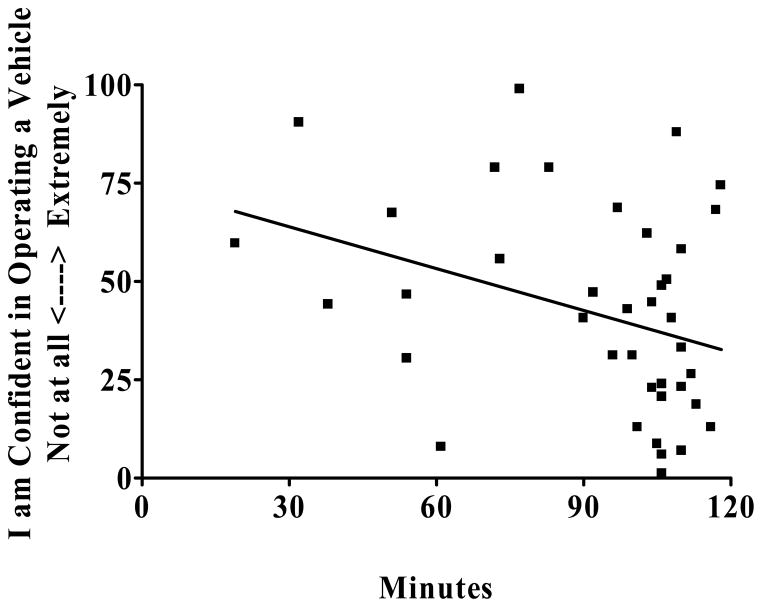
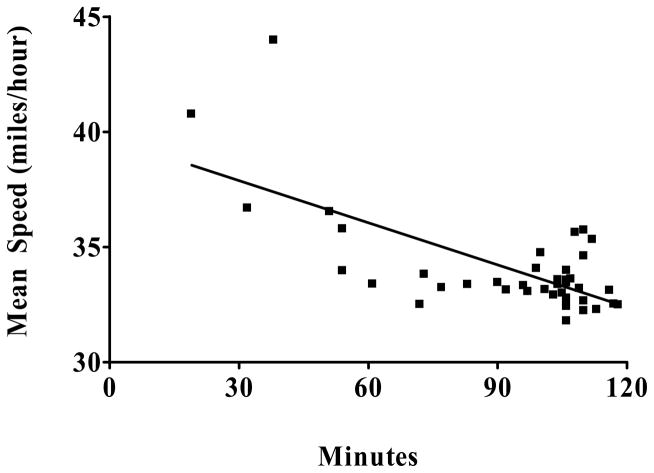
Results: Correlation analyses revealed that, after alcohol drinking, mean simulated driving speed, time in excess of speed limit, collisions, and reported confidence in driving were all associated with rapid alcohol drinking.
Conclusion: Fast drinking may coincide with increased driving confidence because of the extended latency between the conclusion of drinking and the commencement of driving. However, this latency did not reduce alcohol-related driving impairment, as fast drinking was also associated with risky driving.
Copyright © 2012 John Wiley & Sons, Ltd.
Conflict of interest statement
None reported.
Figures
References
-
- Babor TF, Berglas S, Mendelson JH, Ellingboe J, Miller K. Alcohol, affect, and the disinhibition of verbal behavior. Psychopharmacology. 1983;80:53–60. - PubMed
-
- Beirness DJ. Self-estimates of blood alcohol concentration in drinking-driving context. Drug Alc Depen. 1987;19:79–90. - PubMed
-
- First MB, Gibbon M, Spitzer RL, Williams JBW. User’s Guide for the SCID-I (Research Version) New York State Psychiatric Institute; New York: 2002.
Publication types
MeSH terms
Grants and funding
LinkOut - more resources
Full Text Sources
