New susceptibility loci associated with kidney disease in type 1 diabetes
- PMID: 23028342
- PMCID: PMC3447939
- DOI: 10.1371/journal.pgen.1002921
New susceptibility loci associated with kidney disease in type 1 diabetes
Abstract
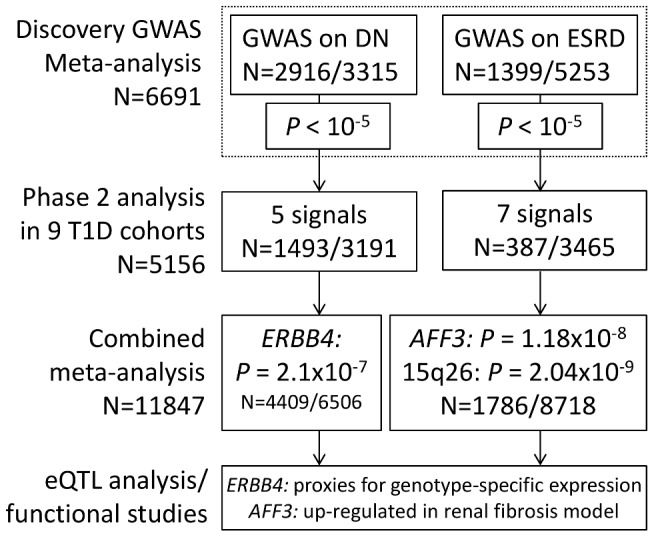
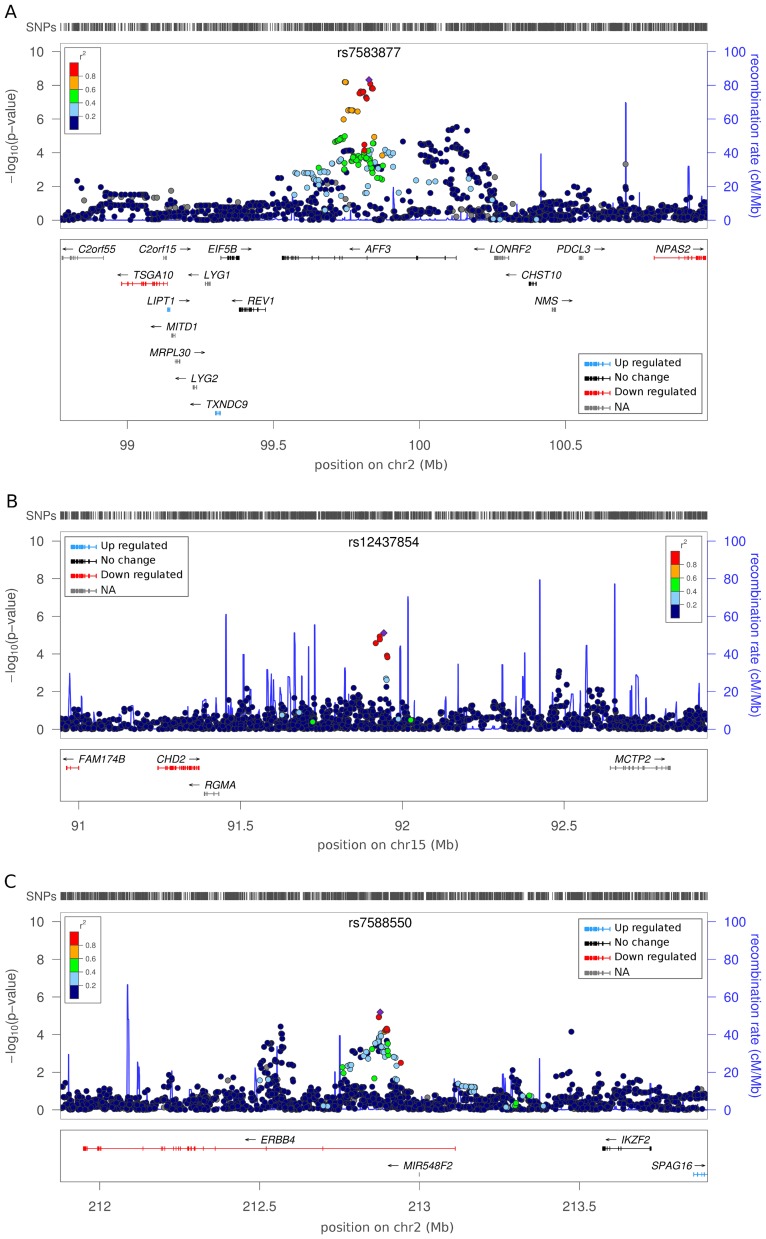
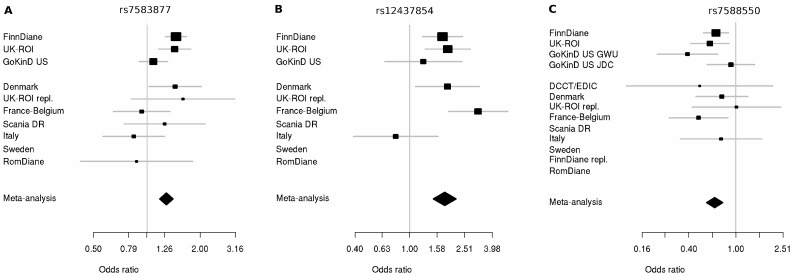
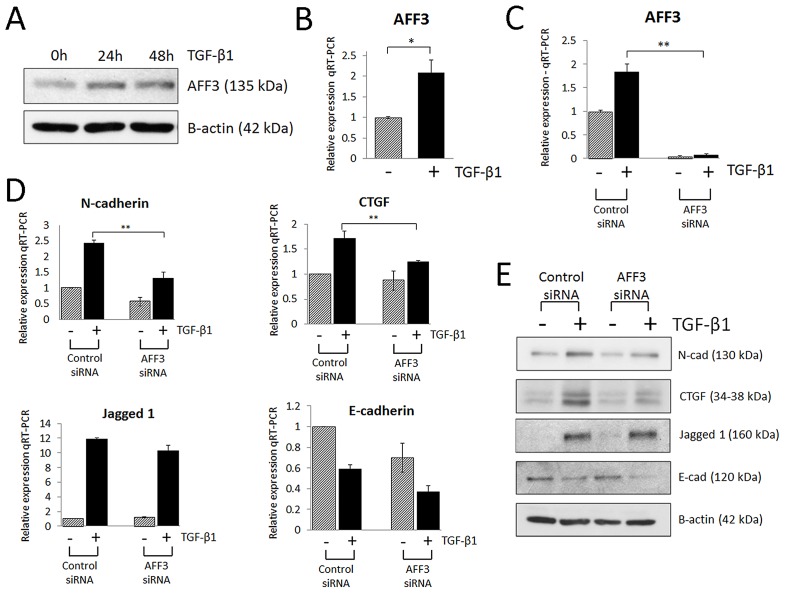
Diabetic kidney disease, or diabetic nephropathy (DN), is a major complication of diabetes and the leading cause of end-stage renal disease (ESRD) that requires dialysis treatment or kidney transplantation. In addition to the decrease in the quality of life, DN accounts for a large proportion of the excess mortality associated with type 1 diabetes (T1D). Whereas the degree of glycemia plays a pivotal role in DN, a subset of individuals with poorly controlled T1D do not develop DN. Furthermore, strong familial aggregation supports genetic susceptibility to DN. However, the genes and the molecular mechanisms behind the disease remain poorly understood, and current therapeutic strategies rarely result in reversal of DN. In the GEnetics of Nephropathy: an International Effort (GENIE) consortium, we have undertaken a meta-analysis of genome-wide association studies (GWAS) of T1D DN comprising ~2.4 million single nucleotide polymorphisms (SNPs) imputed in 6,691 individuals. After additional genotyping of 41 top ranked SNPs representing 24 independent signals in 5,873 individuals, combined meta-analysis revealed association of two SNPs with ESRD: rs7583877 in the AFF3 gene (P = 1.2 × 10(-8)) and an intergenic SNP on chromosome 15q26 between the genes RGMA and MCTP2, rs12437854 (P = 2.0 × 10(-9)). Functional data suggest that AFF3 influences renal tubule fibrosis via the transforming growth factor-beta (TGF-β1) pathway. The strongest association with DN as a primary phenotype was seen for an intronic SNP in the ERBB4 gene (rs7588550, P = 2.1 × 10(-7)), a gene with type 2 diabetes DN differential expression and in the same intron as a variant with cis-eQTL expression of ERBB4. All these detected associations represent new signals in the pathogenesis of DN.
Conflict of interest statement
JC Florez has received consulting honoraria from Novartis, Lilly, and Pfizer. M Kretzler received grant support from Hoffman La Roche and Fibrotech. P-H Groop has received lecture honorariums from Abbot, Boehringer Ingelheim, Cebix, Eli Lilly, Genzyme, Novartis, Novo Nordisk, MSD, and research grants from Eli Lilly and Roche. P-H Groop is also an advisory board member of Boehringer Ingelheim and Novartis.
Figures
Comment in
-
GWAS of diabetic nephropathy: is the GENIE out of the bottle?PLoS Genet. 2012 Sep;8(9):e1002989. doi: 10.1371/journal.pgen.1002989. Epub 2012 Sep 20. PLoS Genet. 2012. PMID: 23028380 Free PMC article. No abstract available.
References
-
- U S Renal Data System (1-12-0011) USRDS 2011 Annual Data Report. Atlas of Chronic Kidney Disease and End-Stage Renal Disease in the United States, National Institutes of Health, National Institute of Diabetes and Digestive and Kidney Diseases, Bethesda, MD, 2011.
-
- Ritz E, Zeng XX, Rychlik I (2011) Clinical manifestation and natural history of diabetic nephropathy. Contrib Nephrol 170: 19–27. - PubMed
-
- Krolewski AS, Warram JH, Christlieb AR, Busick EJ, Kahn CR (1985) The changing natural history of nephropathy in type I diabetes. Am J Med 78: 785–794. - PubMed
Publication types
MeSH terms
Substances
Grants and funding
LinkOut - more resources
Full Text Sources
Other Literature Sources
Medical