


Detrimental effects of RNAi: a cautionary note on its use in Drosophila ageing studies
- PMID: 23028964
- PMCID: PMC3444450
- DOI: 10.1371/journal.pone.0045367
Detrimental effects of RNAi: a cautionary note on its use in Drosophila ageing studies
Abstract
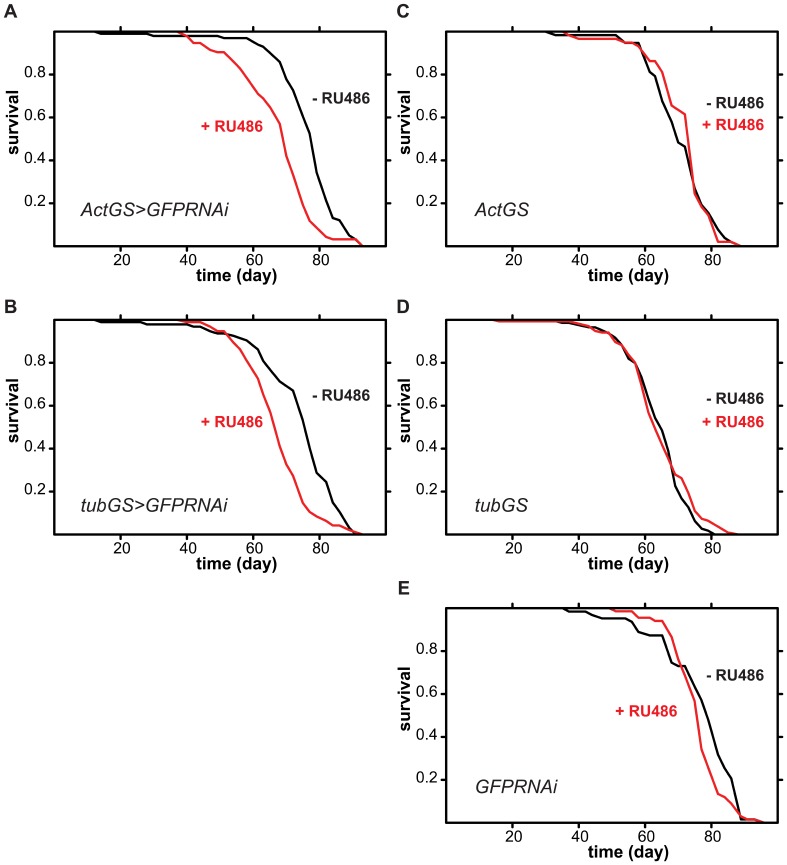
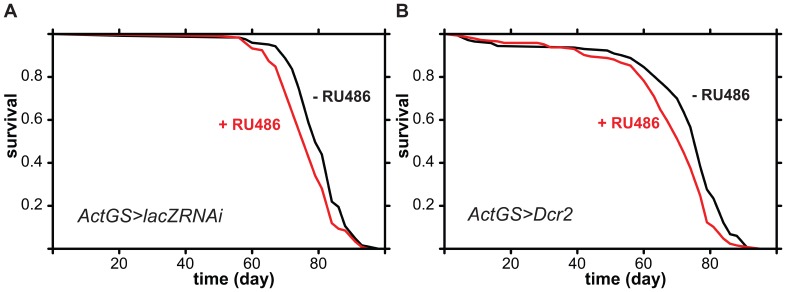
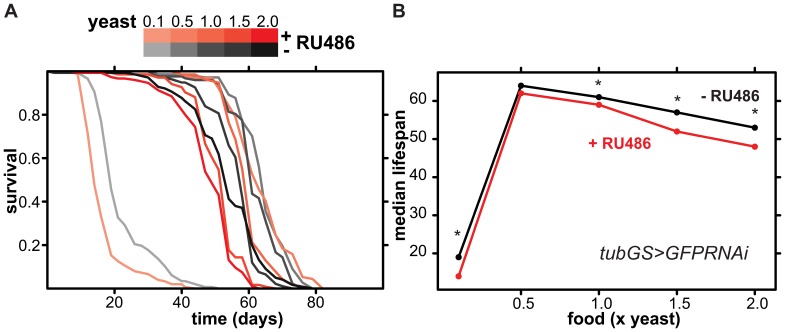
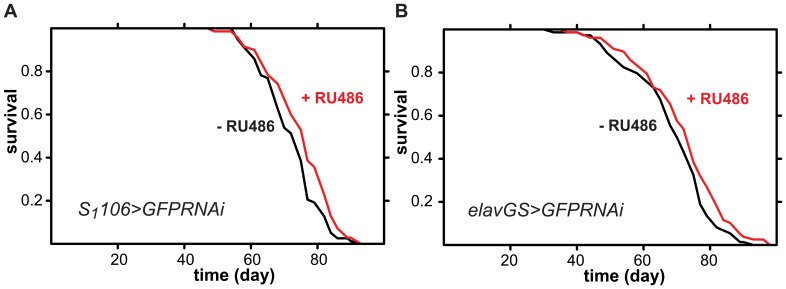
RNA interference (RNAi) provides an important tool for gene function discovery. It has been widely exploited in Caenorhabditis elegans ageing research because it does not appear to have any non-specific effects on ageing-related traits in that model organism. We show here that ubiquitous, adult-onset activation of the RNAi machinery, achieved by expressing a double stranded RNA targeting GFP or lacZ for degradation, or by increasing expression of Dicer substantially reduces lifespan in Drosophila melanogaster. Induction of GFPRNAi construct also alters the response of lifespan to nutrition, exacerbating the lifespan-shortening effects of food containing a high quantity of yeast. Our study indicates that activation of the RNAi machinery may have sequence-independent side-effects on lifespan, and that caution needs to be exercised when employing ubiquitous RNAi in Drosophila ageing studies. However, we also show that RNAi restricted to certain tissues may not be detrimental to lifespan.
Conflict of interest statement
Figures
References
-
- Hannon GJ (2002) RNA interference. Nature 418: 244–251. - PubMed
-
- Bartel DP (2004) MicroRNAs: genomics, biogenesis, mechanism, and function. Cell 116: 281–297. - PubMed
-
- Lee SS, Lee RY, Fraser AG, Kamath RS, Ahringer J, et al. (2003) A systematic RNAi screen identifies a critical role for mitochondria in C. elegans longevity. Nat Genet 33: 40–48. - PubMed
Publication types
MeSH terms
Substances
Grants and funding
LinkOut - more resources
Full Text Sources
Molecular Biology Databases
