


Relationships between inflammation, adiponectin, and oxidative stress in metabolic syndrome
- PMID: 23029185
- PMCID: PMC3446937
- DOI: 10.1371/journal.pone.0045693
Relationships between inflammation, adiponectin, and oxidative stress in metabolic syndrome
Abstract
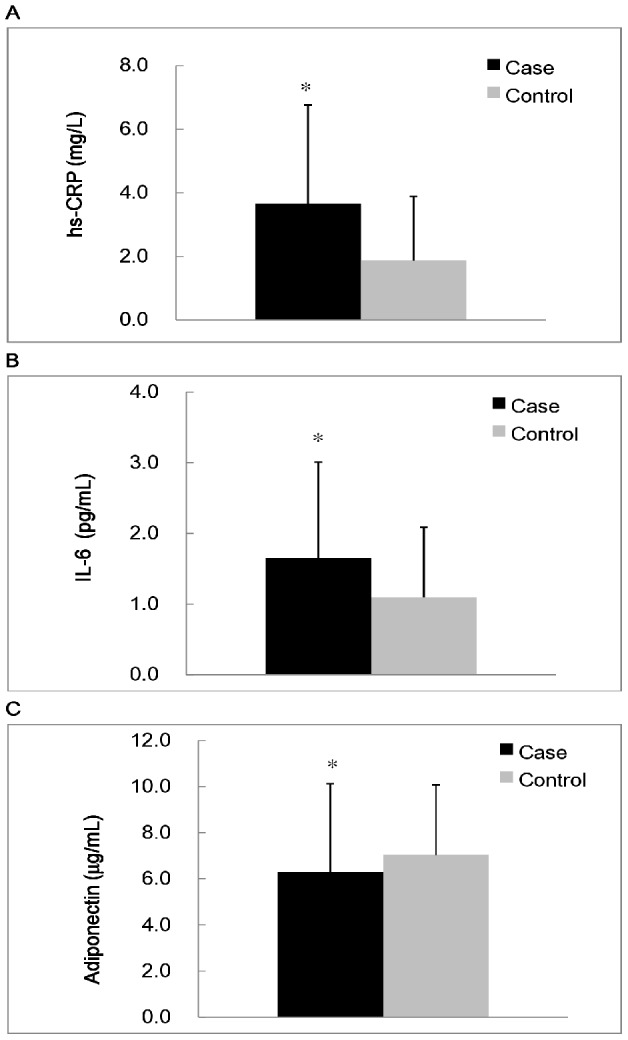
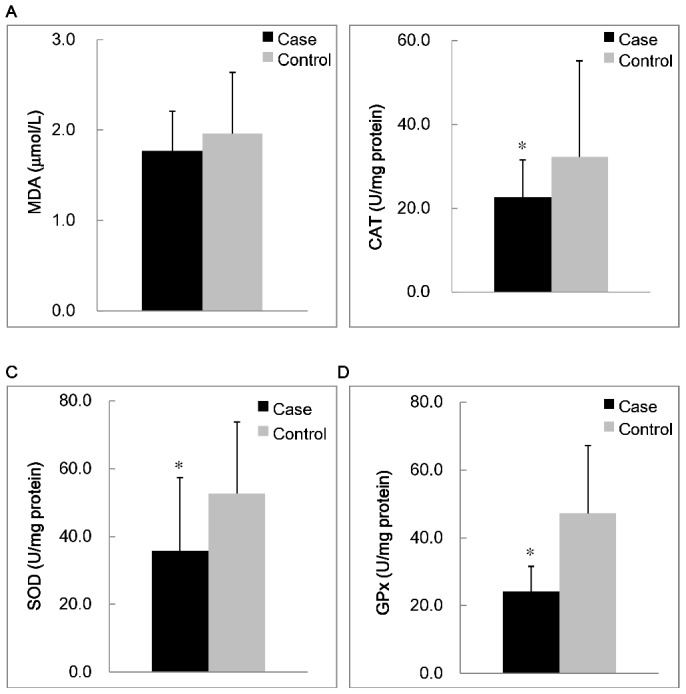
Metabolic syndrome (MS) represents a cluster of physiological and anthropometric abnormalities. The purpose of this study was to investigate the relationships between the levels of inflammation, adiponectin, and oxidative stress in subjects with MS. The inclusion criteria for MS, according to the Taiwan Bureau of Health Promotion, Department of Health, were applied to the case group (n = 72). The control group (n = 105) comprised healthy individuals with normal blood biochemical values. The levels of inflammatory markers [high sensitivity C-reactive protein (hs-CRP) and interleukin-6 (IL-6), adiponectin, an oxidative stress marker (malondialdehyde), and antioxidant enzymes activities [catalase (CAT), superoxide dismutase (SOD), and glutathione peroxidase (GPx)] were measured. Subjects with MS had significantly higher concentrations of inflammatory markers and lower adiponectin level, and lower antioxidant enzymes activities than the control subjects. The levels of inflammatory markers and adiponectin were significantly correlated with the components of MS. The level of hs-CRP was significantly correlated with the oxidative stress marker. The IL-6 level was significantly correlated with the SOD and GPx activities, and the adiponectin level was significantly correlated with the GPx activity. A higher level of hs-CRP (≥1.00 mg/L), or IL-6 (≥1.50 pg/mL) or a lower level of adiponectin (<7.90 µg/mL) were associated with a significantly greater risk of MS. In conclusion, subjects suffering from MS may have a higher inflammation status and a higher level of oxidative stress. A higher inflammation status was significantly correlated with decreases in the levels of antioxidant enzymes and adiponectin and an increase in the risk of MS.
Conflict of interest statement
Figures
References
-
- Expert panel on detection, evaluation, and treatment of high blood cholesterol in adults (2001) Executive summary of the third report of the national cholesterol education program (NCEP) expert panel on detection, evaluation, and treatment of high blood cholesterol in adults (Adult Treatment Panel III). JAMA 285: 2486–2497. - PubMed
-
- Ferrannini E, Haffner SM, Mitchell BD, Stern MP (1991) Hyperinsulinaemia: the key feature of a cardiovascular and metabolic syndrome. Diabetologia 34: 416–422. - PubMed
-
- Ford ES, Giles WH (2003) A comparison of the prevalence of the metabolic syndrome using two proposed definitions. Diabetes Care 26: 575–581. - PubMed
-
- Kolovou GD, Anagnostopoulou KK, Salpea KD, Mikhailidis DP (2007) The prevalence of metabolic syndrome in various populations. Am J Med Sci 333: 362–371. - PubMed
Publication types
MeSH terms
Substances
LinkOut - more resources
Full Text Sources
Medical
Research Materials
Miscellaneous
