. 2012;7(9):e46111.
doi: 10.1371/journal.pone.0046111. Epub 2012 Sep 24.

Sex-dependent alterations in social behaviour and cortical synaptic activity coincide at different ages in a model of Alzheimer's disease

Affiliations

Sex-dependent alterations in social behaviour and cortical synaptic activity coincide at different ages in a model of Alzheimer's disease

Cyril Bories et al. PLoS One. 2012.

Abstract

Besides memory deficits, Alzheimer's disease (AD) patients suffer from neuropsychiatric symptoms, including alterations in social interactions, which are subject of a growing number of investigations in transgenic models of AD. Yet the biological mechanisms underlying these behavioural alterations are poorly understood. Here, a social interaction paradigm was used to assess social dysfunction in the triple-transgenic mouse model of AD (3xTg-AD). We observed that transgenic mice displayed dimorphic behavioural abnormalities at different ages. Social disinhibition was observed in 18 months old 3xTg-AD males compared to age and sex-matched control mice. In 3xTg-AD females, social disinhibition was present at 12 months followed by reduced social interactions at 18 months. These dimorphic behavioural alterations were not associated with alterations in AD neuropathological markers such as Aβ or tau levels in the frontal cortex. However, patch-clamp recordings revealed that enhanced social interactions coincided temporally with an increase in both excitatory and inhibitory basal synaptic inputs to layer 2-3 pyramidal neurons in the prefrontal cortex. These findings uncover a novel pattern of occurrence of psychiatric-like symptoms between sexes in an AD model. Our results also reveal that functional alterations in synapse activity appear as a potentially significant substrate underlying behavioural correlates of AD.


Conflict of interest statement

Competing Interests: The authors have declared that no competing interests exist.

Figures

Figure 1
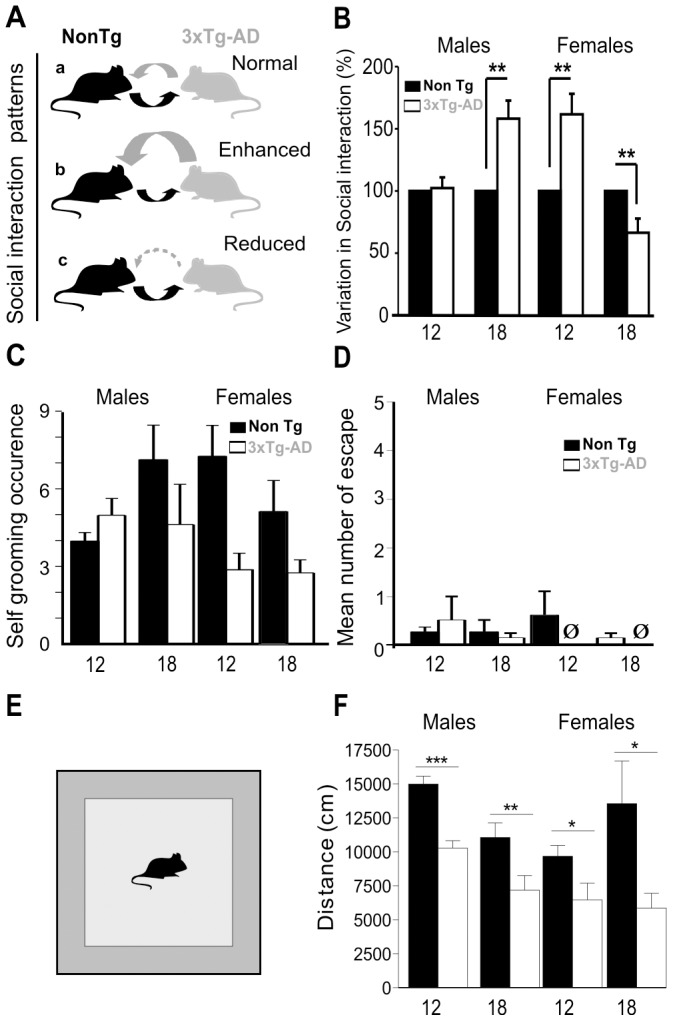
Figure 1. Sex-dependent behavioural abnormalities emerge at different ages in 3xTg-AD mice.
(A) Behavioural paradigm used to study social interactions in 12-month-old and 18-month-old male and female 3xTg-AD mice, along with age- and sex-paired non-transgenic controls (NonTg). Based on the number of social events recorded during experiments, 3 different patterns of social interaction were observed, as depicted from (a) to (c). (B) A marked increase in social interactions was seen in 3xTg-AD females as early as 12 months of age, when compared to NonTg controls, while no difference was observed in males. However, 3xTg-AD males displayed such a social disinhibition after reaching 18 months of age when compared to age- and sex-matched NonTg animals. In contrast, the social behaviour of 18-month-old females was markedly reduced. Social events were expressed as means ± SEM. **p<0.01, n = 8 per group. No difference in self grooming (C) or escape behaviour (D) were observed. (E and F) 3xTg-AD mice travelled less in an open field task. Ø indicates that animals of the group did not demonstrate this behaviour.
Figure 2
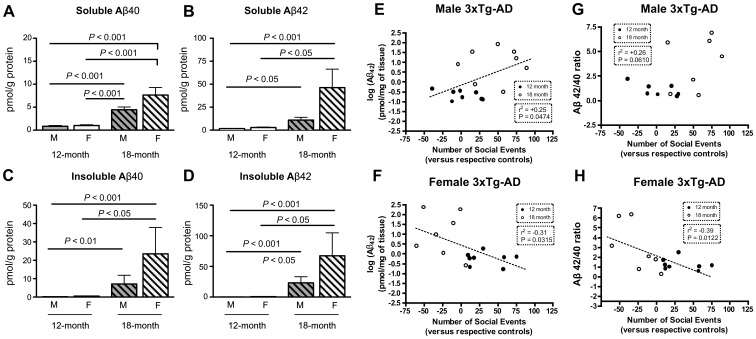
Figure 2. Age-dependent accumulation of Aβ peptides in soluble and insoluble protein fractions in 3xTg-AD mice.
(A–D) ELISA (Aβ) measurements showing Aβ40, Aβ42 accumulation with age as quantified in the TBS-soluble (soluble proteins) and the formic acid-soluble (insoluble proteins) fractions from the frontal cortex of 3xTg-AD mice. Consistent trends toward increases were seen in female 3xTg-AD mice compared to males but did not reach statistical significance. Values are expressed as means ± SEM (n = 8 per group). (E–H) To evaluate the relation between Aβ load and social behaviour, the number of social events displayed by 3xTg-AD mice (relative to its NonTg partner) was plotted against the Aβ42 concentrations or Aβ42/40 ratio in the frontal cortex. A significant correlation could be established across the 2 groups of age (dotted lines).
Figure 3
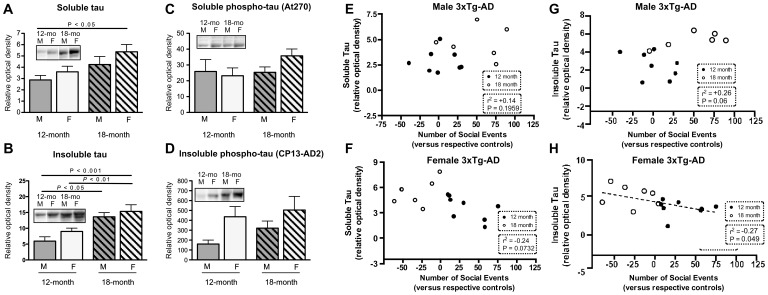
Figure 3. Age-dependent accumulation of tau protein in soluble and insoluble protein fractions in 3xTg-AD mice.
Western immunoblots showing tau accumulation with age as quantified in the TBS-soluble (soluble proteins) and the formic acid-soluble (insoluble proteins) fractions from the frontal cortex of 3xTg-AD mice. Consistent trends toward increases were seen in female 3xTg-AD mice. (E–H) To evaluate the relation between tau load and social behaviour, the number of social events displayed by 3xTg-AD mice (relative to its NonTg partner) was plotted against soluble tau concentrations in the frontal cortex. A significant correlation could only be established between insoluble tau concentrations and social events in female across the 2 groups of age (dotted lines).
Figure 4
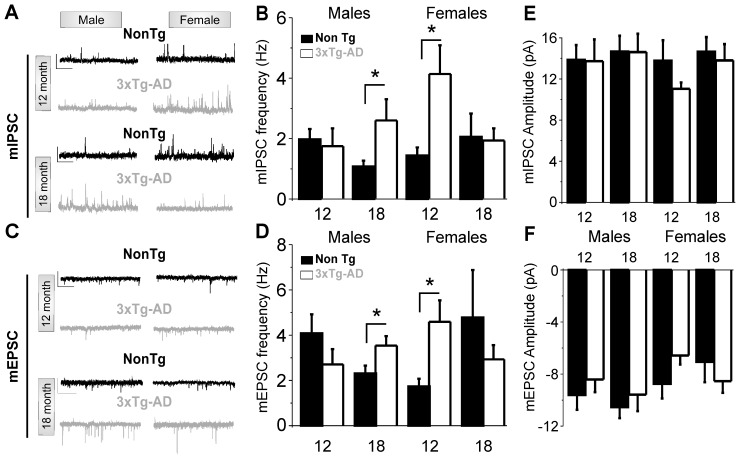
Figure 4. Sex-dependent synaptic hyperactivity in the prefrontal cortex is observed at different ages in 3xTg-AD mice.
(A) Examples of miniature inhibitory post synaptic currents (mIPSCs) recorded from pyramidal cells of NonTg and 3xTg-AD mice at different ages. Scale bar 50 pA/1 s (B) A significant increase in mIPSC frequency was observed at 12 months in 3xTg-AD females, but was delayed until 18 months in males, n = 6 to 8 cells per group *p<0.05 Student t-test. (C) and (D) A significant increase in miniature excitatory post synaptic currents (mEPSC) activity was observed at 12 months in 3xTg-AD females and at 18 month in 3xTg-AD males, n = 5 to 7 cells per group; *p<0.05. Scale bar 25 pA/1 s. (E and F) No changes in mPSC amplitude were observed among the groups compared, n = 5 to 8 cells per group.
Figure 5
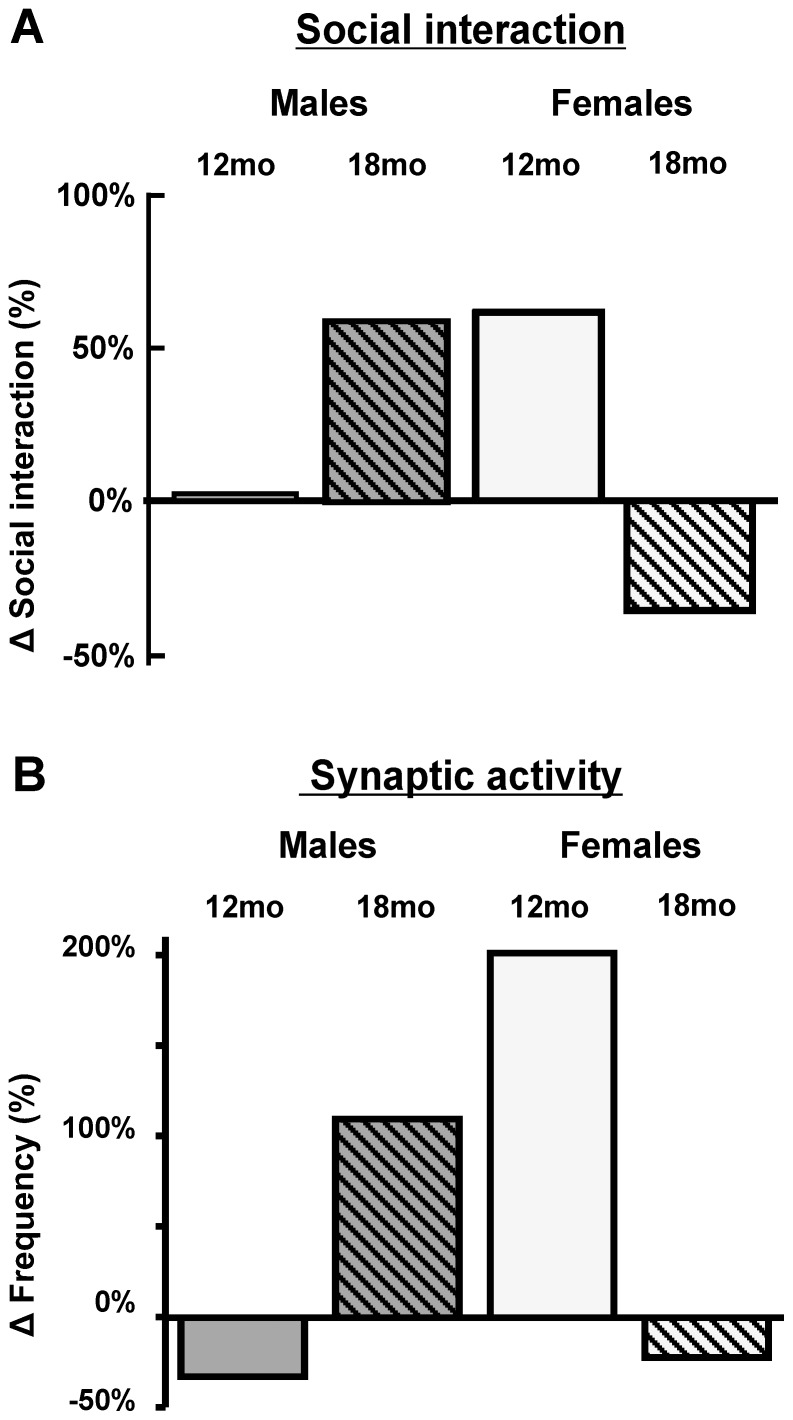
Figure 5. Age and sex-dependent variations in behaviour and synaptic activity in 3xTg-AD mice have the same signature.
Illustration of sex-dependent changes in social interactions (A) and synaptic activity (B) in 12- and 18-month-old 3xTg mice when compared with NonTg mice, emphasizing the tight association between altered social interactions and changes in synaptic activity.

References

    1. Preuss UW, Watzke S, Choi JH (2010) Diagnostic correlates of Alzheimer dementia in a u.s. Nationwide inpatient sample. Am J Geriatr Psychiatry 18: 821–829. - PubMed
    1. Craig D, Mirakhur A, Hart DJ, McIlroy SP, Passmore AP (2005) A cross-sectional study of neuropsychiatric symptoms in 435 patients with Alzheimer’s disease. American Journal of Geriatric Psychiatry 13: 460–468. - PubMed
    1. Mega MS, Cummings JL, Fiorello T, Gornbein J (1996) The spectrum of behavioural changes in Alzheimer’s disease. Neurology 46: 130–135. - PubMed
    1. Mizrahi R, Starkstein SE (2007) Epidemiology and management of apathy in patients with Alzheimer’s disease. Drugs & Aging 24: 547–554. - PubMed
    1. Ashe KH, Zahs KR (2010) Probing the biology of Alzheimer’s disease in mice. Neuron 66: 631–645. - PMC - PubMed

Publication types

MeSH terms

Substances