


Risk factors for ischemic stroke; results from 9 years of follow-up in a population based cohort of Iran
- PMID: 23031547
- PMCID: PMC3517457
- DOI: 10.1186/1471-2377-12-117
Risk factors for ischemic stroke; results from 9 years of follow-up in a population based cohort of Iran
Abstract
Background: Data about the risk factors of stroke are sparse in the Middle East populations. We aimed to determine the potential risk factors and their population attributable fraction (PAF) for stroke in an Iranian population.
Methods: A cohort Study consisted of 1089 men and 1289 women, with mean (SD) ages of 61.1(7.6) and 59.0(6.7) years, respectively. Cox regression was implemented to estimate the hazard ratio (HR) of each risk factor for stroke events in a stepwise method. We calculated a multivariate adjusted population attributable fraction (PAF) for any risk factors remained in the model.
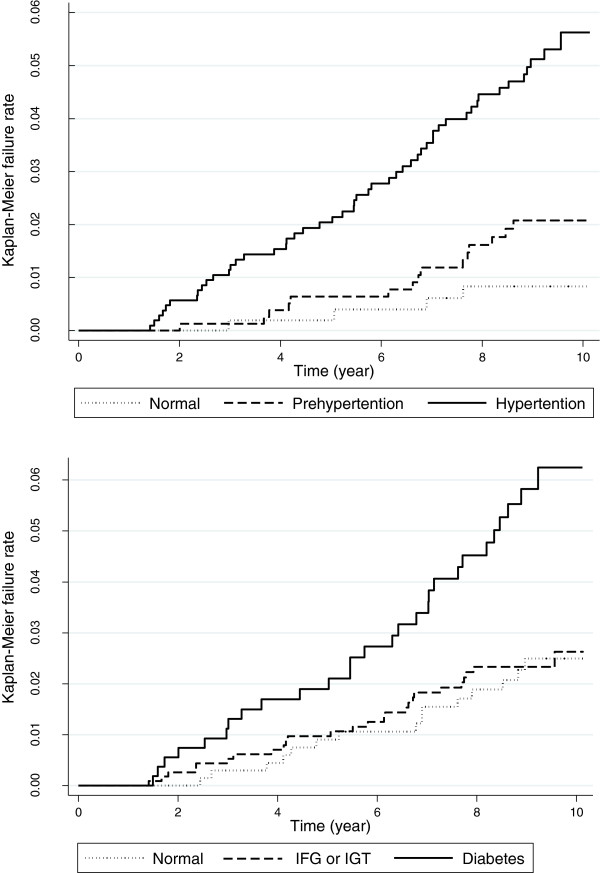
Results: During 9.3 years of follow-up, 69 events of stroke occurred with incidence rates of 4.5 (95% CI: 3.3-6.0) and 2.5 (1.7-3.6) in 1000 person-years for men and women respectively. Among potential risk factors, only age ≥ 65 years (HR: 2.03, CI: 1.24-3.31), male gender (HR: 2.00, CI: 1.16-3.43), hypertension (HR: 3.03, CI: 1.76-5.22), diabetes mellitus (HR: 2.18, CI: 1.34-3.56), and chronic kidney disease (CKD) (HR: 2.01, CI: 1.22-3.33), were independently associated with increased risk of stroke events in the total population. A paired homogeneity test showed that the hazard ratio of CKD did not differ from other independent risk factors. The PAFs were 29.7% and 25% for male gender and age ≥ 65 as non-modifiable and 48.6%, 29.1% and 22.0% for hypertension, CKD and diabetes as modifiable risk factors respectively.
Conclusion: Following this population based study of Iranians, we demonstrated that among modifiable risk factors, CKD as well as hypertension and diabetes are the strongest independent predictors of stroke.
Figures
References
-
- Azarpazhooh MR, Etemadi MM, Donnan GA, Mokhber N, Majdi MR, Ghayour-Mobarhan M, Ghandehary K, Farzadfard MT, Kiani R, Panahandeh M, Thrift AG. Excessive incidence of stroke in Iran: evidence from the Mashhad Stroke Incidence Study (MSIS), a population-based study of stroke in the Middle East. Stroke. 2010;41:e3–e10. doi: 10.1161/STROKEAHA.109.559708. - DOI - PubMed
Publication types
MeSH terms
LinkOut - more resources
Full Text Sources
Medical
