


In vitro susceptibilities of yeast species to fluconazole and voriconazole as determined by the 2010 National China Hospital Invasive Fungal Surveillance Net (CHIF-NET) study
- PMID: 23035204
- PMCID: PMC3502960
- DOI: 10.1128/JCM.01130-12
In vitro susceptibilities of yeast species to fluconazole and voriconazole as determined by the 2010 National China Hospital Invasive Fungal Surveillance Net (CHIF-NET) study
Abstract
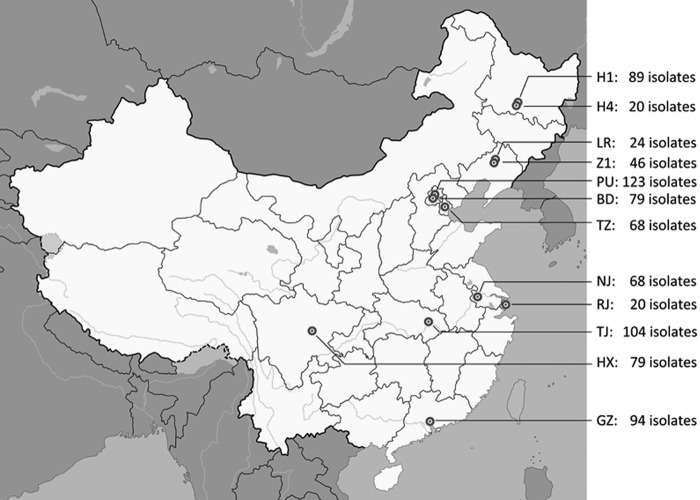
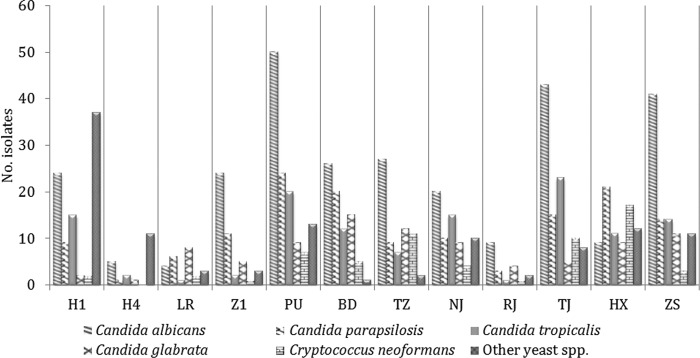
We conducted active, laboratory-based surveillance for isolates from patients with invasive infections across China from August 2009 to July 2010. DNA sequencing methods were used to define species, and susceptibility to fluconazole and voriconazole was determined by the Clinical and Laboratory Standards Institute M44-A2 disk diffusion method but using up-to-date clinical breakpoints or epidemiological cutoff values. Candida spp. made up 90.5% of the 814 yeast strains isolated, followed by Cryptococcus neoformans (7.7%) and other non-Candida yeast strains (1.7%). Bloodstream isolates made up 42.9% of the strains, isolates from ascitic fluid made up 22.1%, but pus/tissue specimens yielded yeast strains in <5% of the cases. Among the Candida isolates, Candida albicans was the most common species from specimens other than blood (50.1%) but made up only 23% of the bloodstream isolates (P < 0.001). C. parapsilosis complex species were the most common Candida isolates from blood (33.2%). Uncommon bloodstream yeast strains included Trichosporon spp., C. pelliculosa, and the novel species C. quercitrusa, reported for the first time as a cause of candidemia. Most (>94%) of the isolates of C. albicans, C. tropicalis, and the C. parapsilosis complex were susceptible to fluconazole and voriconazole, as were all of the Trichosporon strains; however, 12.2% of the C. glabrata sensu stricto isolates were fluconazole resistant and 17.8% had non-wild-type susceptibility to voriconazole. Seven C. tropicalis strains were cross-resistant to fluconazole and voriconazole; six were from patients in the same institution. Resistance to fluconazole and voriconazole was seen in 31.9% and 13.3% of the uncommon Candida and non-Candida yeast strains, respectively. Causative species and azole susceptibility varied with the geographic region. This study provided clinically useful data on yeast strains and their antifungal susceptibilities in China.
Figures
References
-
- Arendrup MC, et al. 2008. Semi-national surveillance of fungaemia in Denmark 2004-2006: increasing incidence of fungaemia and numbers of isolates with reduced azole susceptibility. Clin. Microbiol. Infect. 14:487–494 - PubMed
-
- Arnold HM, et al. 2010. Hospital resource utilization and costs of inappropriate treatment of candidemia. Pharmacotherapy 30:361–368 - PubMed
Publication types
MeSH terms
Substances
LinkOut - more resources
Full Text Sources
Medical
Miscellaneous
