


Acid-activated structural reorganization of the Rift Valley fever virus Gc fusion protein
- PMID: 23035232
- PMCID: PMC3503025
- DOI: 10.1128/JVI.01973-12
Acid-activated structural reorganization of the Rift Valley fever virus Gc fusion protein
Abstract
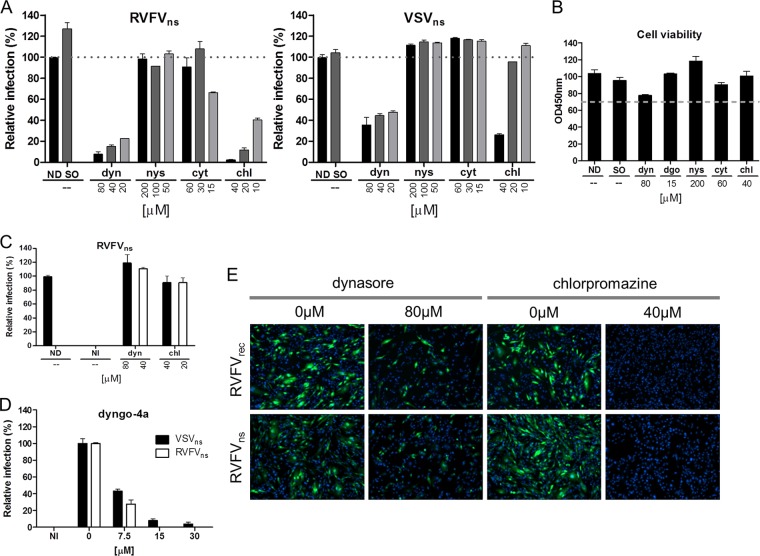
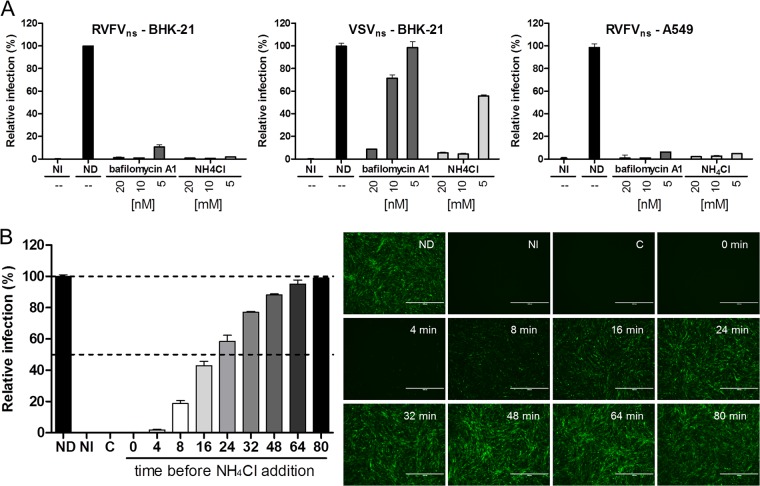
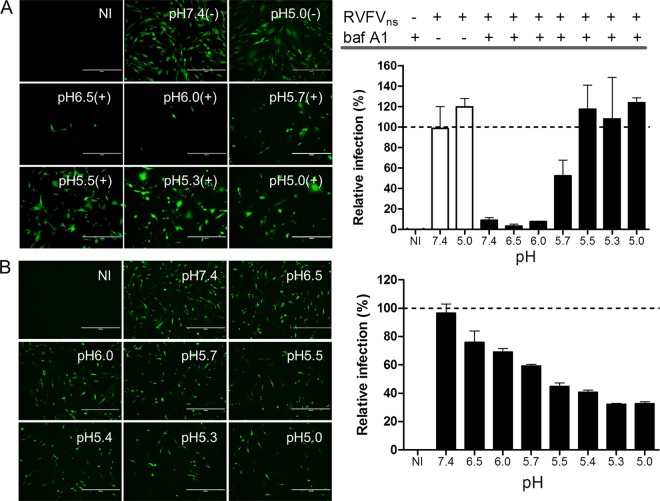
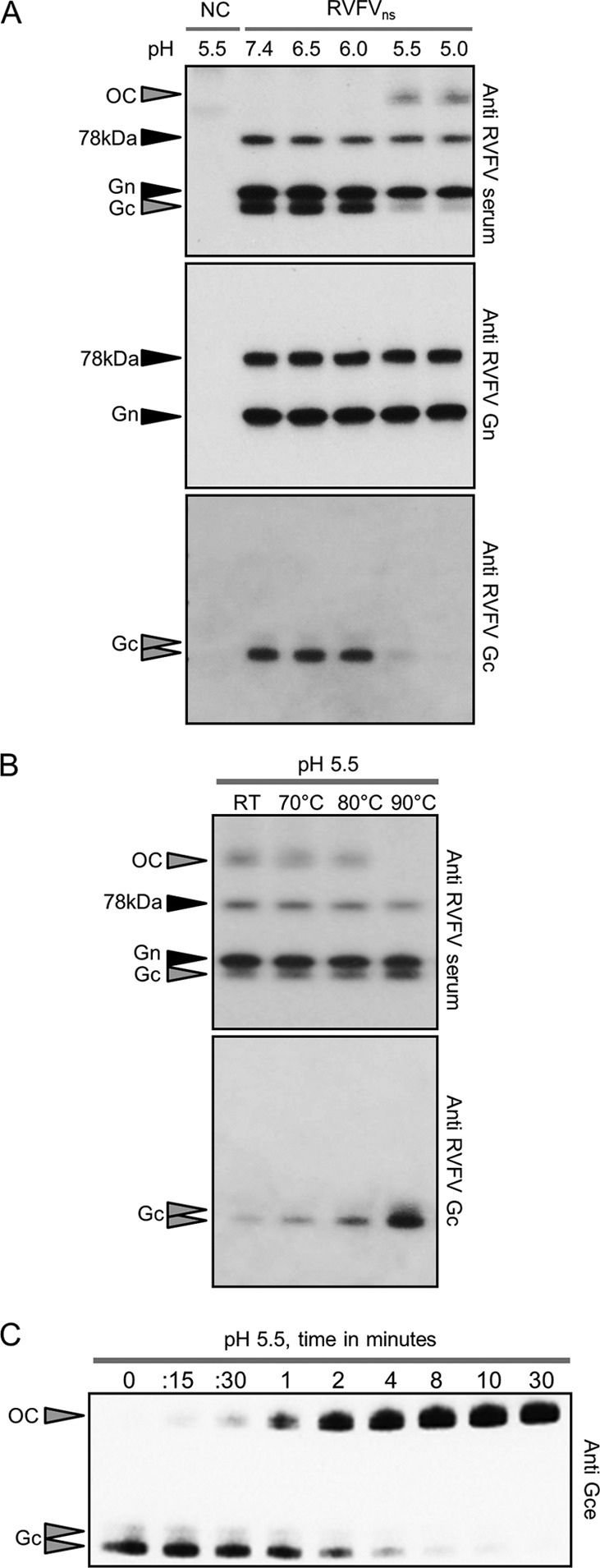
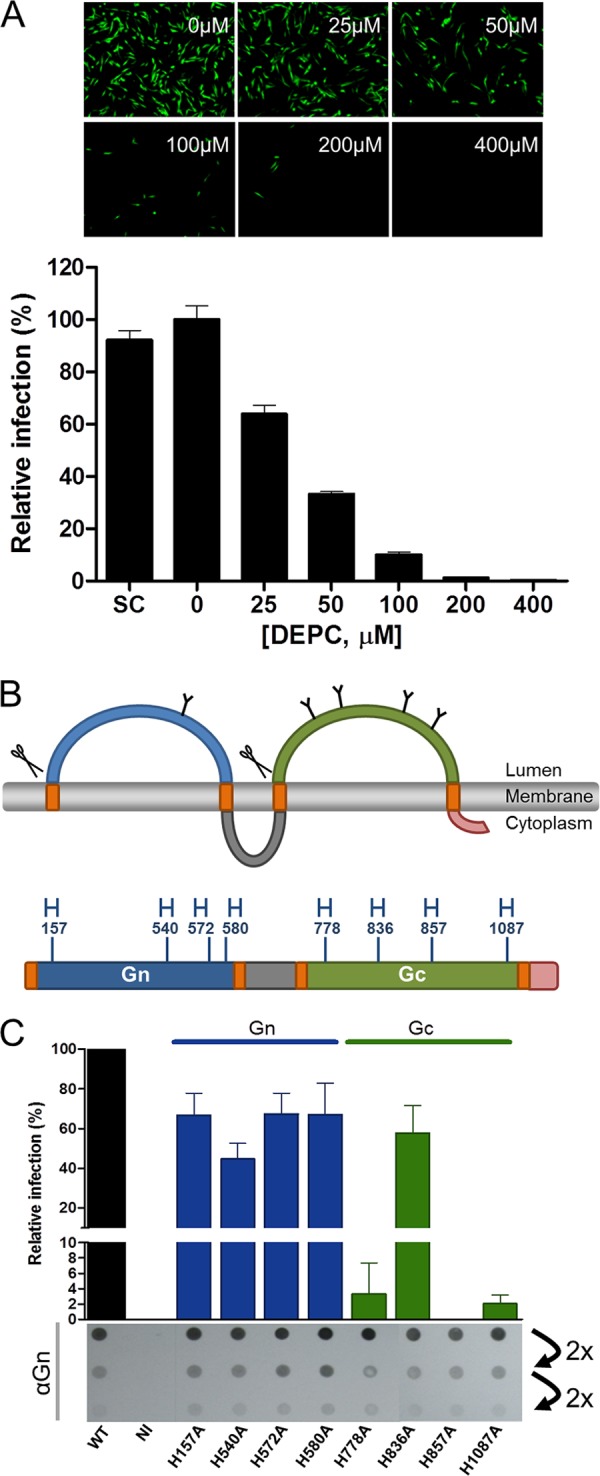
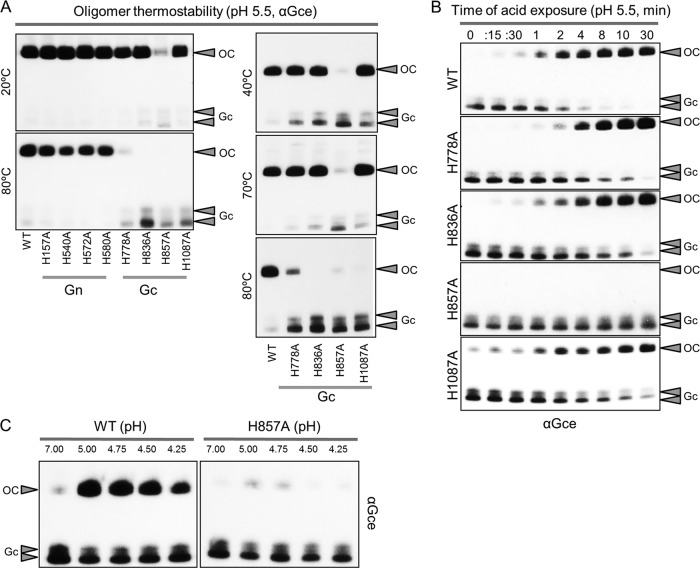
The entry of the enveloped Rift Valley fever virus (RVFV) into its host cell is mediated by the viral glycoproteins Gn and Gc. We investigated the RVFV entry process and, in particular, its pH-dependent activation mechanism using our recently developed nonspreading-RVFV-particle system. Entry of the virus into the host cell was efficiently inhibited by lysosomotropic agents that prevent endosomal acidification and by compounds that interfere with dynamin- and clathrin-dependent endocytosis. Exposure of plasma membrane-bound virions to an acidic pH (<pH 6) equivalent to the pH of late endolysosomal compartments allowed the virus to bypass the endosomal route of infection. Acid exposure of virions in the absence of target membranes triggered the class II-like Gc fusion protein to form extremely stable oligomers that were resistant to SDS and temperature dissociation and concomitantly compromised virus infectivity. By targeted mutagenesis of conserved histidines in Gn and Gc, we demonstrated that mutation of a single histidine (H857) in Gc completely abrogated virus entry, as well as acid-induced Gc oligomerization. In conclusion, our data suggest that after endocytic uptake, RVFV traffics to the acidic late endolysosomal compartments, where histidine protonation drives the reorganization of the Gc fusion protein that leads to membrane fusion.
Figures
References
-
- Arikawa J, Takashima I, Hashimoto N. 1985. Cell fusion by haemorrhagic fever with renal syndrome (HFRS) viruses and its application for titration of virus infectivity and neutralizing antibody. Arch. Virol. 86:303–313 - PubMed
-
- Balkhy HH, Memish ZA. 2003. Rift Valley fever: an uninvited zoonosis in the Arabian peninsula. Int. J. Antimicrob. Agents 21:153–157 - PubMed
-
- Boo I, KteWierik Douam F, Lavillette D, Poumbourios P, Drummer HE. 2012. Distinct roles in folding, CD81 receptor binding and viral entry for conserved histidine residues of hepatitis C virus glycoprotein E1 and E2. Biochem. J. 443:85–94 - PubMed
-
- Carneiro FA, et al. 2003. Membrane fusion induced by vesicular stomatitis virus depends on histidine protonation. J. Biol. Chem. 278:13789–13794 - PubMed
Publication types
MeSH terms
Substances
LinkOut - more resources
Full Text Sources
Other Literature Sources
Miscellaneous
