. 2013 Jan;14(1):82-96.
doi: 10.1111/tra.12016. Epub 2012 Oct 31.

Drosophila S2 cells secrete wingless on exosome-like vesicles but the wingless gradient forms independently of exosomes

Affiliations

Drosophila S2 cells secrete wingless on exosome-like vesicles but the wingless gradient forms independently of exosomes

Karen Beckett et al. Traffic. 2013 Jan.

Abstract

Wingless acts as a morphogen in Drosophila wing discs, where it specifies cell fates and controls growth several cell diameters away from its site of expression. Thus, despite being acylated and membrane associated, Wingless spreads in the extracellular space. Recent studies have focussed on identifying the route that Wingless follows in the secretory pathway and determining how it is packaged for release. We have found that, in medium conditioned by Wingless-expressing Drosophila S2 cells, Wingless is present on exosome-like vesicles and that this fraction activates signal transduction. Proteomic analysis shows that Wingless-containing exosome-like structures contain many Drosophila proteins that are homologous to mammalian exosome proteins. In addition, Evi, a multipass transmembrane protein, is also present on exosome-like vesicles. Using these exosome markers and a cell-based RNAi assay, we found that the small GTPase Rab11 contributes significantly to exosome production. This finding allows us to conclude from in vivo Rab11 knockdown experiments, that exosomes are unlikely to contribute to Wingless secretion and gradient formation in wing discs. Consistent with this conclusion, extracellularly tagged Evi expressed from a Bacterial Artificial Chromosome is not released from imaginal disc Wingless-expressing cells.


Figures

Figure 1
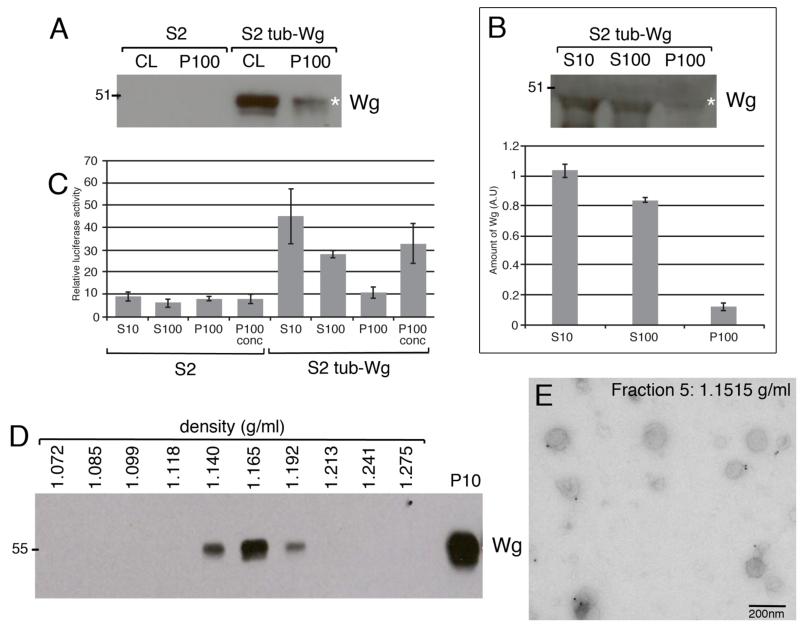
Figure 1. Wingless is secreted on exosome-like vesicles in S2 cells
A. Equal amounts of total protein from cell lysates (CL) and P100 pellets were analysed by western blot. Wg is present in cell lysates and the P100 pellet from S2 tub-Wg cells. B. Quantification of Wg levels in S10 and S100 supernatants versus the P100 pellet from S2 tub-Wg cells shows that approximately 12% of secreted Wg sediments at 100,000 g. C. The S10 and S100 supernatants and P100 pellet from S2 tub-Wg cells can activate expression of a Wg signalling reporter in S2R+ cells. D. P100 pellet from S2 tub-Wg cells was fractionated by continuous sucrose density gradient and equal amounts of the resulting fractions analysed by western blot. Wg is present in fractions with densities 1.14 – 1.192 g/ml, corresponding to exosomes. E. Immuno-EM analysis of fraction 5 (1.1515 g/ml) from S2 HA-Wg cells shows cup-shaped vesicles with a mean diameter of 114 nm labelled with anti-HA in addition to smaller structures. Scale bar = 200 nm
Figure 2
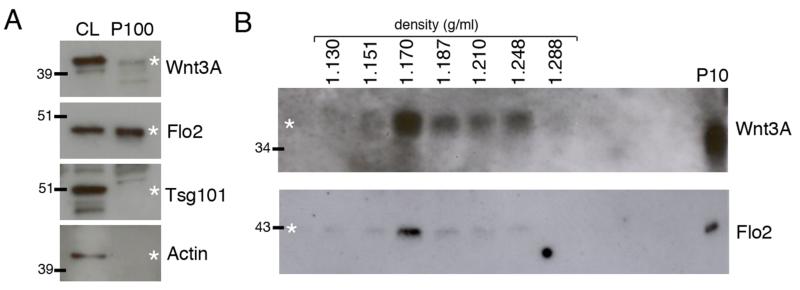
Figure 2. Wnt3A is secreted on exosome-like vesicles in L cells
A. Cell lysates (CL) and P100 pellets from L-Wnt3A cells were analysed by Western blot. Twice as much P100 protein was loaded compared to CL. Wnt3A and Flo2 are both detected in the P100 pellet, while Tsg101 and Actin were only detected in the CL. B. The P100 pellet from L-Wnt3A CM was further fractionated by continuous sucrose density gradient and the fractions analysed by Western blot. Wnt3A was found at low levels in fractions with densities between 1.151 – 1.288 g/ml, but the majority was detected in the exosome fraction with a density of 1.170 g/ml. Flo2 was detected in the same fractions and levels peaked in the exosome fraction with a density of 1.170 g/ml.
Figure 3
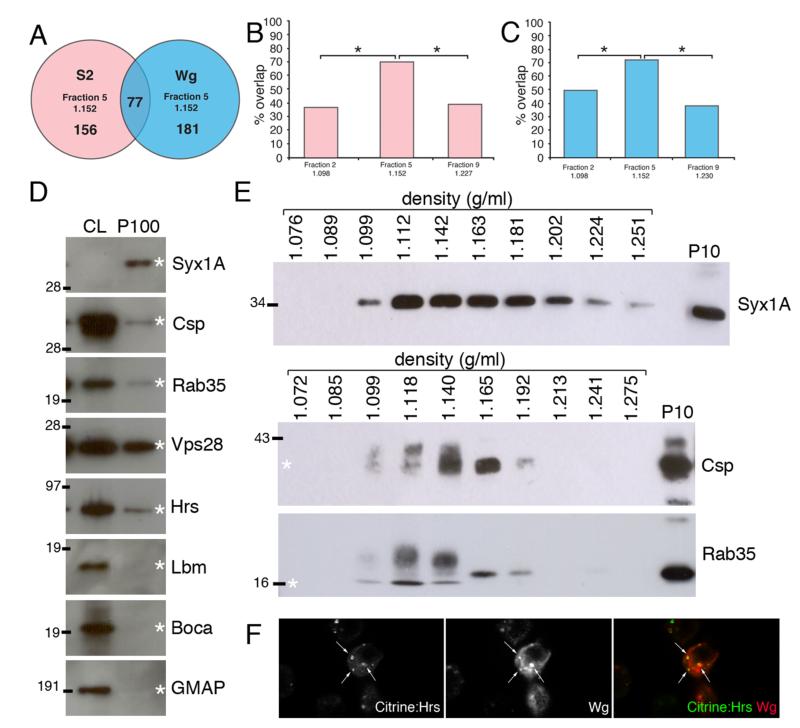
Figure 3. Analysis and validation of mass spectrometry results
A. Venn diagram showing number of exosome proteins detected (with 2 peptides or more) in exosome fraction 5 (1.151 g/ml) from S2 and S2 tub-Wg cells. 77 proteins were found in exosome fractions from both cell types. B, C. Graph showing percentage overlap between fractions 2, 5 and 9 from S2 (B) and S2 tub-Wg (C) cells and the most common mammalian exosome proteins (* p<0.001). D. Equal amount of protein from cell lysates (CL) and P100 pellets from S2 tub-Wg cells were analysed by western blots. Syx1A, Csp, Rab35, Hrs and Vps28 were all present in the P100 pellet, but the tetraspanin Lbm, the ER protein Boca and the Golgi marker GMAP were only found in the CL. E. Western blots of continuous sucrose density gradients. Syx1A is found in fractions between 1.099 – 1.251 g/ml. Csp and Rab35 are found in fractions between 1.099 – 1.192 g/ml, showing a narrower distribution than Syx1A. The molecular weight of Csp and Rab35 was altered in lighter non-exosome fractions with a density between 1.099 – 1.140 g/ml, but the reason for this change is not understood. F. S2R+ cells were contransfected with plasmids expressing Wg and Citrine:Hrs. Significant colocalisation was observed within Wg secreting cells (white arrows).
Figure 4
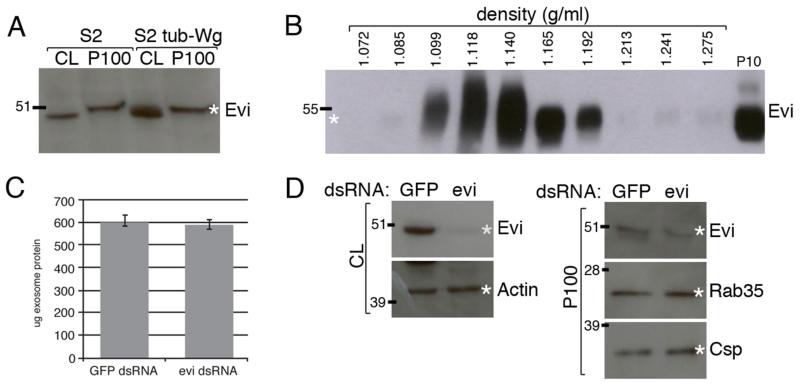
Figure 4. Evi is secreted on exosome-like vesicles in S2 cells, but is not required for their production
A. Equal amounts of proteins from cell lysates (CL) and P100 pellets from S2 and S2 tub-Wg cells were analysed by western blot. Similar levels of Evi are detected in the P100 pellet from each cell type, although the apparent molecular weight of Evi is slightly higher in the P100 samples. B. Western blot analysis of a continuous sucrose density gradient from S2 tub-Wg cells shows that Evi is present in fractions between 1.099 – 1.192 g/ml. However, in lighter non-exosome fractions with densities between 1.099 – 1.410 g/ml Evi appears to have a higher molecular weight. We do not understand the reason for this. C, D. S2 cells were treated with dsRNA against GFP or evi. Evi levels were reduced upon RNAi treatment in both the CL and P100 pellet. Exosome production as measured by Rab35, Csp (D) or total protein levels (C) was unaffected.
Figure 5
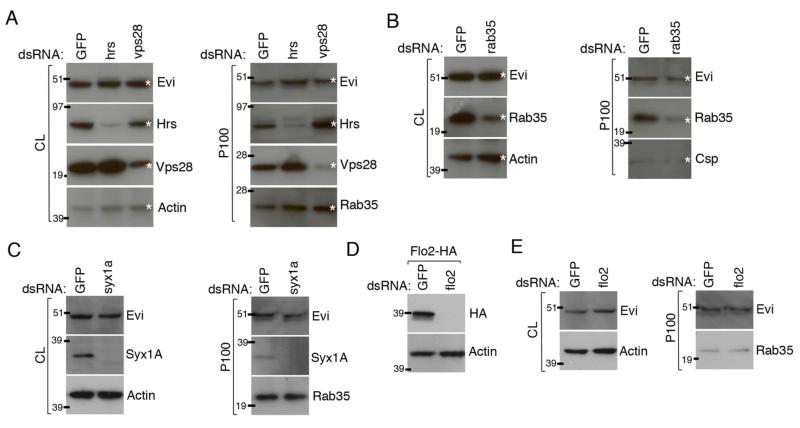
Figure 5. ESCRT proteins, Rab35, Syx1A and Flo2 are not required for exosome production in S2 cells
S2 cells were treated with dsRNA against hrs or vps28 (A), rab35 (B), syx1a (C) or flo2 (D). RNAi against GFP was used as a control. The cell lysates (CL) and P100 pellets produced by those cells were analysed by Western blot. A. Hrs and Vps28 RNAi caused reduction in respective protein levels in both the CL and P100 pellets. However, no change in Evi or Rab35 levels in the P100 pellets were observed. B. Rab35 RNAi caused reduction in Rab35 levels in both CL and P100 pellets. No change in Evi or Csp levels in the P100 pellet was observed. C. Syx1A RNAi caused reduction in Syx1A levels in both CL and P100 pellets. No change in Evi or Rab35 levels in the P100 pellet was observed. D. Flo2-HA expressing S2 cells were treated with dsRNA against GFP or flo2. Flo2 RNAi caused reduction of Flo2-HA levels in CL. However, Flo2 RNAi caused no changes in Evi or Rab35 levels in the P100 pellet.
Figure 6
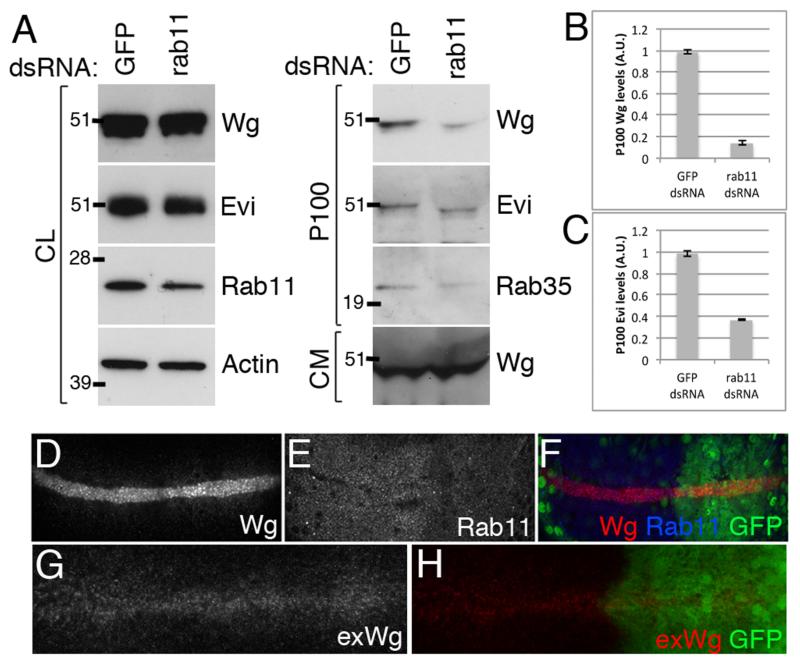
Figure 6. Rab11 is required for exosome production in S2 tub-Wg cells, but plays no role in Wg gradient formation in the wing imaginal disc
A-C. S2 tub-Wg cells were treated with dsRNA against GFP or rab11. Rab11 RNAi caused a reduction in Rab11 levels in the CL. Reduced levels of Wg (quantified in B), Evi (quantified in C) and Rab35 levels in the P100 pellet were observed upon Rab11 RNAi. No effect on the levels of secreted Wg in the CM was seen. D-H. Rab11 RNAi was expressed in the posterior compartment of wing imaginal discs and caused strong reduction in Rab11 levels (E), with minimal cell death (data not shown). Total Wg staining showed no changes upon Rab11 knockdown except for aberrant punctae of Wg in the most apical regions of the expressing cells indicating a defect in intracellular trafficking (D, F). However, no changes in extracellular Wg distribution were observed (G, H) indicating that Wg secretion and gradient formation occur normally with reduced Rab11 levels.
Figure 7
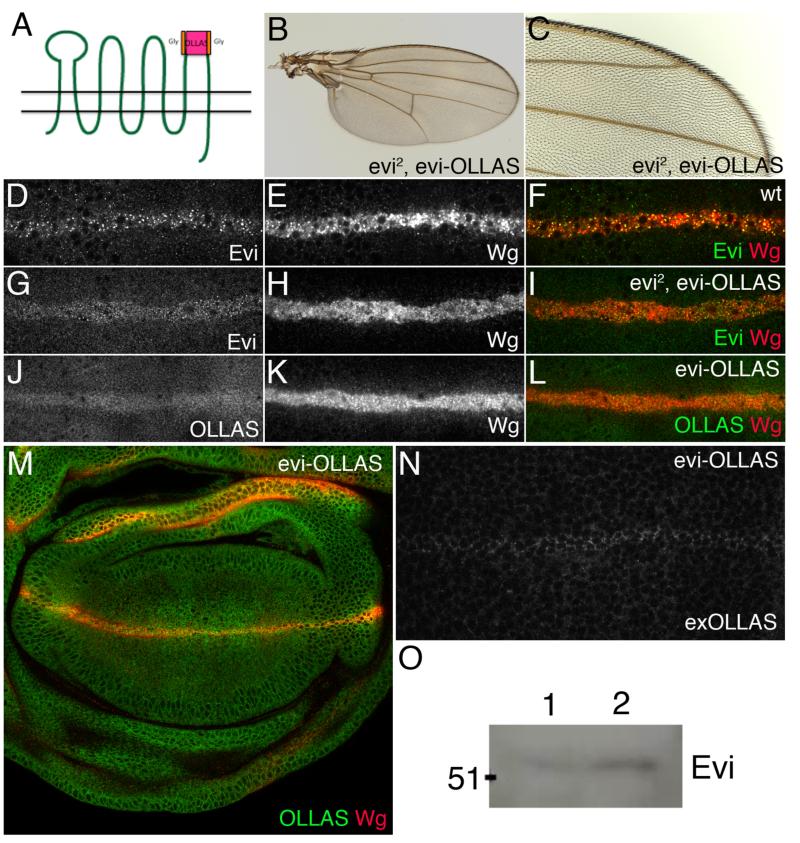
Figure 7. Analysis of Evi secretion in vivo
A. Schematic of Evi protein showing site of OLLAS tag in the fourth extracellular loop. B, C. Wings from evi2 mutant flies, expressing the Evi-OLLAS BAC showing complete rescue of the evi mutant phenotype. D-M. Confocal images of wing imaginal discs from wild type (D-F), evi2, evi-OLLAS (G-I) and evi-OLLAS (J-M) larvae stained with antibodies against Evi (D, F, G, I), Wg (E, F, H, I, K, L, M) and OLLAS (J, L, M). Apical sections showing the Wg expressing cells are shown in panels D-L, while a more basal section of the whole disc is shown in panel M. Evi-OLLAS reproduced the endogenous Evi distribution and colocalises with Wg within Wg expressing cells (compare panel F to panels I and L). N. Extracellular OLLAS staining of wing imaginal disc from Evi-OLLAS larvae shows uniform low levels of staining across the pouch with higher levels on the cell surface of the Wg expressing cells. No gradient of extracellular Evi-OLLAS was observed. O. Western blot of haemolymph from wild type (lane 1) and cg-GAL4 > UAS-evi-V5 expressing (lane 2) larvae shows endogenous Evi is secreted into the larval haemolymph.

References

    1. van Amerongen R, Nusse R. Towards an integrated view of Wnt signaling in development. Development. 2009;136(19):3205–3214. - PubMed
    1. Willert K, Brown JD, Danenberg E, Duncan AW, Weissman IL, Reya T, Yates JR, 3rd, Nusse R. Wnt proteins are lipid-modified and can act as stem cell growth factors. Nature. 2003;423(6938):448–452. - PubMed
    1. Takada R, Satomi Y, Kurata T, Ueno N, Norioka S, Kondoh H, Takao T, Takada S. Monounsaturated fatty acid modification of Wnt protein: its role in Wnt secretion. Dev Cell. 2006;11(6):791–801. - PubMed
    1. Strigini M, Cohen SM. Wingless gradient formation in the Drosophila wing. Current biology: CB. 2000;10(6):293–300. - PubMed
    1. Port F, Basler K. Wnt trafficking: new insights into Wnt maturation, secretion and spreading. Traffic. 2010;11(10):1265–1271. - PubMed

Publication types

MeSH terms

LinkOut - more resources