


Angiopoietin-1 variant reduces LPS-induced microvascular dysfunction in a murine model of sepsis
- PMID: 23036162
- PMCID: PMC3682284
- DOI: 10.1186/cc11666
Angiopoietin-1 variant reduces LPS-induced microvascular dysfunction in a murine model of sepsis
Abstract
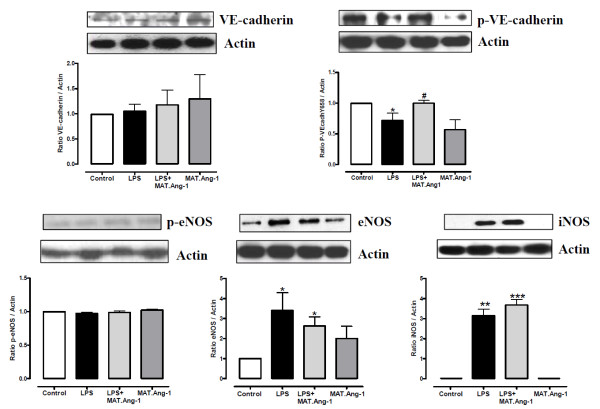
Introduction: Severe sepsis is characterised by intravascular or extravascular infection with microbial agents, systemic inflammation and microcirculatory dysfunction, leading to tissue damage, organ failure and death. The growth factor angiopoietin (Ang-1) has therapeutic potential but recombinant Ang-1 tends to aggregate and has a short half-life in vivo. This study aimed to investigate the acute effects of the more stable Ang-1 variant matrilin-1-angiopoietin-1 (MAT.Ang-1) on the function of the microcirculation in an experimental model of sepsis, and whether any protection by MAT-Ang-1 was associated with modulation of inflammatory cytokines, angiogenic factors or the endothelial nitric oxide synthase (eNOS)-Akt and vascular endothelial (VE)-cadherin pathways.
Methods: Aluminium window chambers were implanted into the dorsal skinfold of male C3H/HeN mice (7 to 10 weeks old) to expose the striated muscle microcirculation. Endotoxemia was induced by intraperitoneal injection of lipopolysaccharide (LPS, 1 mg/kg at 0 and 19 hours). MAT.Ang-1 was administered intravenously 20 hours after the onset of sepsis. Microcirculatory function was evaluated by intravital microscopy and Doppler fluximetry.
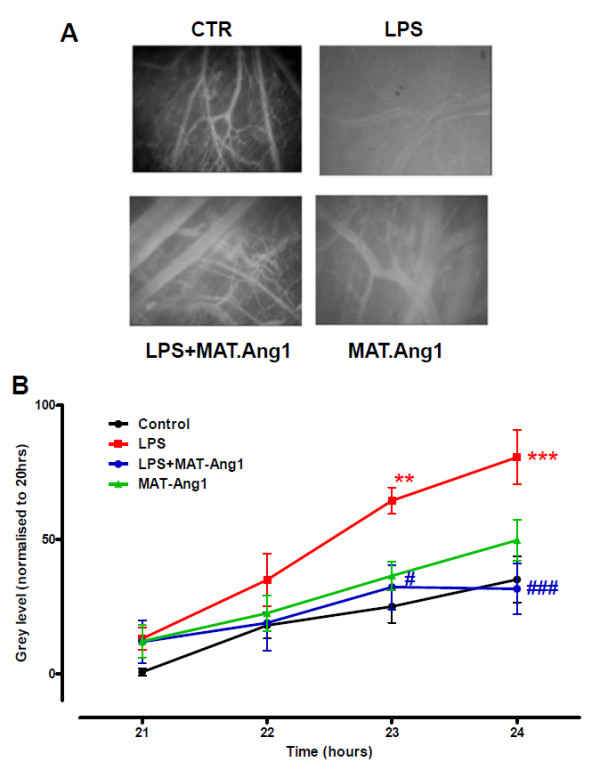
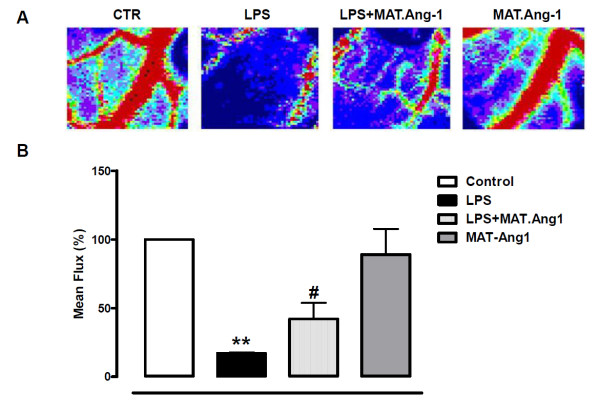
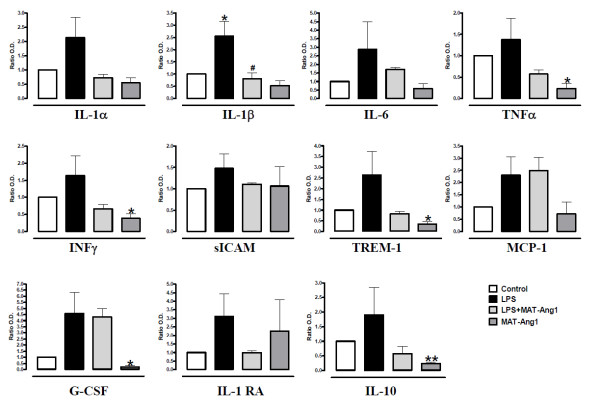
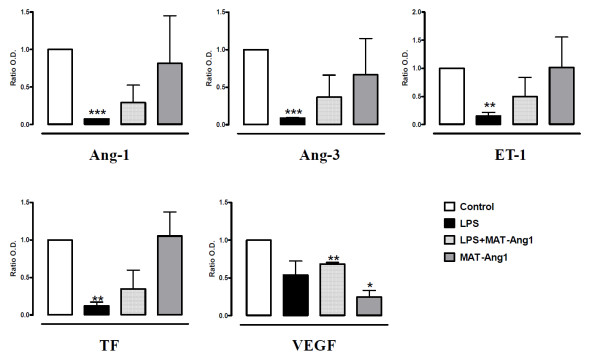
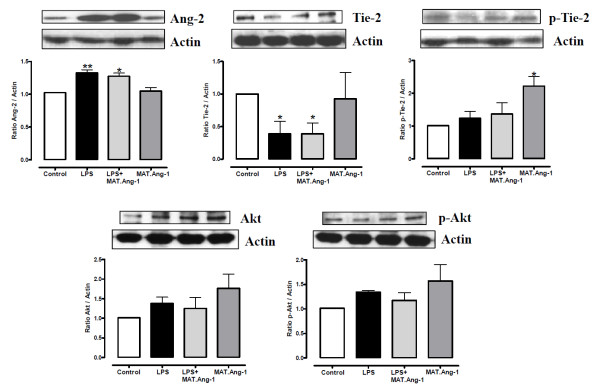
Results: Endotoxemia resulted in macromolecular leak, which was ameliorated by MAT.Ang-1 post-treatment. LPS induced a dramatic reduction in tissue perfusion, which was improved by MAT.Ang-1. Proteome profiler array analysis of skeletal muscle also demonstrated increased inflammatory and reduced angiogenic factors during endotoxemia. MAT.Ang-1 post-treatment reduced the level of IL-1β but did not significantly induce the expression of angiogenic factors. MAT.Ang-1 alone did not induce leak or increase angiogenic factors but did reduce vascular endothelial growth factor expression in controls.
Conclusion: Administration of MAT.Ang-1 after the onset of sepsis protects the microcirculation from endotoxemia-induced vascular dysfunction through reducing inflammation but without pro-angiogenic actions, thus representing a novel, potential pharmacotherapeutic agent for the treatment of sepsis.
Figures
Comment in
-
Fixing the leak: targeting the vascular endothelium in sepsis.Crit Care. 2012 Nov 21;16(6):177. doi: 10.1186/cc11829. Crit Care. 2012. PMID: 23171759 Free PMC article.
-
Unraveling the mechanisms involved in endothelial barrier protective effects of angiopoietin-1 variant MAT.Ang-1.Crit Care. 2012 Nov 27;16(6):466; author reply 466. doi: 10.1186/cc11844. Crit Care. 2012. PMID: 23186009 Free PMC article. No abstract available.
References
Publication types
MeSH terms
Substances
Grants and funding
LinkOut - more resources
Full Text Sources
Other Literature Sources
Medical
Miscellaneous
