


Genetically engineered mouse models and human osteosarcoma
- PMID: 23036272
- PMCID: PMC3523007
- DOI: 10.1186/2045-3329-2-19
Genetically engineered mouse models and human osteosarcoma
Abstract
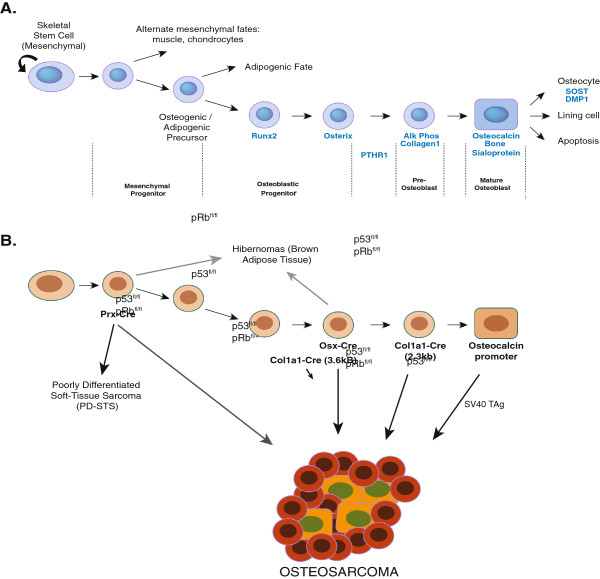
Osteosarcoma is the most common form of bone cancer. Pivotal insight into the genes involved in human osteosarcoma has been provided by the study of rare familial cancer predisposition syndromes. Three kindreds stand out as predisposing to the development of osteosarcoma: Li-Fraumeni syndrome, familial retinoblastoma and RecQ helicase disorders, which include Rothmund-Thomson Syndrome in particular. These disorders have highlighted the important roles of P53 and RB respectively, in the development of osteosarcoma. The association of OS with RECQL4 mutations is apparent but the relevance of this to OS is uncertain as mutations in RECQL4 are not found in sporadic OS. Application of the knowledge or mutations of P53 and RB in familial and sporadic OS has enabled the development of tractable, highly penetrant murine models of OS. These models share many of the cardinal features associated with human osteosarcoma including, importantly, a high incidence of spontaneous metastasis. The recent development of these models has been a significant advance for efforts to improve our understanding of the genetics of human OS and, more critically, to provide a high-throughput genetically modifiable platform for preclinical evaluation of new therapeutics.
Figures
References
-
- Klein MJ, Siegal GP. Osteosarcoma: anatomic and histologic variants. Am J Clin Pathol. 2006;125:555–581. - PubMed
-
- Lamoureux F, Trichet V, Chipoy C, Blanchard F, Gouin F, Redini F. Recent advances in the management of osteosarcoma and forthcoming therapeutic strategies. Expert Rev Anticancer Ther. 2007;7:169–181. - PubMed
-
- Chou AJ, Gorlick R. Chemotherapy resistance in osteosarcoma: current challenges and future directions. Expert Rev Anticancer Ther. 2006;6:1075–1085. - PubMed
-
- Ferguson PC, McLaughlin CE, Griffin AM, Bell RS, Deheshi BM, Wunder JS. Clinical and functional outcomes of patients with a pathologic fracture in high-grade osteosarcoma. J Surg Oncol. 2010;102:120–124. - PubMed
LinkOut - more resources
Full Text Sources
Research Materials
Miscellaneous
