


Temporal regularity determines the impact of electrical stimulation on tactile reactivity and response to capsaicin in spinally transected rats
- PMID: 23036621
- PMCID: PMC4458372
- DOI: 10.1016/j.neuroscience.2012.09.054
Temporal regularity determines the impact of electrical stimulation on tactile reactivity and response to capsaicin in spinally transected rats
Abstract
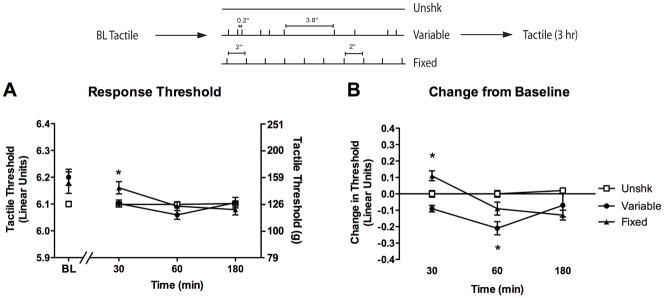
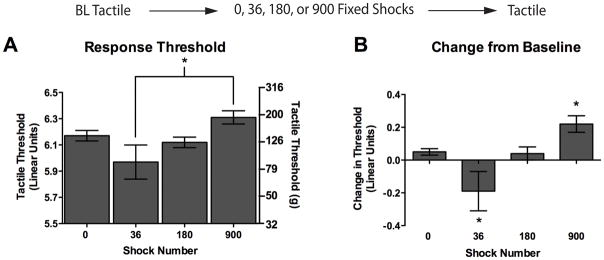
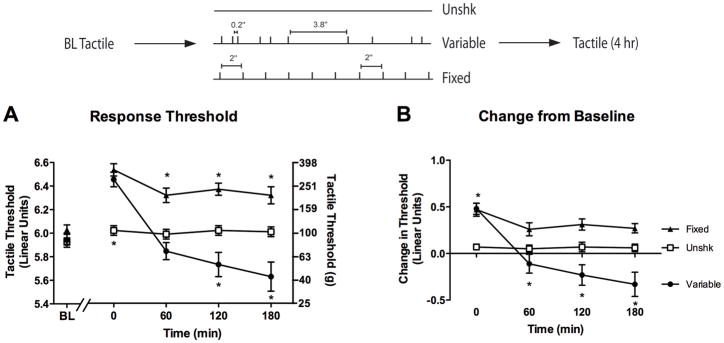
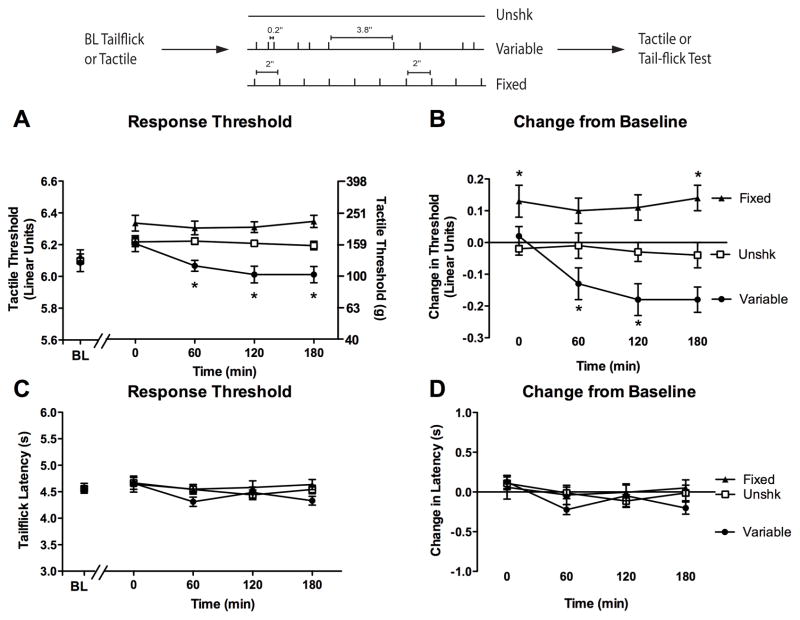
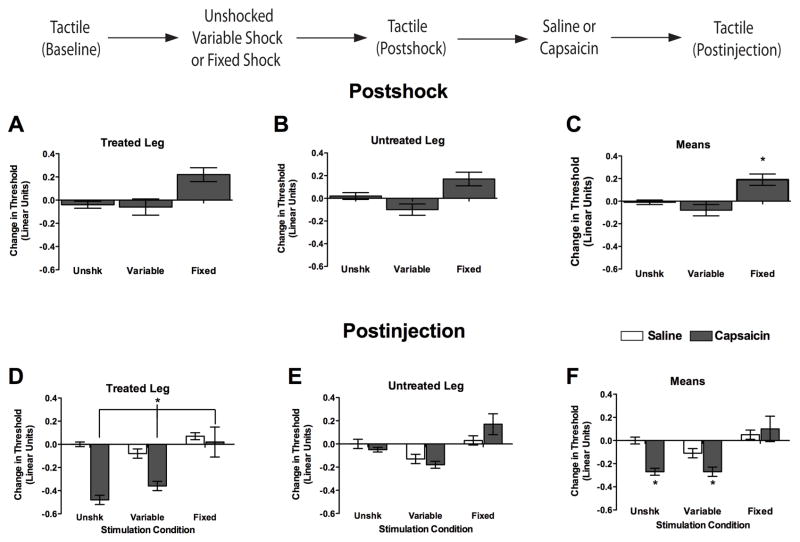
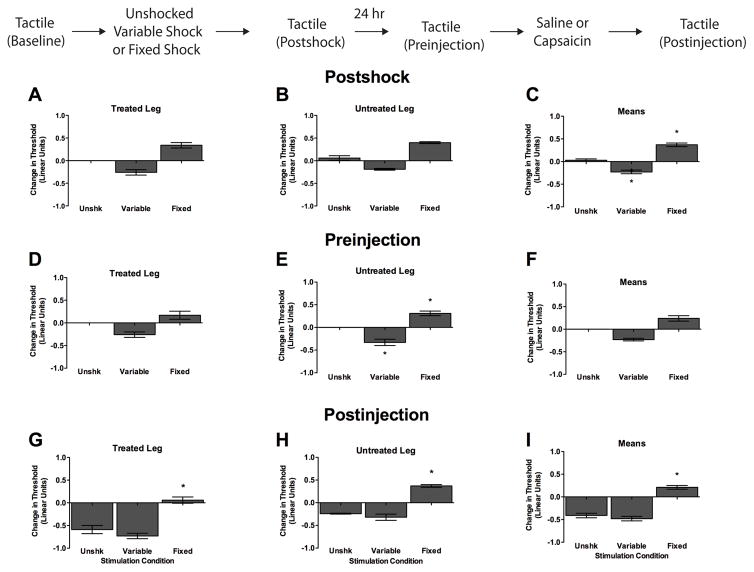
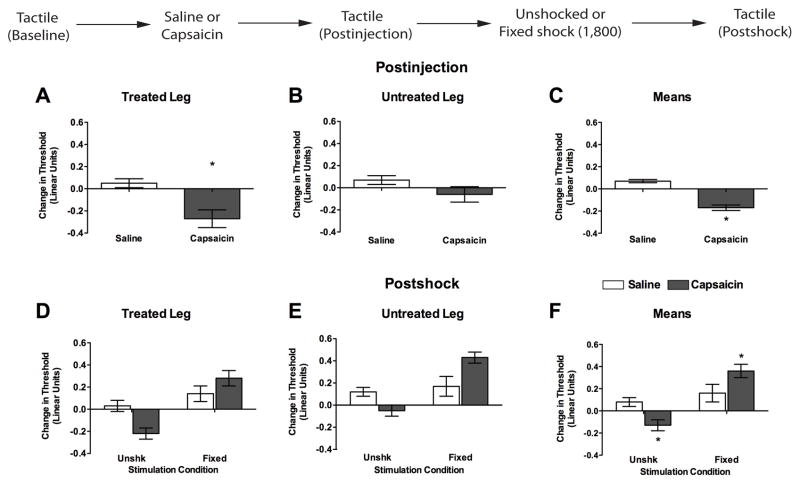
Nociceptive plasticity and central sensitization within the spinal cord depend on neurobiological mechanisms implicated in learning and memory in higher neural systems, suggesting that the factors that impact brain-mediated learning and memory could modulate how stimulation affects spinal systems. One such factor is temporal regularity (predictability). The present paper shows that intermittent hindleg shock has opposing effects in spinally transected rats depending upon whether shock is presented in a regular or irregular (variable) manner. Variable intermittent legshock (900 shocks) enhanced mechanical reactivity to von Frey stimuli (hyperreactivity), whereas 900 fixed-spaced legshocks produced hyporeactivity. The impact of fixed-spaced shock depended upon the duration of exposure; a brief exposure (36 shocks) induced hyperreactivity whereas an extended exposure (900 shocks) produced hyporeactivity. The enhanced reactivity observed after variable shock was most evident 60-180 min after treatment. Fixed and variable intermittent stimulation applied to the sciatic nerve, or the tail, yielded a similar pattern of results. Stimulation had no effect on thermal reactivity. Exposure to fixed-spaced shock, but not variable shock, attenuated the enhanced mechanical reactivity (EMR) produced by treatment with hindpaw capsaicin. The effect of fixed-spaced stimulation lasted 24h. Treatment with fixed-spaced shock also attenuated the maintenance of capsaicin-induced EMR. The results show that variable intermittent shock enhances mechanical reactivity, while an extended exposure to fixed-spaced shock has the opposite effect on mechanical reactivity and attenuates capsaicin-induced EMR.
Copyright © 2012 IBRO. Published by Elsevier Ltd. All rights reserved.
Figures
References
-
- Ainsworth L, Budelier K, Clinesmith M, Fiedler A, Landstrom R, Leeper BJ, Moeller L, Mutch S, O’Dell K, Ross J, Radhakrishnan R, Sluka KA. Transcutaneous electrical nerve stimulation (TENS) reduces chronic hyperalgesia induced by muscle inflammation. Pain. 2006;120:182–187. - PubMed
-
- Baumann TK, Simone DA, Shain CN, LaMotte RH. Neurogenic hyperalgesia: the search for the primary cutaneous afferent fibers that contribute to capsaicin-induced pain and hyperalgesia. J Neurophysiol. 1991;66:212–227. - PubMed
Publication types
MeSH terms
Substances
Grants and funding
LinkOut - more resources
Full Text Sources
Medical
