Opiate substitution treatment and HIV transmission in people who inject drugs: systematic review and meta-analysis
- PMID: 23038795
- PMCID: PMC3489107
- DOI: 10.1136/bmj.e5945
Opiate substitution treatment and HIV transmission in people who inject drugs: systematic review and meta-analysis
Abstract
Objective: To quantify the effect of opiate substitution treatment in relation to HIV transmission among people who inject drugs.
Design: Systematic review and meta-analysis of prospective published and unpublished observational studies.
Data sources: Search of Medline, Embase, PsychINFO, and the Cochrane Library from the earliest year to 2011 without language restriction.
Review methods: We selected studies that directly assessed the impact of opiate substitution treatment in relation to incidence of HIV and studies that assessed incidence of HIV in people who inject drugs and that might have collected data regarding exposure to opiate substitution treatment but not have reported it. Authors of these studies were contacted. Data were extracted by two reviewers and pooled in a meta-analysis with a random effects model.
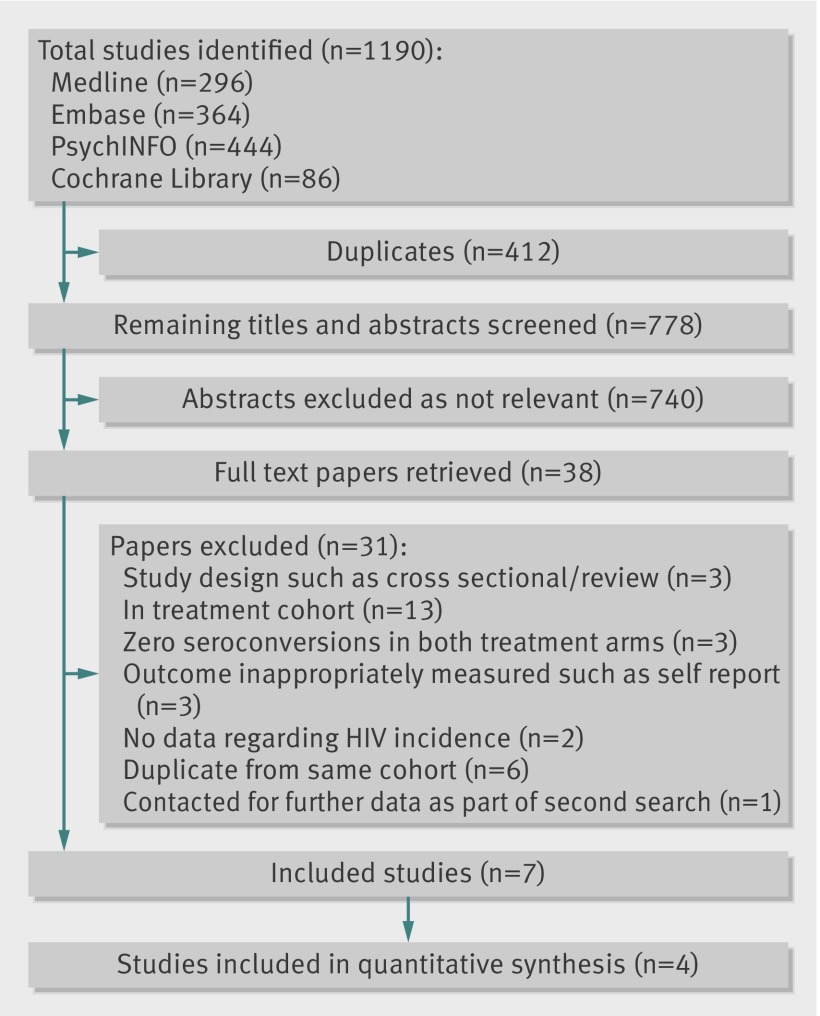
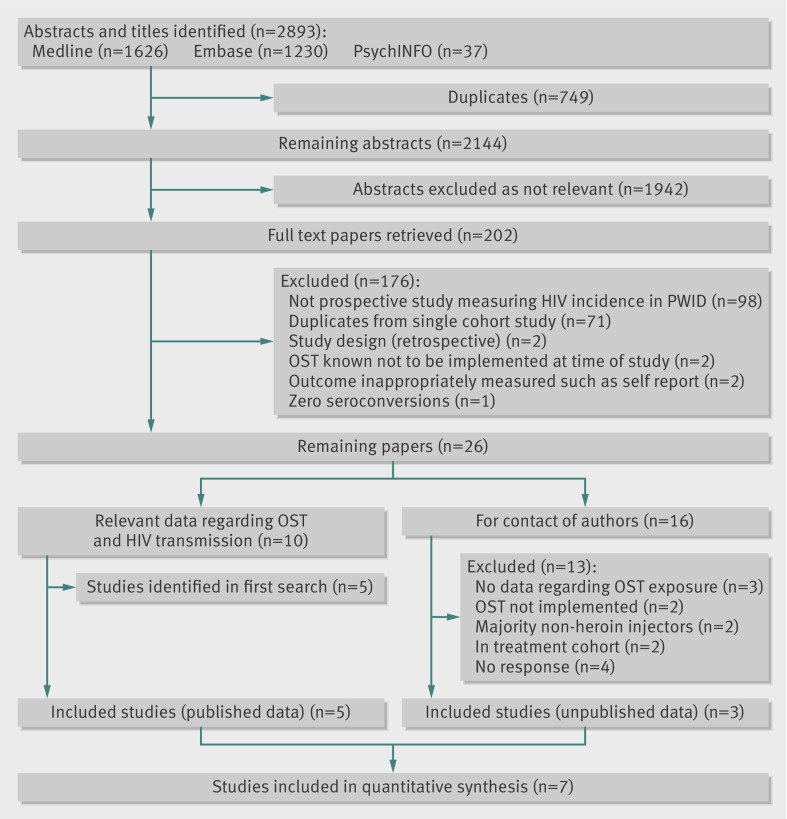
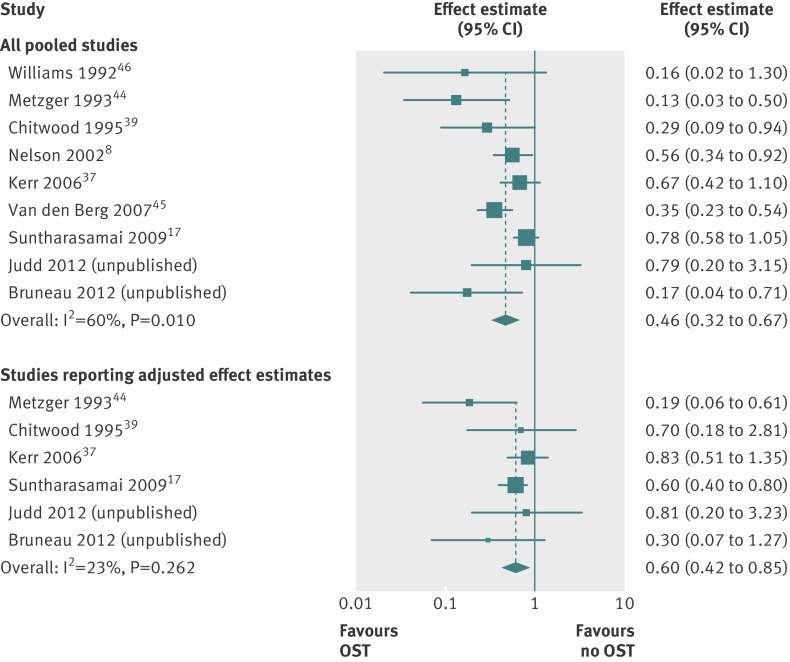
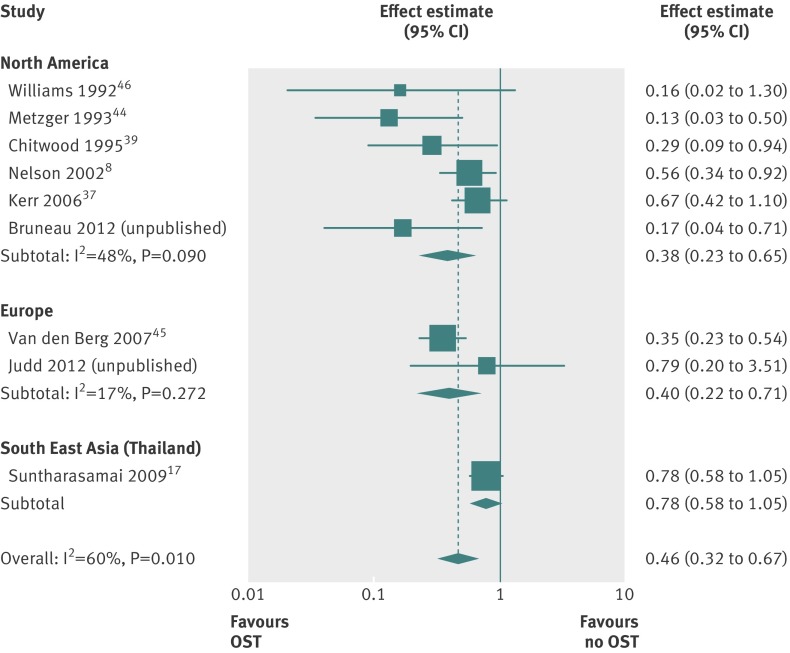
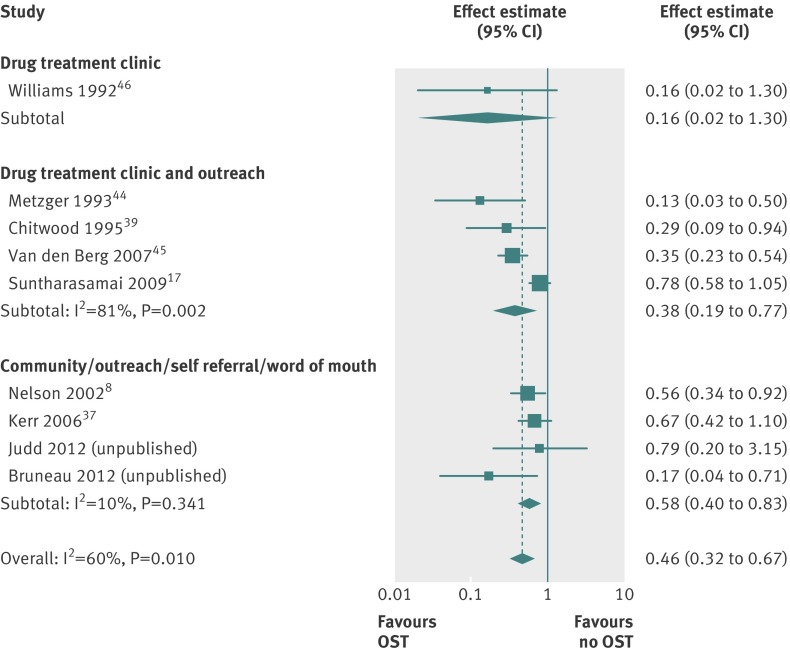
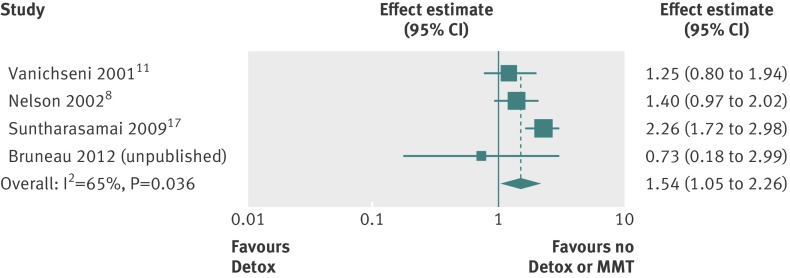
Results: Twelve published studies that examined the impact of opiate substitution treatment on HIV transmission met criteria for inclusion, and unpublished data were obtained from three additional studies. All included studies examined methadone maintenance treatment. Data from nine of these studies could be pooled, including 819 incident HIV infections over 23,608 person years of follow-up. Opiate substitution treatment was associated with a 54% reduction in risk of HIV infection among people who inject drugs (rate ratio 0.46, 95% confidence interval 0.32 to 0.67; P<0.001). There was evidence of heterogeneity between studies (I(2)=60%, χ(2)=20.12, P=0.010), which could not be explained by geographical region, site of recruitment, or the provision of incentives. There was weak evidence for greater benefit associated with longer duration of exposure to opiate substitution treatment.
Conclusion: Opiate substitution treatment provided as maintenance therapy is associated with a reduction in the risk of HIV infection among people who inject drugs. These findings, however, could reflect comparatively high levels of motivation to change behaviour and reduce injecting risk behaviour among people who inject drugs who are receiving opiate substitution treatment.
Conflict of interest statement
Competing interests: All authors have completed the ICMJE uniform disclosure form at
Figures
Comment in
-
The role of opioid substitution treatment in reducing HIV transmission.BMJ. 2012 Oct 3;345:e6425. doi: 10.1136/bmj.e6425. BMJ. 2012. PMID: 23038796 No abstract available.
-
Opioid substitution therapy is associated with decreased HIV transmission among people who inject drugs.Evid Based Med. 2013 Oct;18(5):177-8. doi: 10.1136/eb-2012-101125. Epub 2013 Jan 17. Evid Based Med. 2013. PMID: 23328967 No abstract available.
References
-
- UNAIDS, Health Canada, Open Society Institute, Canadian International Development Agency. The Warsaw declaration: a framework for effective action on HIV/AIDS and injecting drug use. Second international policy dialogue on HIV/AIDS. 2003. - PubMed
-
- Rhodes T, Ball A, Stimson GV, Kobyshcha Y, Fitch C, Pokrovsky V, et al. HIV infection associated with drug injecting in the newly independent states, eastern Europe: the social and economic context of epidemics. Addiction 1999;94:1323-6. - PubMed
-
- Mathers BM, Degenhardt L, Phillips B, Wiessing L, Hickman M, Strathdee SA, et al. Global epidemiology of injecting drug use and HIV among people who inject drugs: a systematic review. Lancet 2008;372:1733-45. - PubMed
Publication types
MeSH terms
Substances
Grants and funding
LinkOut - more resources
Full Text Sources
Medical
Miscellaneous