


Identification of wild soybean miRNAs and their target genes responsive to aluminum stress
- PMID: 23040172
- PMCID: PMC3519564
- DOI: 10.1186/1471-2229-12-182
Identification of wild soybean miRNAs and their target genes responsive to aluminum stress
Abstract
Background: MicroRNAs (miRNAs) play important regulatory roles in development and stress response in plants. Wild soybean (Glycine soja) has undergone long-term natural selection and may have evolved special mechanisms to survive stress conditions as a result. However, little information about miRNAs especially miRNAs responsive to aluminum (Al) stress is available in wild soybean.
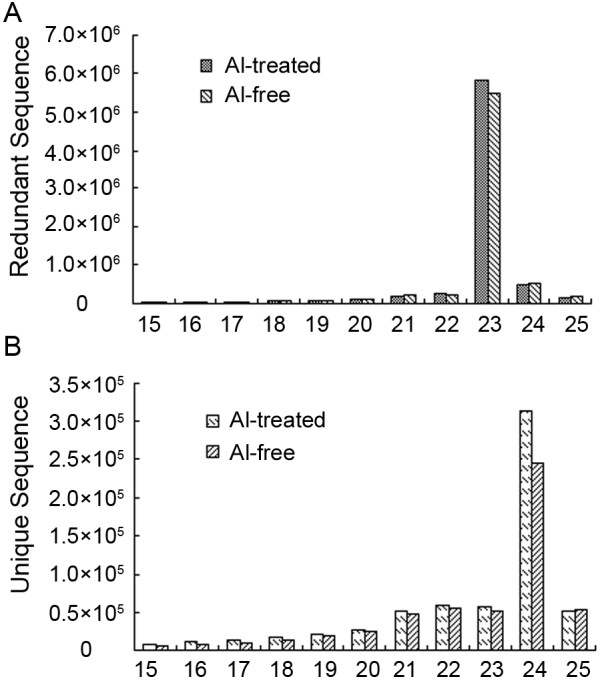
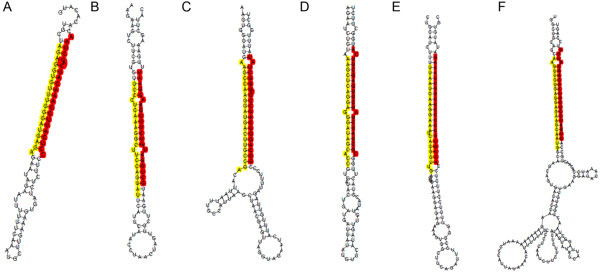
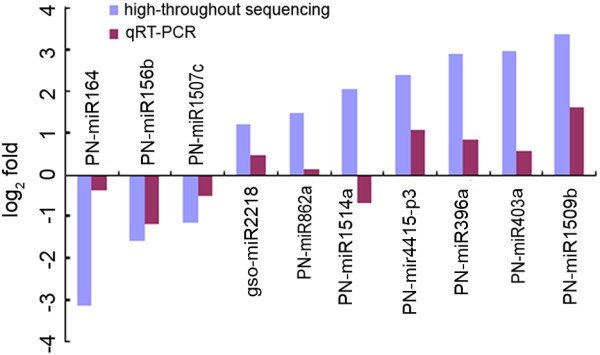
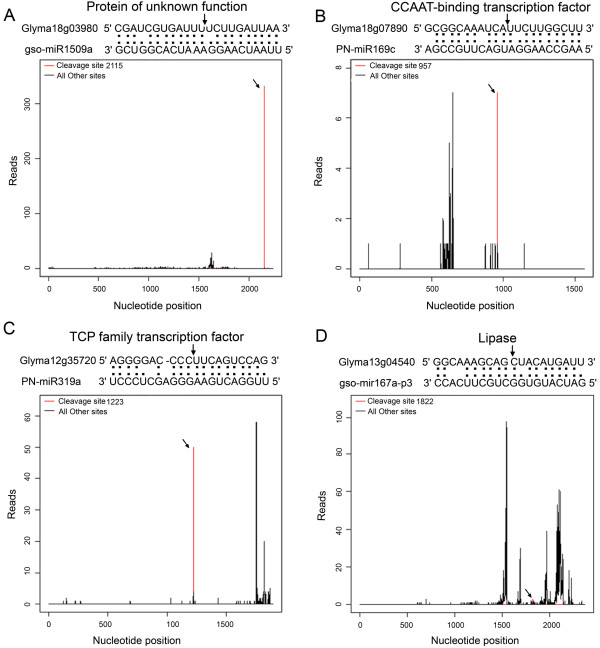
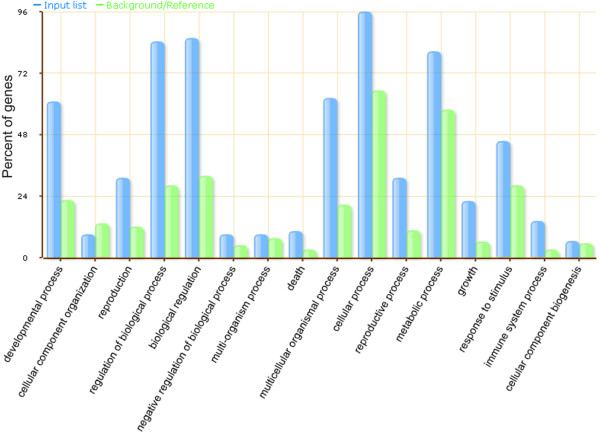
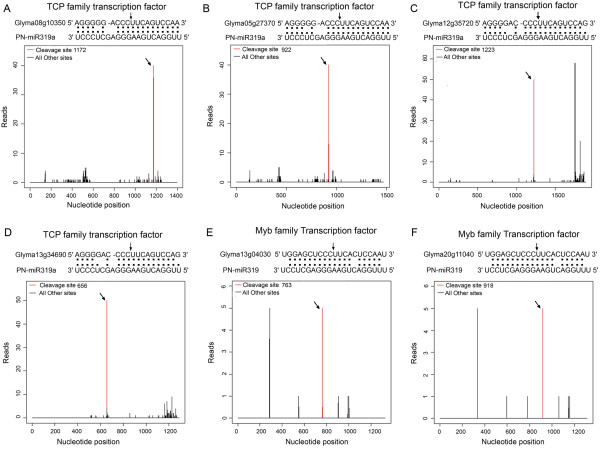
Results: Two small RNA libraries and two degradome libraries were constructed from the roots of Al-treated and Al-free G. soja seedlings. For miRNA identification, a total of 7,287,655 and 7,035,914 clean reads in Al-treated and Al-free small RNAs libraries, respectively, were generated, and 97 known miRNAs and 31 novel miRNAs were identified. In addition, 49 p3 or p5 strands of known miRNAs were found. Among all the identified miRNAs, the expressions of 30 miRNAs were responsive to Al stress. Through degradome sequencing, 86 genes were identified as targets of the known miRNAs and five genes were found to be the targets of the novel miRNAs obtained in this study. Gene ontology (GO) annotations of target transcripts indicated that 52 target genes cleaved by conserved miRNA families might play roles in the regulation of transcription. Additionally, some genes, such as those for the auxin response factor (ARF), domain-containing disease resistance protein (NB-ARC), leucine-rich repeat and toll/interleukin-1 receptor-like protein (LRR-TIR) domain protein, cation transporting ATPase, Myb transcription factors, and the no apical meristem (NAM) protein, that are known to be responsive to stress, were found to be cleaved under Al stress conditions.
Conclusions: A number of miRNAs and their targets were detected in wild soybean. Some of them that were responsive to biotic and abiotic stresses were regulated by Al stress. These findings provide valuable information to understand the function of miRNAs in Al tolerance.
Figures
References
-
- Hymowitz T. On the domestication of the soybean. Economic Botany. 1970;24:408–421.
-
- Ge Y, Zhu Y, Lv D, Dong T, Wang W, Tan S, Liu C, Zou P. Research on responses of wild soybean to alkaline stress. Pratacultural Science. 2009;26:47–52.
-
- Aladdin H, Xu D. Conserved salt tolerance quantitative trait locus (QTL) in wild and cultivated soybeans. Breeding Science. 2008;58:355–359.
-
- Tuyen D, Lal S, Xu D. Identification of a major QTL allele from wild soybean (Glycihe soja Sieb. & Zucc.) for increasing alkaline salt tolerance in soybean. Theor Appl Genet. 2010;121:229–236. - PubMed
Publication types
MeSH terms
Substances
LinkOut - more resources
Full Text Sources
Miscellaneous
