


Intratunical injection of human adipose tissue-derived stem cells prevents fibrosis and is associated with improved erectile function in a rat model of Peyronie's disease
- PMID: 23040209
- PMCID: PMC4029115
- DOI: 10.1016/j.eururo.2012.09.034
Intratunical injection of human adipose tissue-derived stem cells prevents fibrosis and is associated with improved erectile function in a rat model of Peyronie's disease
Erratum in
- Eur Urol. 2013 Jul;64(1):e21
Abstract
Background: Peyronie's disease (PD) is a connective tissue disorder of the tunica albuginea (TA). Currently, no gold standard has been developed for the treatment of the disease in its active phase.
Objective: To test the effects of a local injection of adipose tissue-derived stem cells (ADSCs) in the active phase of a rat model of PD on the subsequent development of fibrosis and elastosis of the TA and underlying erectile tissue.
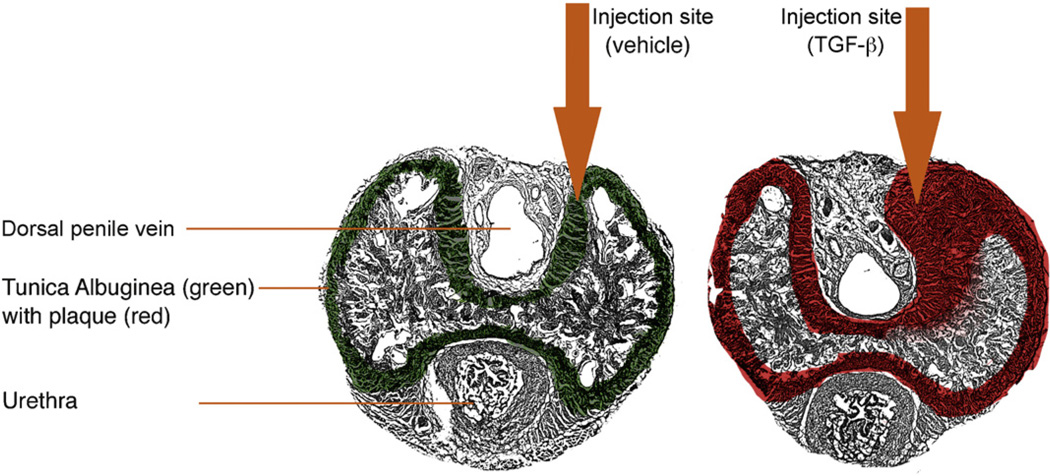
Design, setting, and participants: A total of 27 male 12-wk-old Sprague-Dawley rats were divided in three equal groups and underwent injection of vehicle (sham), 0.5-μg [corrected] transforming growth factor (TGF)-β1 in a 50-μl vehicle in either a PD or a PD plus ADSC group in the dorsal aspect of the TA.
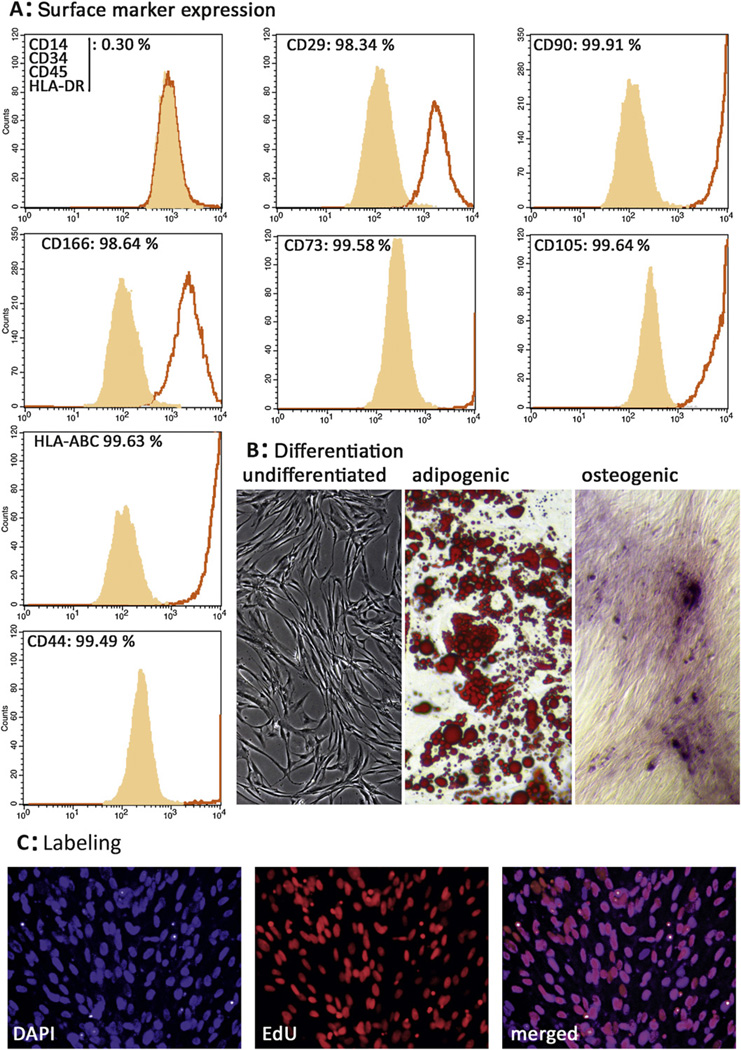
Intervention: The sham and PD groups were treated 1 d after TGF-β1 injection with intralesional treatment of vehicle, and the PD plus ADSC group received 1 million human-labeled ADSCs in the 50-μl vehicle. Five weeks after treatment, six rats per group underwent erectile function measurement. Following euthanasia, penises were harvested for histology and Western blot.
Outcome measurements and statistical analysis: The ratio of intracavernous pressure to mean arterial pressure (ICP/MAP) upon cavernous nerve stimulation, elastin, and collagen III protein expression and histomorphometric analysis of the penis. Statistical analysis was performed by analysis of variance followed by the Tukey-Kramer test for post hoc comparisons or the Mann-Whitney test when applicable.
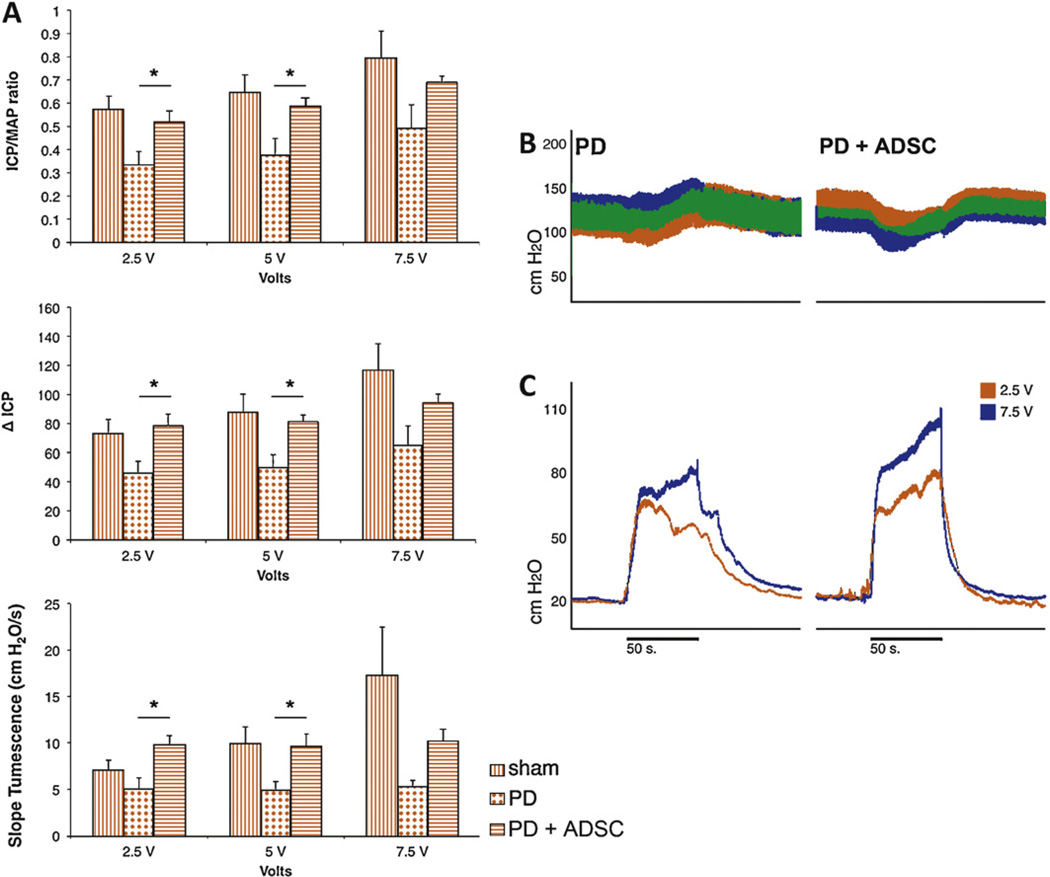
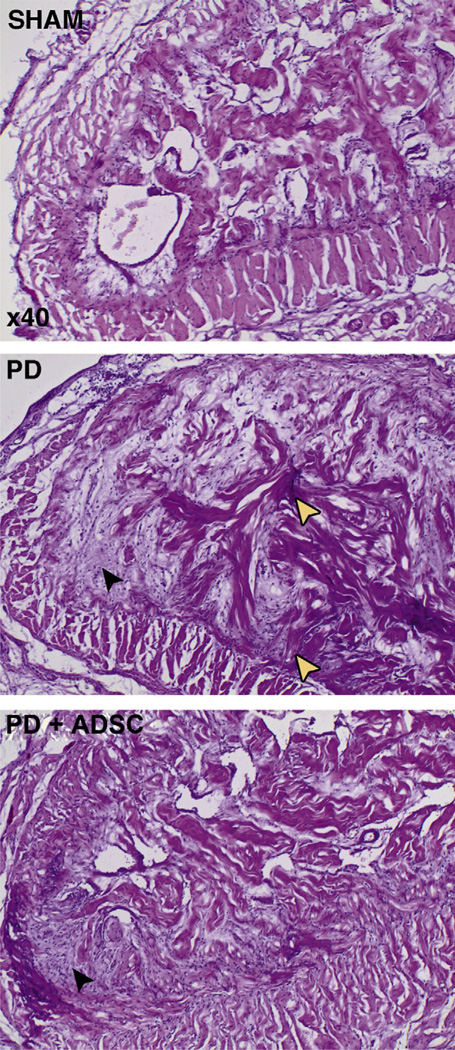
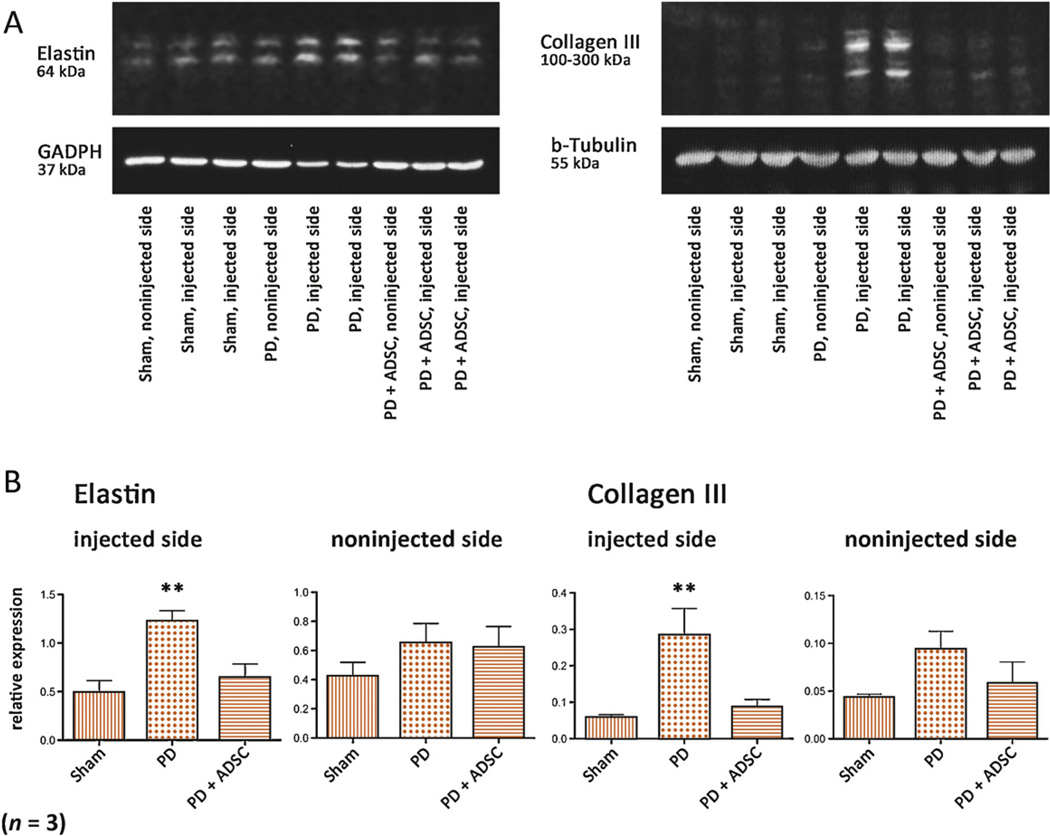
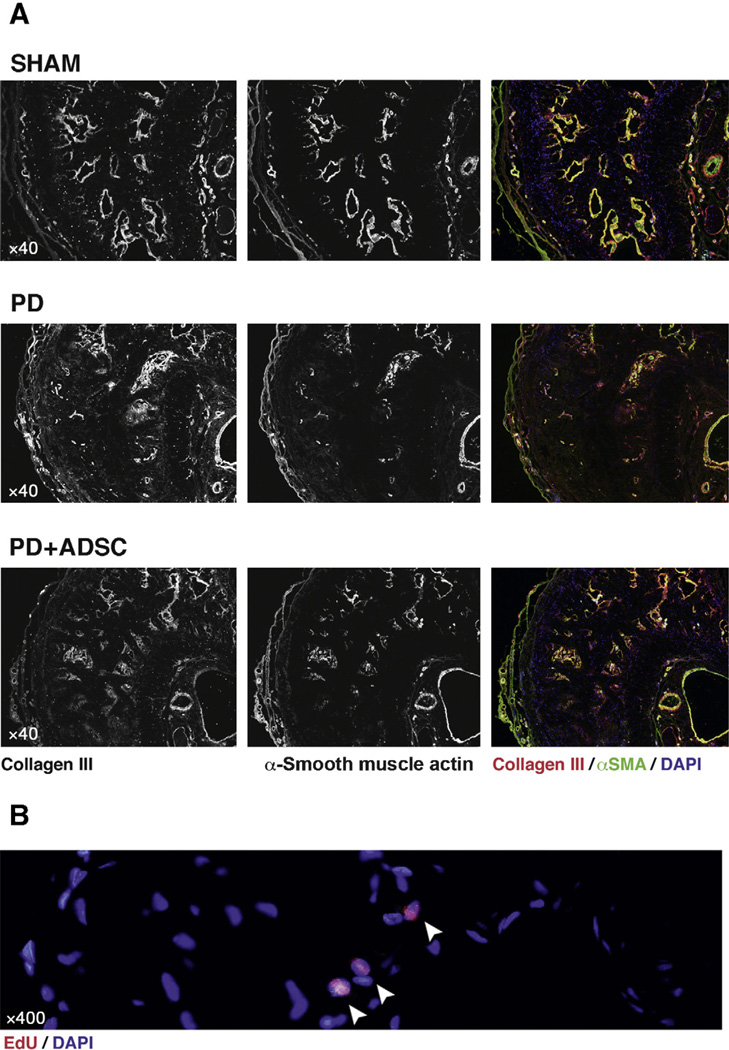
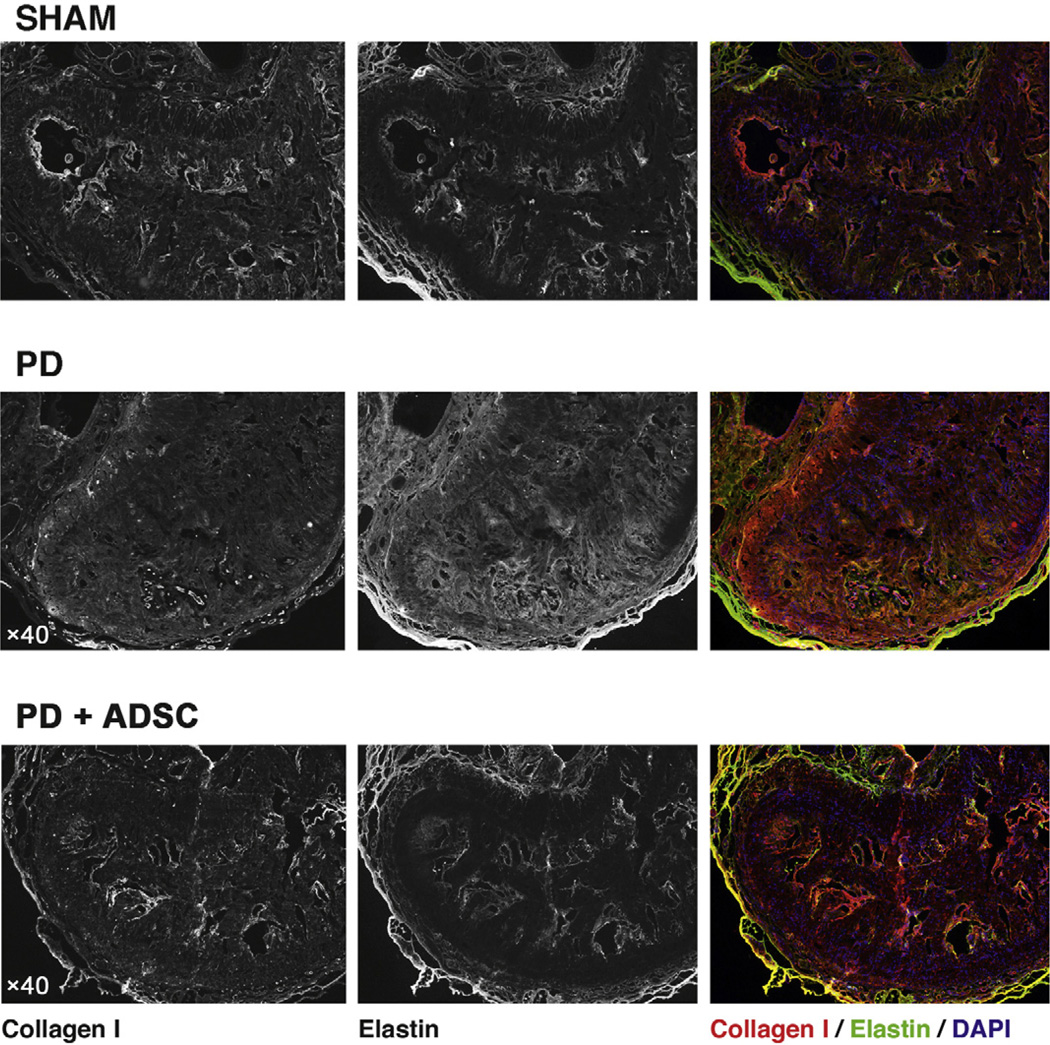
Results and limitations: Erectile function significantly improved after ADSC treatment (ICP/MAP 0.37 in PD vs 0.59 in PD plus ADSC at 5-V stimulation; p=0.03). PD animals developed areas of fibrosis and elastosis with a significant upregulation of collagen III and elastin protein expression. These fibrotic changes were prevented by ADSC treatment.
Conclusions: This study is the first to test stem cell therapy in an animal model of PD. Injection of ADSCs into the TA during the active phase of PD prevents the formation of fibrosis and elastosis in the TA and corpus cavernosum.
Copyright © 2012 European Association of Urology. Published by Elsevier B.V. All rights reserved.
Conflict of interest statement
Figures
Comment in
-
Adipose-derived stem cells for the treatment of Peyronie's disease?Eur Urol. 2013 Mar;63(3):561-2. doi: 10.1016/j.eururo.2012.10.049. Epub 2012 Nov 5. Eur Urol. 2013. PMID: 23149148 Free PMC article. No abstract available.
References
-
- Lin CS, Lin G, Wang Z, Maddah SA, Lue TF. Upregulation of monocyte chemoattractant protein 1 and effects of transforming growth factor-beta 1 in Peyronie’s disease. Biochem Biophys Res Commun. 2002;295:1014–1019. - PubMed
-
- Brock G, Hsu GL, Nunes L, von Heyden B, Lue TF. The anatomy of the tunica albuginea in the normal penis and Peyronie’s disease. J Urol. 1997;157:276–281. - PubMed
-
- Hatzimouratidis K, Eardley I, Giuliano F, et al. Guidelines on penile curvature. Eur Urol. 2012;62:543–552. - PubMed
-
- Ferretti L, Giuliani M, Bessède T, et al. Tissue engineering for penile surgery: comparative study of noncellular and cell-seeded synthetic grafts for tunica albuginea replacement. J Sex Med. 2012;9:625–631. - PubMed
Publication types
MeSH terms
Substances
Grants and funding
LinkOut - more resources
Full Text Sources
Other Literature Sources
Medical
