


Characteristics of congenital hepatic fibrosis in a large cohort of patients with autosomal recessive polycystic kidney disease
- PMID: 23041322
- PMCID: PMC4162098
- DOI: 10.1053/j.gastro.2012.09.056
Characteristics of congenital hepatic fibrosis in a large cohort of patients with autosomal recessive polycystic kidney disease
Abstract
Background & aims: Autosomal recessive polycystic kidney disease (ARPKD), the most common ciliopathy of childhood, is characterized by congenital hepatic fibrosis and progressive cystic degeneration of kidneys. We aimed to describe congenital hepatic fibrosis in patients with ARPKD, confirmed by detection of mutations in PKHD1.
Methods: Patients with ARPKD and congenital hepatic fibrosis were evaluated at the National Institutes of Health from 2003 to 2009. We analyzed clinical, molecular, and imaging data from 73 patients (age, 1-56 years; average, 12.7 ± 13.1 years) with kidney and liver involvement (based on clinical, imaging, or biopsy analyses) and mutations in PKHD1.
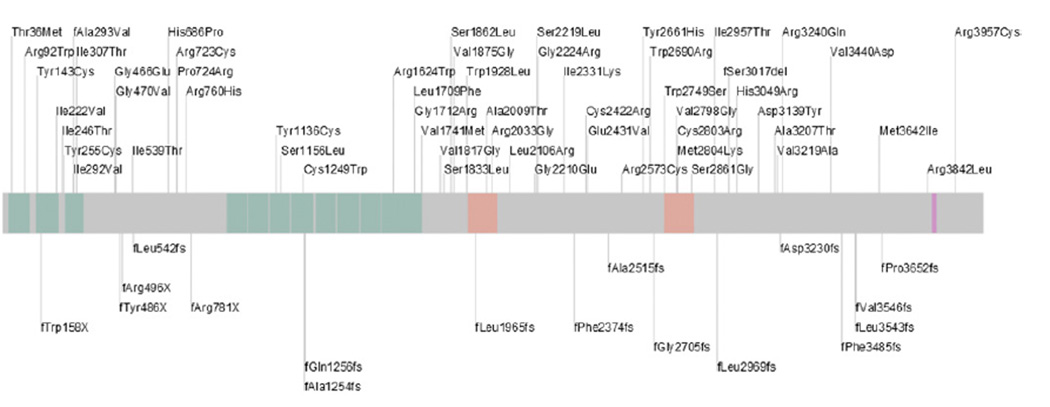
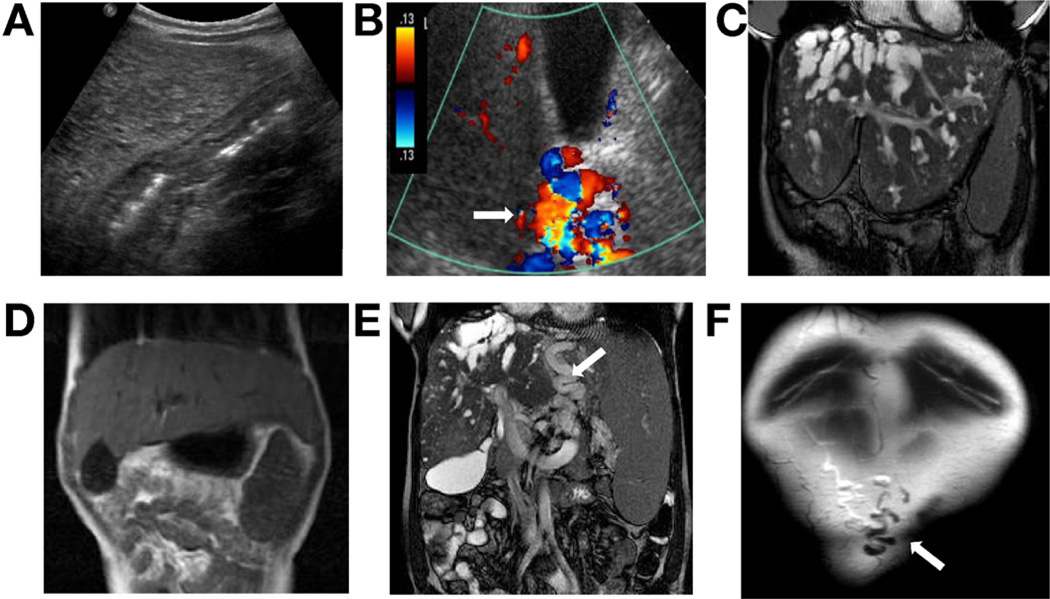
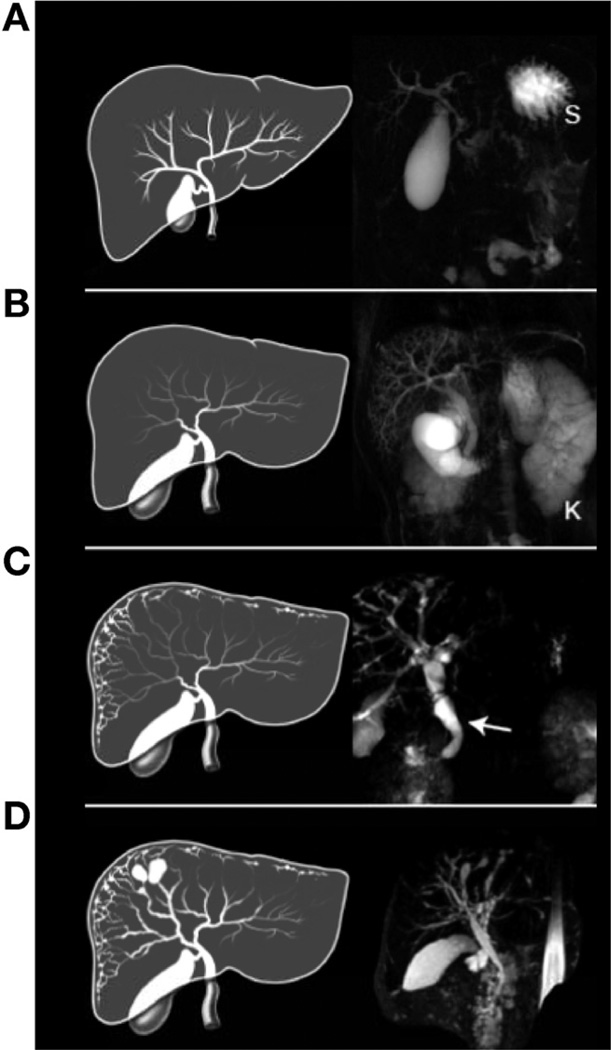
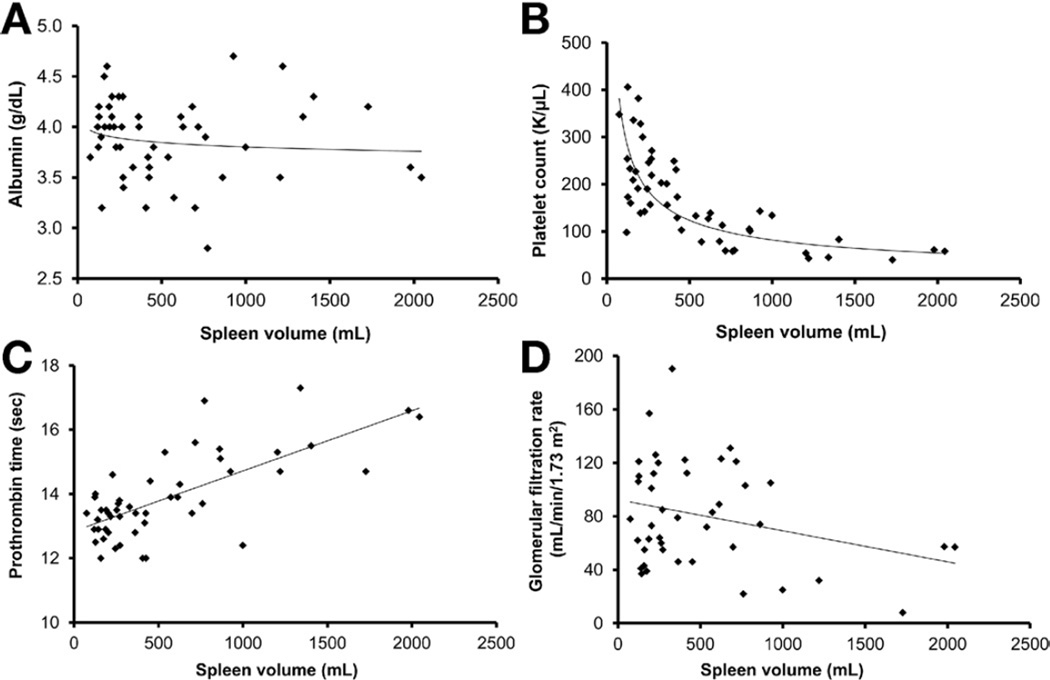
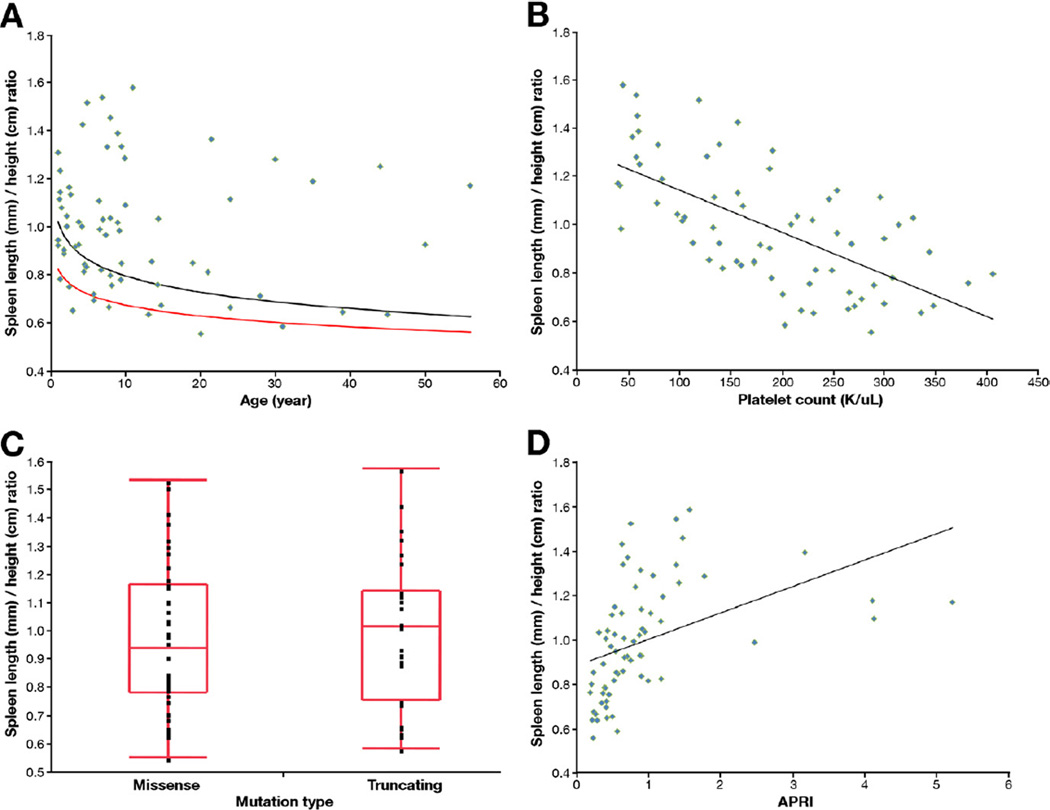
Results: Initial symptoms were liver related in 26% of patients, and others presented with kidney disease. One patient underwent liver and kidney transplantation, and 10 others received kidney transplants. Four presented with cholangitis and one with variceal bleeding. Sixty-nine percent of patients had enlarged left lobes on magnetic resonance imaging, 92% had increased liver echogenicity on ultrasonography, and 65% had splenomegaly. Splenomegaly started early in life; 60% of children younger than 5 years had enlarged spleens. Spleen volume had an inverse correlation with platelet count and prothrombin time but not with serum albumin level. Platelet count was the best predictor of spleen volume (area under the curve of 0.88905), and spleen length corrected for patient's height correlated inversely with platelet count (R(2) = 0.42, P < .0001). Spleen volume did not correlate with renal function or type of PKHD1 mutation. Twenty-two of 31 patients who underwent endoscopy were found to have varices. Five had variceal bleeding, and 2 had portosystemic shunts. Forty-percent had Caroli syndrome, and 30% had an isolated dilated common bile duct.
Conclusions: Platelet count is the best predictor of the severity of portal hypertension, which has early onset but is underdiagnosed in patients with ARPKD. Seventy percent of patients with ARPKD have biliary abnormalities. Kidney and liver disease are independent, and variability in severity is not explainable by type of PKHD1 mutation; ClinicalTrials.gov number, NCT00068224.
Copyright © 2013 AGA Institute. Published by Elsevier Inc. All rights reserved.
Conflict of interest statement
Conflicts of interest
The authors disclose no conflicts.
Figures
Comment in
-
Autosomal-recessive polycystic kidney disease gets more complex.Gastroenterology. 2013 May;144(5):1155-6. doi: 10.1053/j.gastro.2013.02.046. Epub 2013 Mar 22. Gastroenterology. 2013. PMID: 23523842 No abstract available.
-
Reply: To PMID 23041322.Gastroenterology. 2013 May;144(5):1156-7. doi: 10.1053/j.gastro.2013.03.041. Epub 2013 Mar 23. Gastroenterology. 2013. PMID: 23528665 No abstract available.
References
-
- Zerres K, Rudnik-Schoneborn S, Deget F, et al. Autosomal recessive polycystic kidney disease in 115 children: clinical presentation, course and influence of gender. Arbeitsgemeinschaft fur Padiatrische, Nephrologie. Acta Paediatr. 1996;85:437–445. - PubMed
-
- Capisonda R, Phan V, Traubuci J, et al. Autosomal recessive polycystic kidney disease: outcomes from a single-center experience. Pediatr Nephrol. 2003;18:119–126. - PubMed
-
- Guay-Woodford LM, Desmond RA. Autosomal recessive polycystic kidney disease: the clinical experience in North America. Pediatrics. 2003;111:1072–1080. - PubMed
-
- Gunay-Aygun M, Heller T, Gahl WA. GeneReviews at GeneTests: Medical Genetics Information Resource. Seattle, WA: University of Washington; 2008. Congenital hepatic fibrosis overview. [database online] http://www.genetests.org. - PubMed
Publication types
MeSH terms
Substances
Associated data
Grants and funding
LinkOut - more resources
Full Text Sources
Other Literature Sources
Medical
