Platelets in lung biology
- PMID: 23043249
- PMCID: PMC3670819
- DOI: 10.1146/annurev-physiol-030212-183752
Platelets in lung biology
Abstract
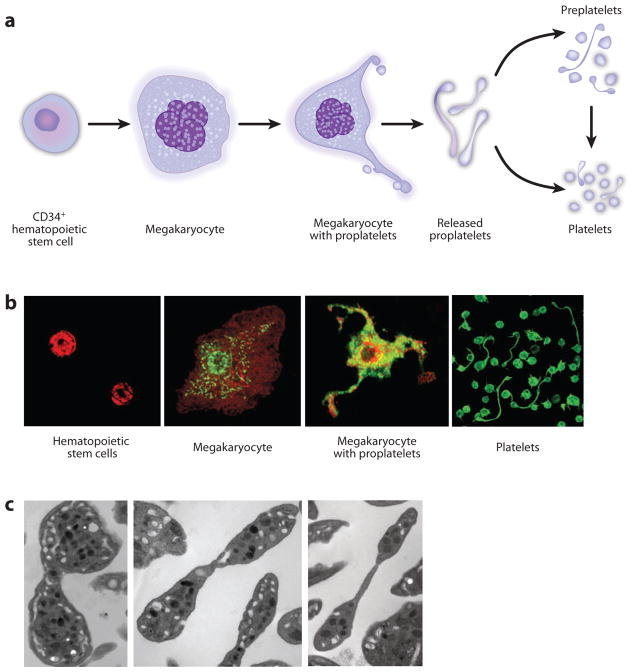
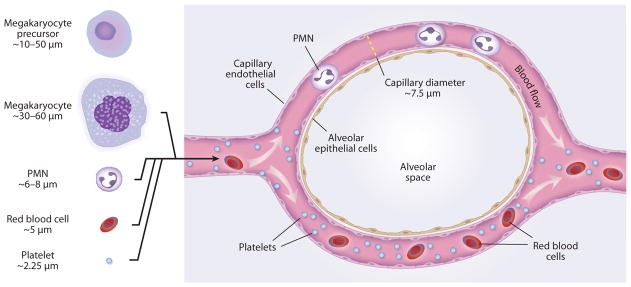
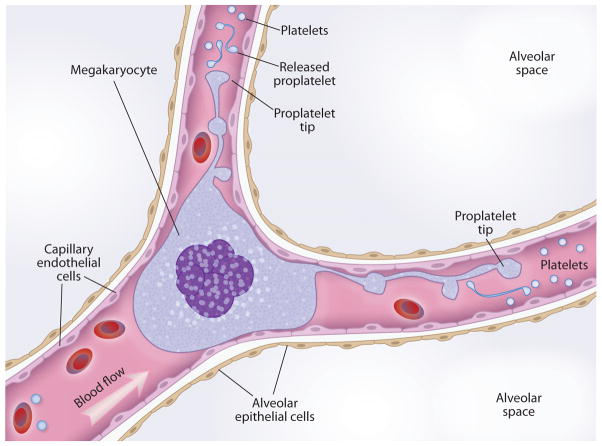
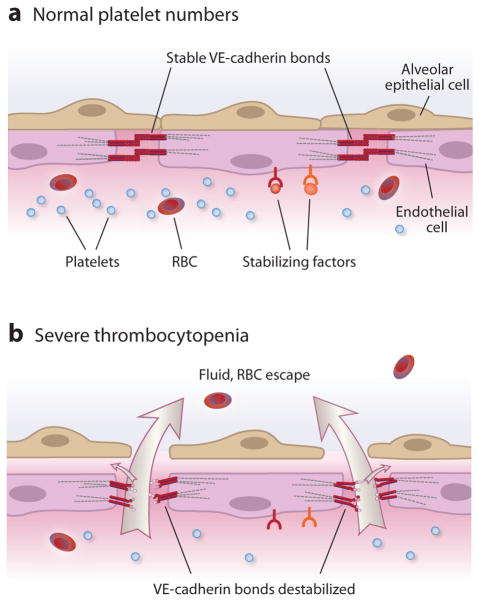
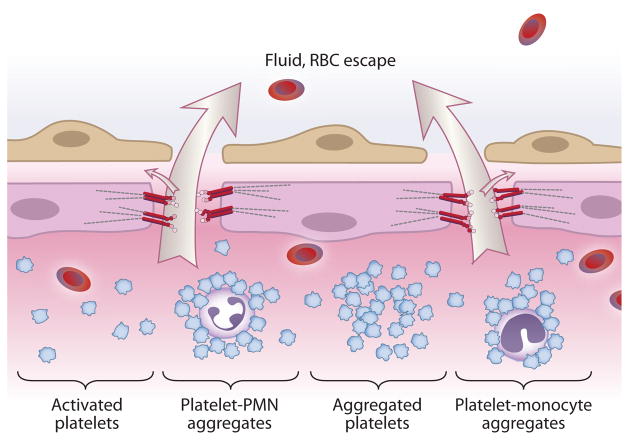
Platelets and the lungs have an intimate relationship. Platelets are anucleate mammalian blood cells that continuously circulate through pulmonary vessels and that have major effector activities in hemostasis and inflammation. The lungs are reservoirs for megakaryocytes, the requisite precursor cell in thrombopoiesis, which is the intricate process by which platelets are generated. Platelets contribute to basal barrier integrity of the alveolar capillaries, which selectively restricts the transfer of water, proteins, and red blood cells out of the vessels. Platelets also contribute to pulmonary vascular repair. Although platelets bolster hemostatic and inflammatory defense of the healthy lung, experimental evidence and clinical evidence indicate that these blood cells are effectors of injury in a variety of pulmonary disorders and syndromes. Newly discovered biological capacities of platelets are being explored in the context of lung defense, disease, and remodeling.
Figures
References
-
- Michelson AD, editor. Platelets. 3. San Diego: Elsevier/Academic; 2013. In press.
-
- Bierman HR. The hematologic role of the lung in man. Am J Surg. 1955;89:130–40. - PubMed
-
- Heffner JE, Repine JE. Platelets. In: Crystal RG, editor. The Lung: Scientific Foundations. New York: Raven; 1991. pp. 617–30.
-
- Herd CM, Page CP. Pulmonary immune cells in health and disease: platelets. Eur Respir J. 1994;7:1145–60. - PubMed
-
- Heffner JE, Repine JE. Platelets. In: Crystal RG, editor. The Lung: Scientific Foundations. 2 New York: Raven; 1997. pp. 947–59.
Publication types
MeSH terms
Grants and funding
LinkOut - more resources
Full Text Sources
Other Literature Sources