


Who benefits from a psychosocial counselling versus educational intervention to improve psychological quality of life in prostate cancer survivors?
- PMID: 23045995
- PMCID: PMC3574213
- DOI: 10.1080/08870446.2012.731058
Who benefits from a psychosocial counselling versus educational intervention to improve psychological quality of life in prostate cancer survivors?
Abstract
Objective: We examined selected survivor characteristics to determine what factors might moderate the response to two psychosocial interventions.
Design: Seventy-one prostate cancer survivors (PCSs) were randomly assigned to either a telephone-delivered health education (THE) intervention or a telephone-delivered interpersonal counselling (TIP-C) intervention.
Measures: Psychological quality of life (QOL) outcomes included depression, negative and positive affect, and perceived stress.
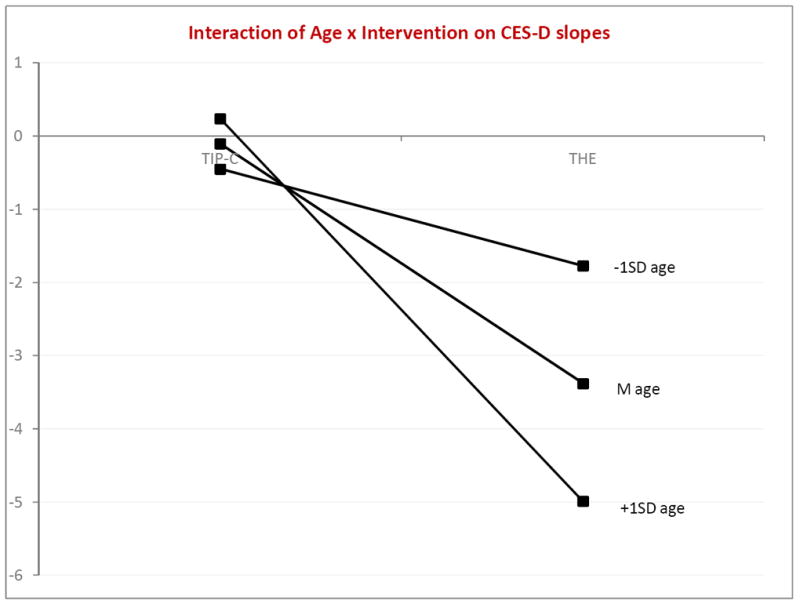
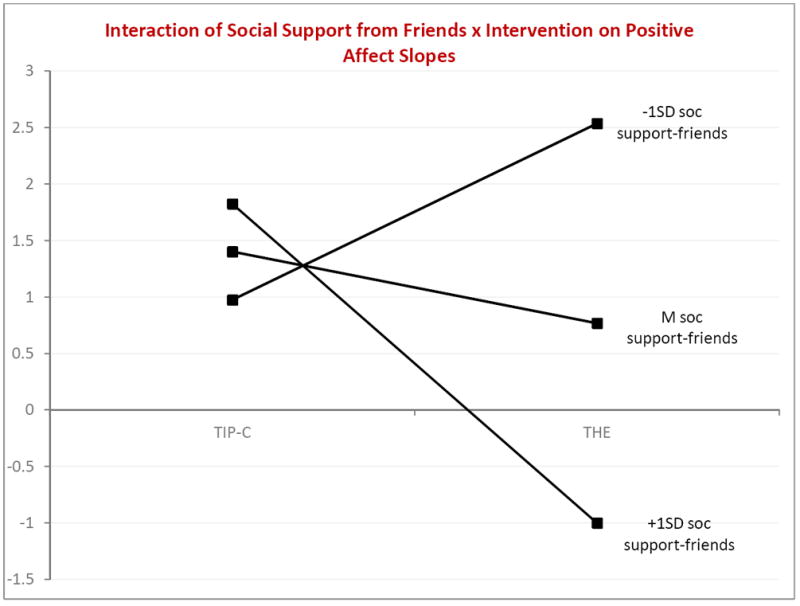
Results: For three of the psychological outcomes (depression, negative affect and stress), there were distinct advantages from participating in THE. For example, more favourable depression outcomes occurred when men were older, had lower prostate specific functioning, were in active chemotherapy, had lower social support from friends and lower cancer knowledge. Participating in the TIP-C provided a more favourable outcome for positive affect when men had higher education, prostate specific functioning, social support from friends and cancer knowledge.
Conclusion: Unique survivor characteristics must be considered when recommending interventions that might improve psychological QOL in PCSs. Future research must examine who benefits most and from what components of psychosocial interventions to enable clinicians to recommend appropriate psychosocial care.
Figures
References
-
- ACS. Cancer Facts & Figures, 2011. American Cancer Society; Atlanta, GA: 2011.
-
- Danjoux C, Gardner S, Fitch M. Prospective evaluation of fatigue during a course of curative radiotherapy for localised prostate cancer. Supportive care in cancer : official journal of the Multinational Association of Supportive Care in Cancer. 2007;15(10):1169–1176. - PubMed
-
- Sharpley CF, Christie DR. An analysis of the psychometric profile and frequency of anxiety and depression in Australian men with prostate cancer. Psycho-oncology. 2007;16(7):660–667. - PubMed
-
- Namiki SYA. Health-related quality of life in men with localized prostate cancer. International Journal of Urology. 2010;17:125–158. - PubMed
-
- Jacobsen PB, Jim HS. Psychosocial interventions for anxiety and depression in adult cancer patients: achievements and challenges. CA: a cancer journal for clinicians. 2008;58(4):214–230. - PubMed
Publication types
MeSH terms
Grants and funding
LinkOut - more resources
Full Text Sources
Other Literature Sources
Medical