


Insecticide resistance monitoring of field-collected Anopheles gambiae s.l. populations from Jinja, eastern Uganda, identifies high levels of pyrethroid resistance
- PMID: 23046446
- PMCID: PMC3543752
- DOI: 10.1111/j.1365-2915.2012.01055.x
Insecticide resistance monitoring of field-collected Anopheles gambiae s.l. populations from Jinja, eastern Uganda, identifies high levels of pyrethroid resistance
Abstract
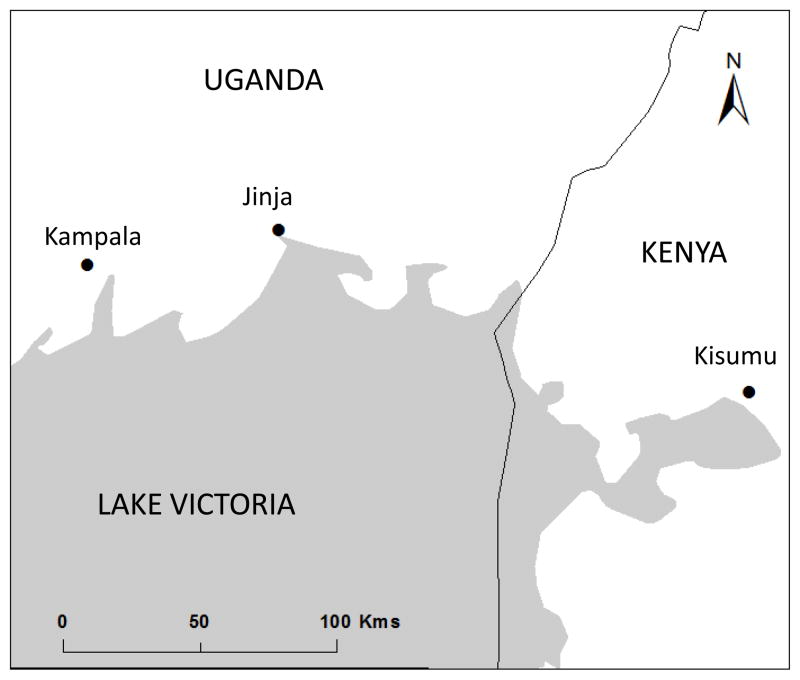
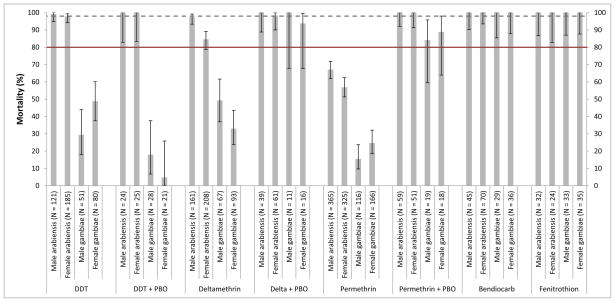
Insecticide resistance in the malaria vector Anopheles gambiae s.l. (Diptera: Culicidae) threatens insecticide-based control efforts, necessitating regular monitoring. We assessed resistance in field-collected An. gambiae s.l. from Jinja, Uganda using World Health Organization (WHO) bioassays. Only An. gambiae s.s. and An. arabiensis (≈70%) were present. Female An. gambiae exhibited extremely high pyrethroid resistance (permethrin LT50 > 2 h; deltamethrin LT50 > 5 h). Female An. arabiensis were resistant to permethrin and exhibited reduced susceptibility to deltamethrin. However, while An. gambiae were DDT resistant, An. arabiensis were fully susceptible. Both species were fully susceptible to bendiocarb and fenitrothion. Kdr 1014S has increased rapidly in the Jinja population of An. gambiae s.s. and now approaches fixation (≈95%), consistent with insecticide-mediated selection, but is currently at a low frequency in An. arabiensis (0.07%). Kdr 1014F was also at a low frequency in An. gambiae. These frequencies preclude adequately-powered tests for an association with phenotypic resistance. PBO synergist bioassays resulted in near complete recovery of pyrethroid susceptibility suggesting involvement of CYP450s in resistance. A small number (0.22%) of An. gambiae s.s. ×An. arabiensis hybrids were found, suggesting the possibility of introgression of resistance alleles between species. The high levels of pyrethroid resistance encountered in Jinja threaten to reduce the efficacy of vector control programmes which rely on pyrethroid-impregnated bednets or indoor spraying of pyrethroids.
Keywords: Anopheles arabiensis; hybridization; introgression; kdr; malaria; metabolic resistance; permethrin.
© 2012 The Royal Entomological Society.
Figures


References
Publication types
MeSH terms
Substances
Grants and funding
LinkOut - more resources
Full Text Sources
Miscellaneous
