


Phosphorylation of mouse melanopsin by protein kinase A
- PMID: 23049792
- PMCID: PMC3458869
- DOI: 10.1371/journal.pone.0045387
Phosphorylation of mouse melanopsin by protein kinase A
Abstract
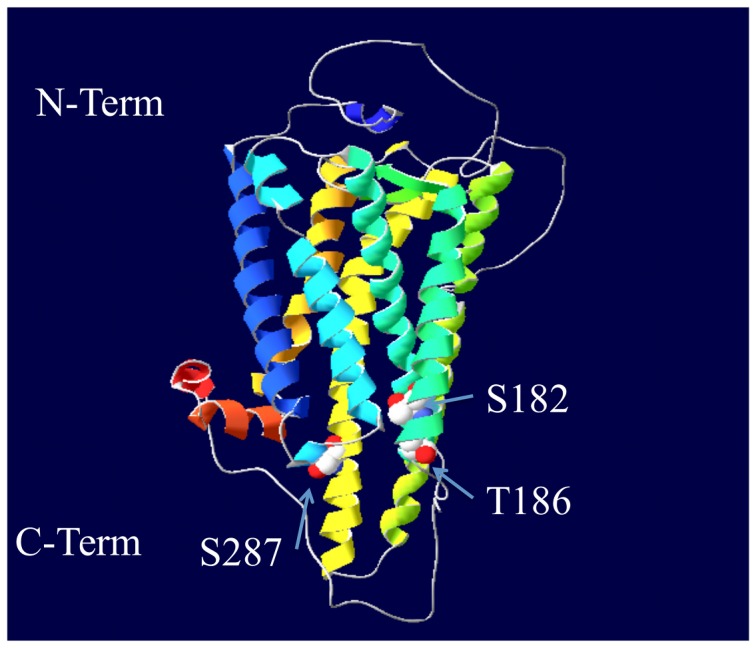
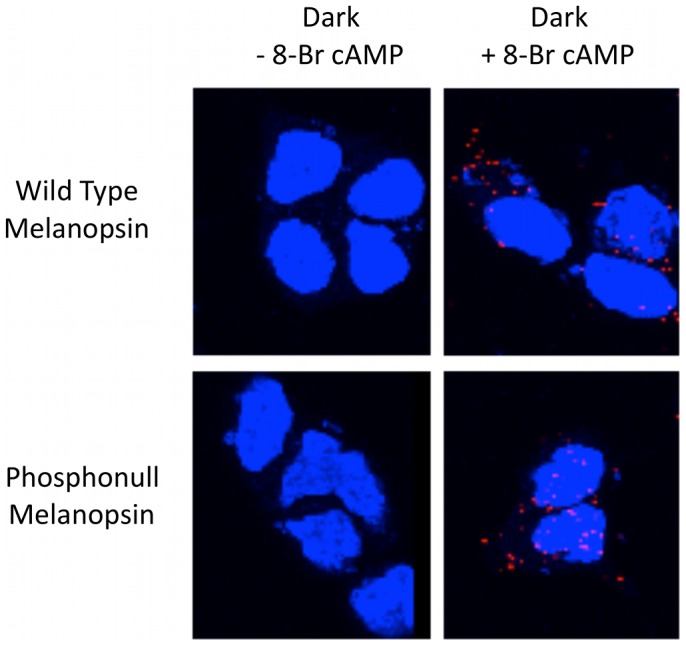
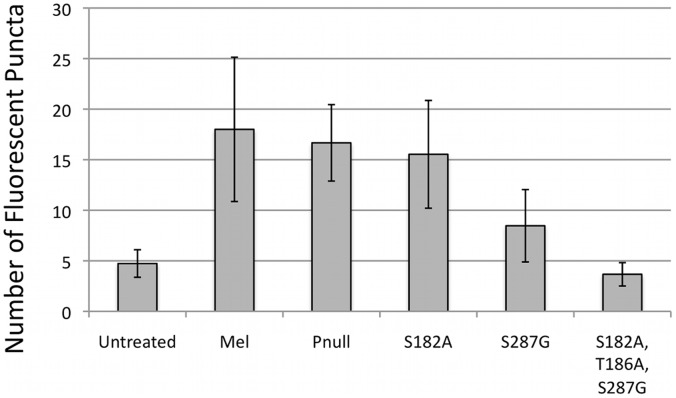
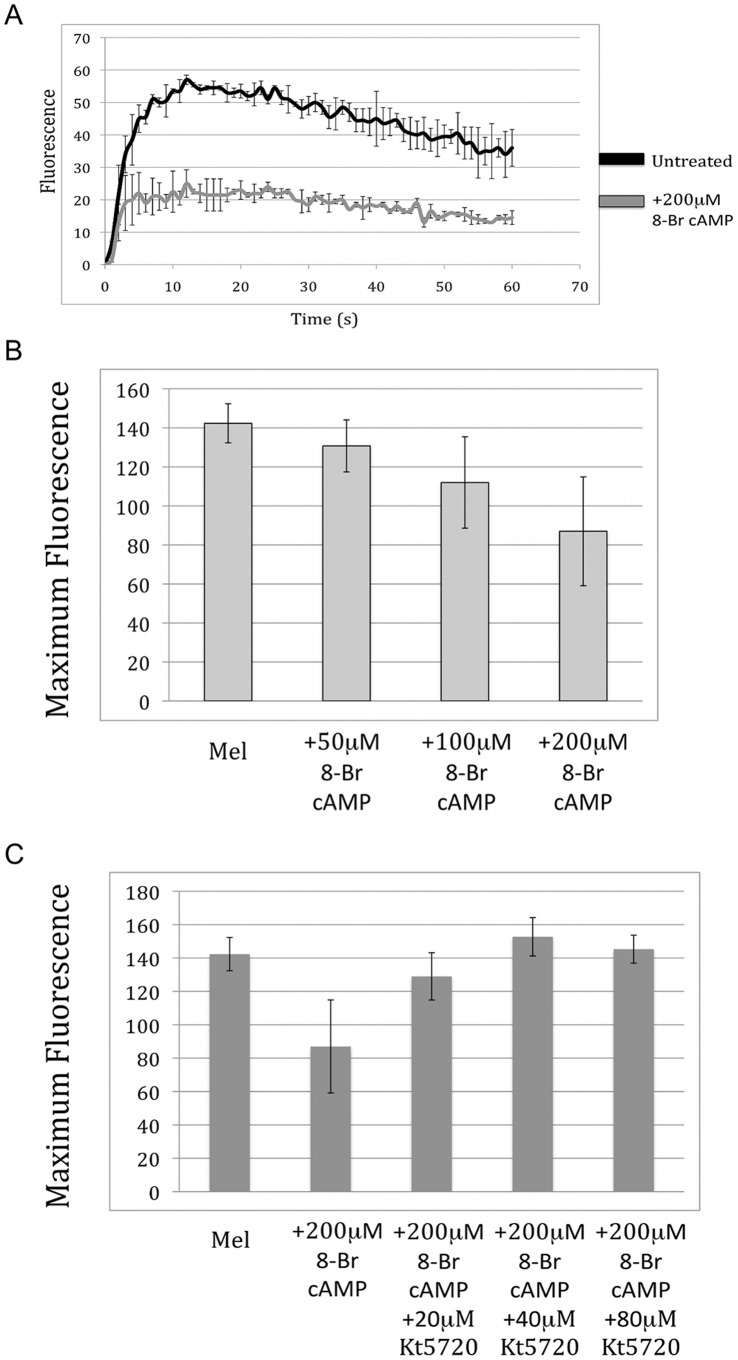
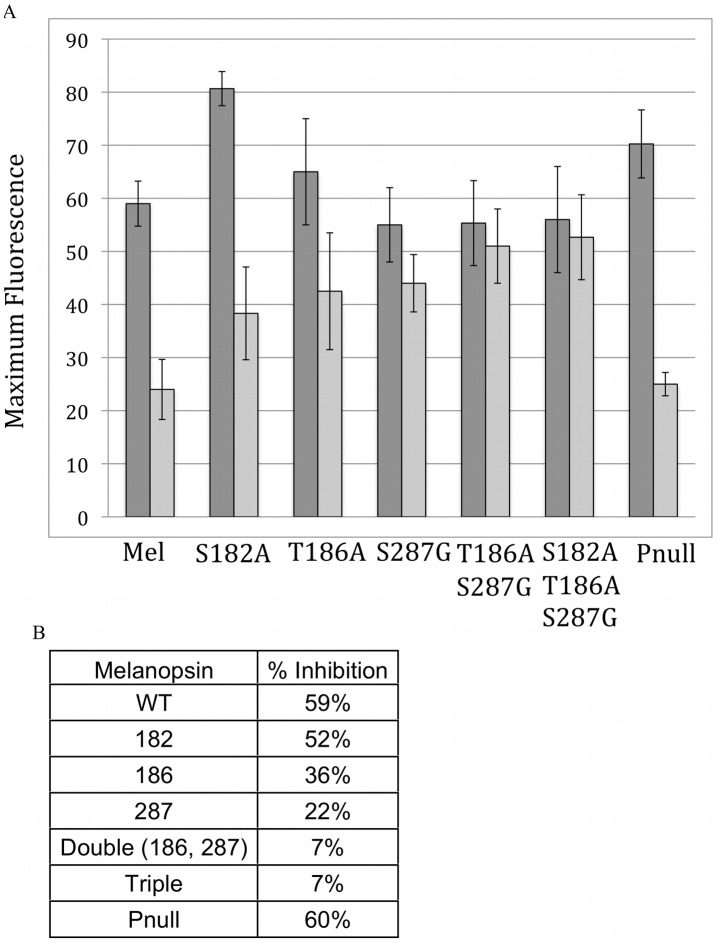
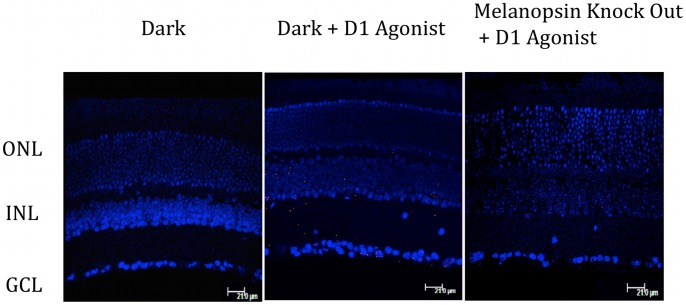
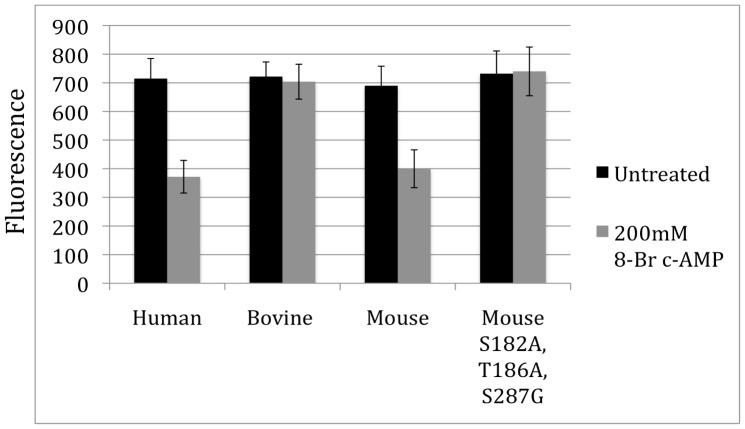
The visual pigment melanopsin is expressed in intrinsically photosensitive retinal ganglion cells (ipRGCs) in the mammalian retina, where it is involved in non-image forming light responses including circadian photoentrainment, pupil constriction, suppression of pineal melatonin synthesis, and direct photic regulation of sleep. It has recently been shown that the melanopsin-based light response in ipRGCs is attenuated by the neurotransmitter dopamine. Here, we use a heterologous expression system to demonstrate that mouse melanopsin can be phosphorylated by protein kinase A, and that phosphorylation can inhibit melanopsin signaling in HEK cells. Site-directed mutagenesis experiments revealed that this inhibitory effect is primarily mediated by phosphorylation of sites T186 and S287 located in the second and third intracellular loops of melanopsin, respectively. Furthermore, we show that this phosphorylation can occur in vivo using an in situ proximity-dependent ligation assay (PLA). Based on these data, we suggest that the attenuation of the melanopsin-based light response by dopamine is mediated by direct PKA phosphorylation of melanopsin, rather than phosphorylation of a downstream component of the signaling cascade.
Conflict of interest statement
Figures
References
-
- Lupi D, Oster H, Thompson S, Foster RG (2008) The acute light-induction of sleep is mediated by OPN4-based photoreception. Nat Neurosci 11: 1068–1073. - PubMed
-
- Graham DM, Wong KY, Shapiro P, Frederick C, Pattabiraman K, et al. (2008) Melanopsin ganglion cells use a membrane-associated rhabdomeric phototransduction cascade. J Neurophysiol 99: 2522–2532. - PubMed
Publication types
MeSH terms
Substances
Grants and funding
LinkOut - more resources
Full Text Sources
Molecular Biology Databases
Miscellaneous
