


Advanced yellow fever virus genome detection in point-of-care facilities and reference laboratories
- PMID: 23052311
- PMCID: PMC3503008
- DOI: 10.1128/JCM.01799-12
Advanced yellow fever virus genome detection in point-of-care facilities and reference laboratories
Abstract
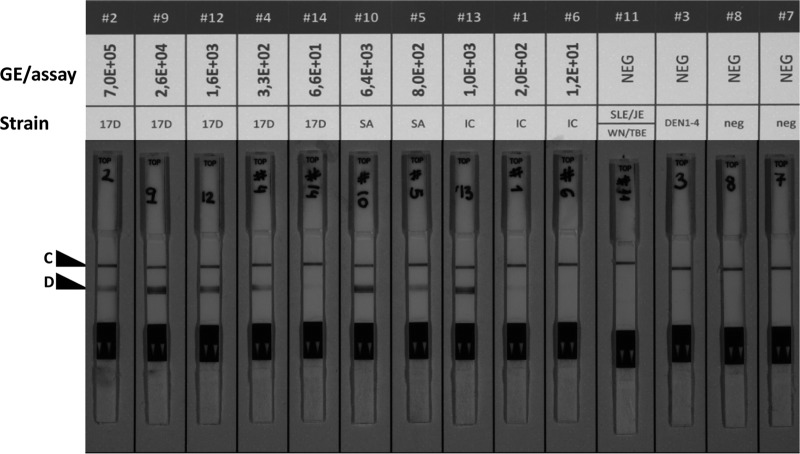
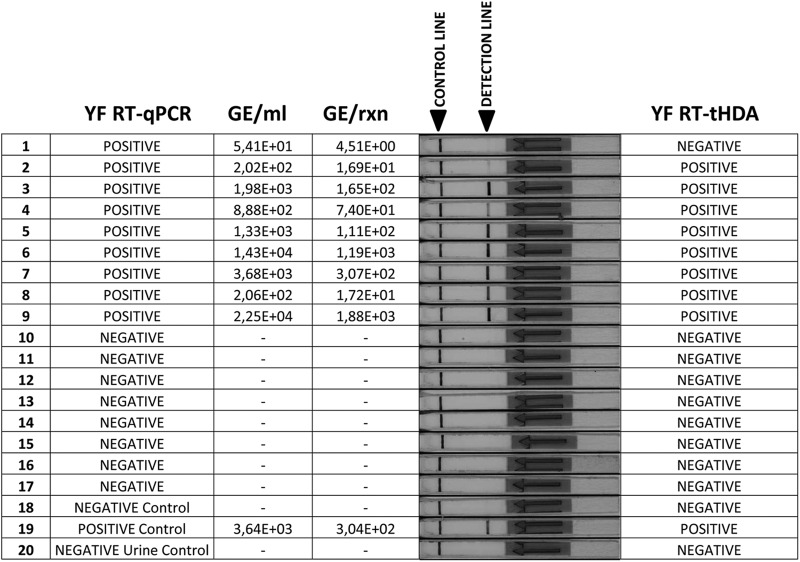
Reported methods for the detection of the yellow fever viral genome are beset by limitations in sensitivity, specificity, strain detection spectra, and suitability to laboratories with simple infrastructure in areas of endemicity. We describe the development of two different approaches affording sensitive and specific detection of the yellow fever genome: a real-time reverse transcription-quantitative PCR (RT-qPCR) and an isothermal protocol employing the same primer-probe set but based on helicase-dependent amplification technology (RT-tHDA). Both assays were evaluated using yellow fever cell culture supernatants as well as spiked and clinical samples. We demonstrate reliable detection by both assays of different strains of yellow fever virus with improved sensitivity and specificity. The RT-qPCR assay is a powerful tool for reference or diagnostic laboratories with real-time PCR capability, while the isothermal RT-tHDA assay represents a useful alternative to earlier amplification techniques for the molecular diagnosis of yellow fever by field or point-of-care laboratories.
Figures
References
-
- Bae HG, Nitsche A, Teichmann A, Biel SS, Niedrig M. 2003. Detection of yellow fever virus: a comparison of quantitative real-time PCR and plaque assay. J. Virol. Methods 110:185–191 - PubMed
-
- Bae HG, et al. 2005. Analysis of two imported cases of yellow fever infection from Ivory Coast and The Gambia to Germany and Belgium. J. Clin. Virol. 33:274–280 - PubMed
-
- Barban V, et al. 2007. High stability of yellow fever 17D-204 vaccine: a 12-year restrospective analysis of large-scale production. Vaccine 25:2941–2950 - PubMed
-
- Craw P, Balachandran W. 2012. Isothermal nucleic acid amplification technologies for point-of-care diagnostics: a critical review. Lab Chip 12:2469–2486 - PubMed
Publication types
MeSH terms
Substances
LinkOut - more resources
Full Text Sources
Medical
