Papillon-Lefèvre syndrome: Case report and review of the literature
- PMID: 23055596
- PMCID: PMC3459510
- DOI: 10.4103/0972-124X.99273
Papillon-Lefèvre syndrome: Case report and review of the literature
Abstract
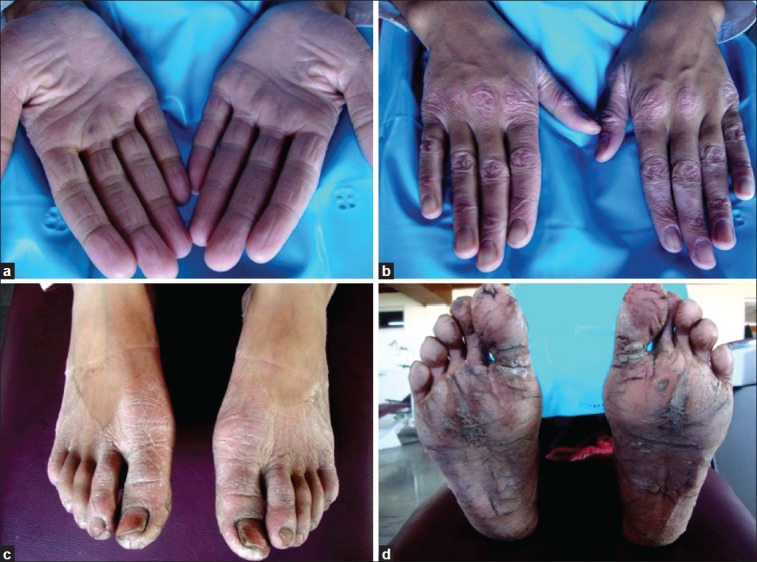
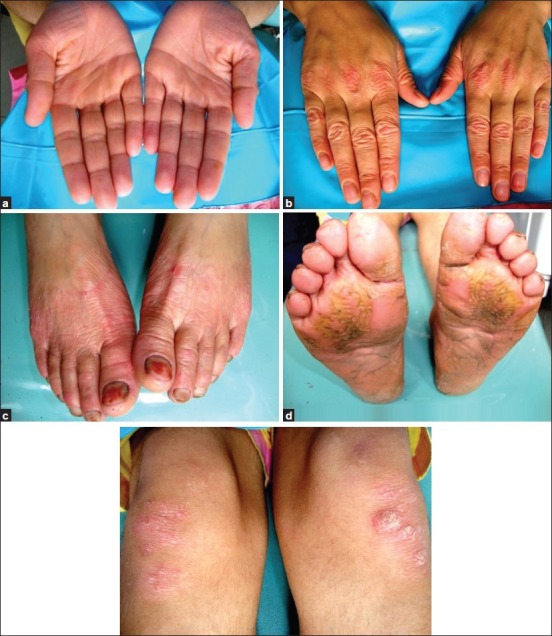
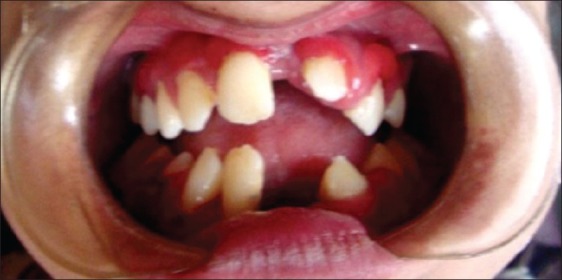
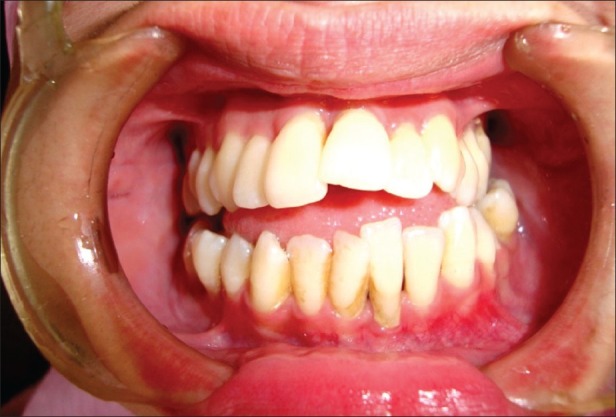
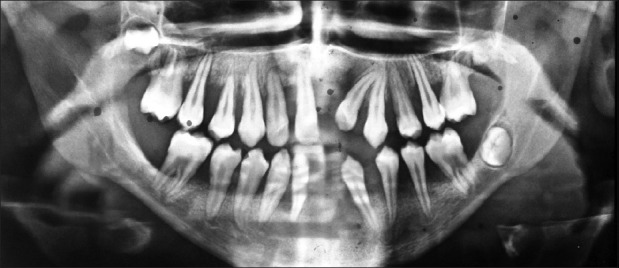
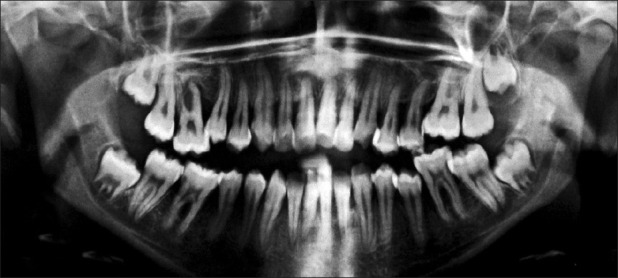
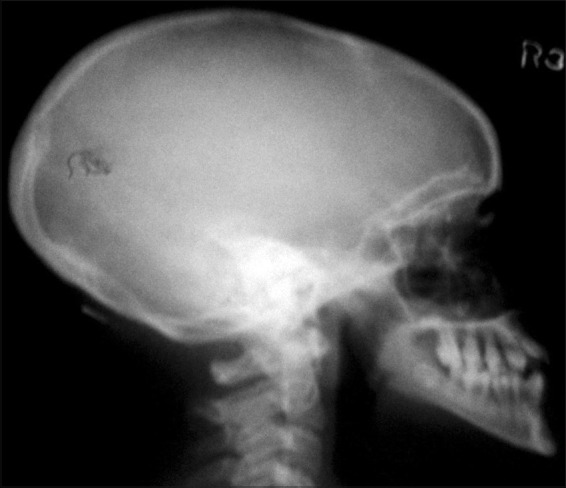
Papillon-Lefèvre syndrome is a very rare syndrome of autosomal recessive inheritance characterized by palmar-plantar hyperkeratosis and early onset of a severe destructive periodontitis leading to premature loss of both primary and permanent dentitions. Various etiopathogenic factors are associated with the syndrome; but a recent report has suggested that the condition is linked to mutations of the cathepsin C gene. Two cases of Papillon-Lefèvre syndrome in the same family, having all of the characteristic features are presented. An 11-year-old girl, and her elder sister, a 13-year-old girl complained of loose teeth and discomfort in chewing along with recurrently swollen and friable gums. Both patients also had premature shedding of their deciduous teeth. The family history revealed consanguineous marriage of the parents. Both patients presented with persistent thickening, flaking and scaling of the skin of palms and soles. Severe generalized periodontal destruction with mobility of teeth was evident on intraoral examination; orthopantomograph examination showed severe generalized loss of alveolar bone in both the patients.
Keywords: Hyperkeratosis; Papillon-Lefèvre syndrome; periodontitis.
Conflict of interest statement
Figures
References
-
- Papillon MM, Lefèvre P. Deux cas de keratodermie palmaire et plantaire symétrique familiale (maladie de Meleda) chez le frere et la soeur. Coexistence dans les deus cas alterations dentaires grabes. Bulletin de la Soceite Francaise de Dermatologie et de Syphiligraphie. 1924;31:82–7.
-
- Gorlin RJ, Cohen MM, Levin LS. Syndromes of the Head and Neck. 3rd ed. Oxford: Oxford University Pres; 1990. pp. 853–5.
-
- Hall RK, editor. Paediatric Orofacial Medicine and Pathology. 1st ed. London: Chapman and HallMedical; 1994.
-
- Kressin S, Herforth A, Preis S, Wahn V, Lenard HG. Papillon–Lefèvre syndrome – successful treatment with a combination of retinoid and concurrent systematic periodontal therapy: Case reports. Quintessence Int. 1995;26:795–803. - PubMed
-
- Wara-Aswapati N, Lertsirivorakul J, Nagasawa T, Kawashima Y, Ishikawa I. Papillon–Lefèvre syndrome: Serum immunoglobulins G (IgG) subclass antibody response to periodontopathic bacteria. A case report. J Periodontol. 2001;72:1747–54. - PubMed