


Expression of calcitonin gene-related peptide in efferent vestibular system and vestibular nucleus in rats with motion sickness
- PMID: 23056625
- PMCID: PMC3467246
- DOI: 10.1371/journal.pone.0047308
Expression of calcitonin gene-related peptide in efferent vestibular system and vestibular nucleus in rats with motion sickness
Abstract
Motion sickness presents a challenge due to its high incidence and unknown pathogenesis although it is a known fact that a functioning vestibular system is essential for the perception of motion sickness. Recent studies show that the efferent vestibular neurons contain calcitonin gene-related peptide (CGRP). It is a possibility that the CGRP immunoreactivity (CGRPi) fibers of the efferent vestibular system modulate primary afferent input into the central nervous system; thus, making it likely that CGRP plays a key role in motion sickness. To elucidate the relationship between motion sickness and CGRP, the effects of CGRP on the vestibular efferent nucleus and the vestibular nucleus were investigated in rats with motion sickness.
Methods: An animal model of motion sickness was created by subjecting rats to rotary stimulation for 30 minutes via a trapezoidal stimulation pattern. The number of CGRPi neurons in the vestibular efferent nucleus at the level of the facial nerve genu and the expression level of CGRPi in the vestibular nucleus of rats were measured. Using the ABC method of immunohistochemistry technique, measurements were taken before and after rotary stimulation. The effects of anisodamine on the expression of CGRP in the vestibular efferent nucleus and the vestibular nucleus of rats with motion sickness were also investigated.
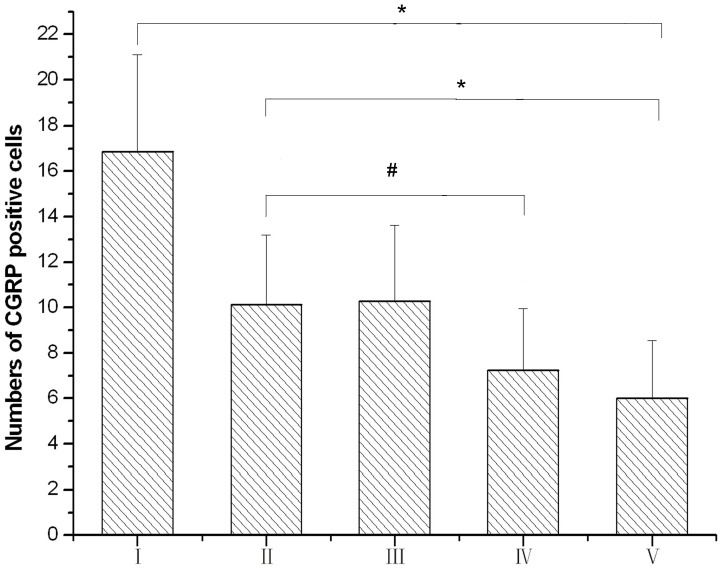
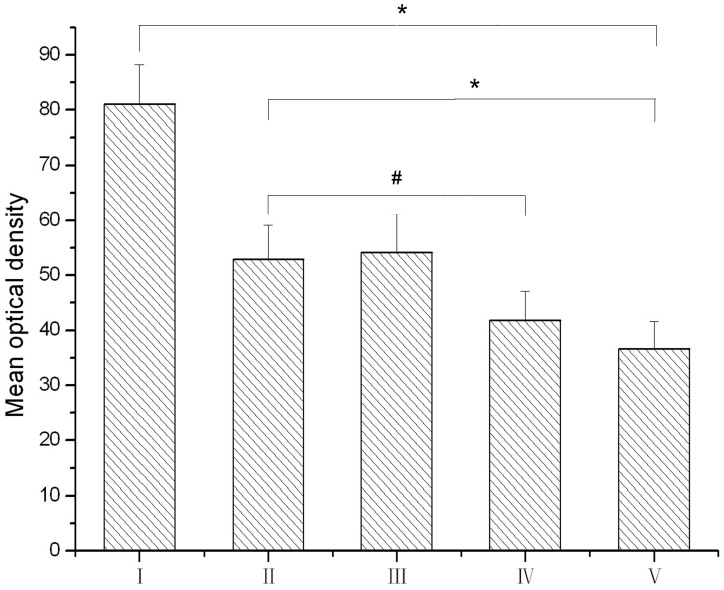
Results and discussion: Both the number of CGRPi neurons in the vestibular efferent nucleus and expression level in the vestibular nucleus increased significantly in rats with motion sickness compared to that of controls. The increase of CGRP expression in rats subjected to rotary stimulation 3 times was greater than those having only one-time stimulation. Administration of anisodamine decreased the expression of CGRP within the vestibular efferent nucleus and the vestibular nucleus in rats subjected to rotary stimulation. In conclusion, CGRP possibly plays a role in motion sickness and its mechanism merits further investigation.
Conflict of interest statement
Figures
References
-
- Shupak A, Gordon CR (2006) Motion sickness: advances in pathogenesis, prediction, prevention, and treatment. Aviat Space Environ Med 77: 1213–23. - PubMed
-
- Buyuklu F, Tarhan E, Ozluoglu L (2009) Vestibular functions in motion sickness susceptible individuals. Eur Arch Otorhinolaryngol 266: 1365–1371. - PubMed
-
- Kennedy RS, Drexler J, Kennedy RC (2010) Research in visually induced motion sickness. Appl Ergon 41: 494–503. - PubMed
-
- Golding JF (2006) Motion sickness susceptibility. Auton Neurosci 129: 67–76. - PubMed
-
- Zajonc TP, Roland PS (2006) Vertigo and motion sickness. Part II: Pharmacologic treatment. Ear Nose Throat J 85: 25–35. - PubMed
Publication types
MeSH terms
Substances
LinkOut - more resources
Full Text Sources
Medical
Research Materials
