


Trends in postpartum hemorrhage from 2000 to 2009: a population-based study
- PMID: 23057683
- PMCID: PMC3534600
- DOI: 10.1186/1471-2393-12-108
Trends in postpartum hemorrhage from 2000 to 2009: a population-based study
Abstract
Background: Postpartum hemorrhage, a major cause of maternal death and severe maternal morbidity, increased in frequency in Canada between 1991 and 2004. We carried out a study to describe the epidemiology of postpartum hemorrhage in British Columbia, Canada, between 2000 and 2009.
Methods: The study population included all women residents of British Columbia who delivered between 2000 and 2009. Data on postpartum hemorrhage by subtypes and severity were obtained from the British Columbia Perinatal Data Registry. Among women with postpartum hemorrhage, severe cases were identified by the use of blood transfusions or procedures to control bleeding. Rates of postpartum hemorrhage and changes over time were assessed using rates, rate ratios and 95% confidence intervals (CI).
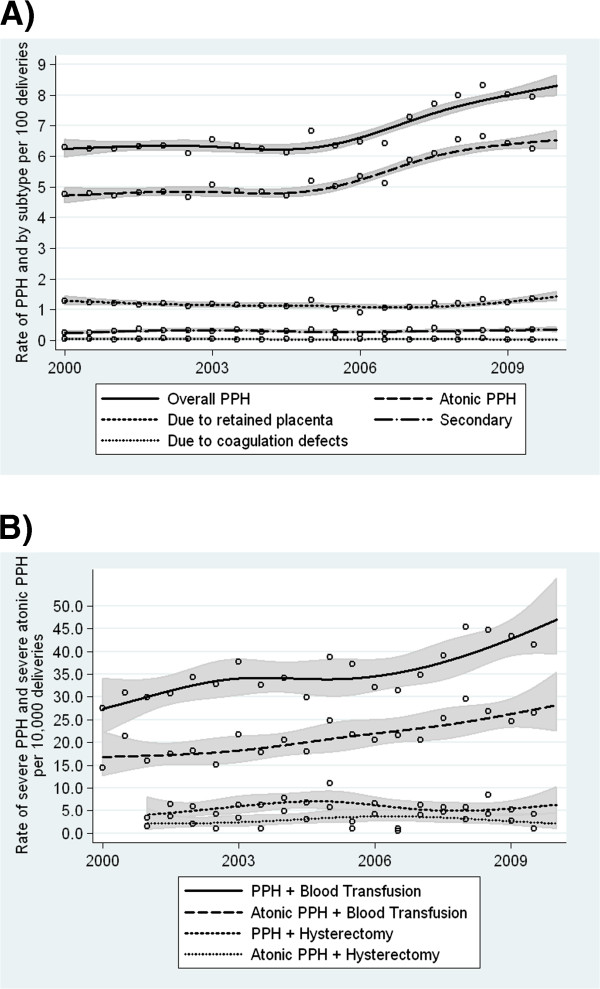
Results: The rate of postpartum hemorrhage increased by 27% (95% CI 21-34%) between 2000 and 2009 (from 6.3% to 8.0%), while atonic postpartum hemorrhage rates increased by 33% (95% CI 26-41%) from 4.8% to 6.4%. Atonic postpartum hemorrhage with blood transfusion increased from 17.8 to 25.5 per 10,000 deliveries from 2000 to 2009 and atonic postpartum hemorrhage with either suturing of the uterus, ligation of pelvic vessels or embolization increased from 1.8 to 5.6 per 10,000 deliveries from 2001 to 2009. The increase in atonic postpartum hemorrhage was most evident between 2006 and 2009 and occurred across regions, hospitals and various maternal, fetal and obstetric characteristics.
Conclusions: Atonic postpartum hemorrhage and severe atonic postpartum hemorrhage increased in British Columbia between 2000 and 2009. Further research is required to identify the cause of the increase.
Figures
References
-
- Roberts WE. Emergent obstetric management of postpartum hemorrhage. Obstet Gynecol Clin North Am. 1995;22(2):283–302. - PubMed
-
- Knight M, Callaghan WM, Berg C, Alexander S, Bouvier-Colle MH, Ford JB, Joseph KS, Lewis G, Liston RM, Roberts CL. et al.Trends in postpartum hemorrhage in high resource countries: a review and recommendations from the International Postpartum Hemorrhage Collaborative Group. BMC Pregnancy Childbirth. 2009;9:55. doi: 10.1186/1471-2393-9-55. - DOI - PMC - PubMed
-
- Health Canada. Canadian Perinatal Health Report, 2003. Ottawa: Minister of Public Works and Government Services of Canada; 2003.
Publication types
MeSH terms
Grants and funding
LinkOut - more resources
Full Text Sources
Medical
