


Chemical composition and molecular structure of polysaccharide-protein biopolymer from Durio zibethinus seed: extraction and purification process
- PMID: 23062269
- PMCID: PMC3515408
- DOI: 10.1186/1752-153X-6-117
Chemical composition and molecular structure of polysaccharide-protein biopolymer from Durio zibethinus seed: extraction and purification process
Abstract
Background: The biological functions of natural biopolymers from plant sources depend on their chemical composition and molecular structure. In addition, the extraction and further processing conditions significantly influence the chemical and molecular structure of the plant biopolymer. The main objective of the present study was to characterize the chemical and molecular structure of a natural biopolymer from Durio zibethinus seed. A size-exclusion chromatography coupled to multi angle laser light-scattering (SEC-MALS) was applied to analyze the molecular weight (Mw), number average molecular weight (Mn), and polydispersity index (Mw/Mn).
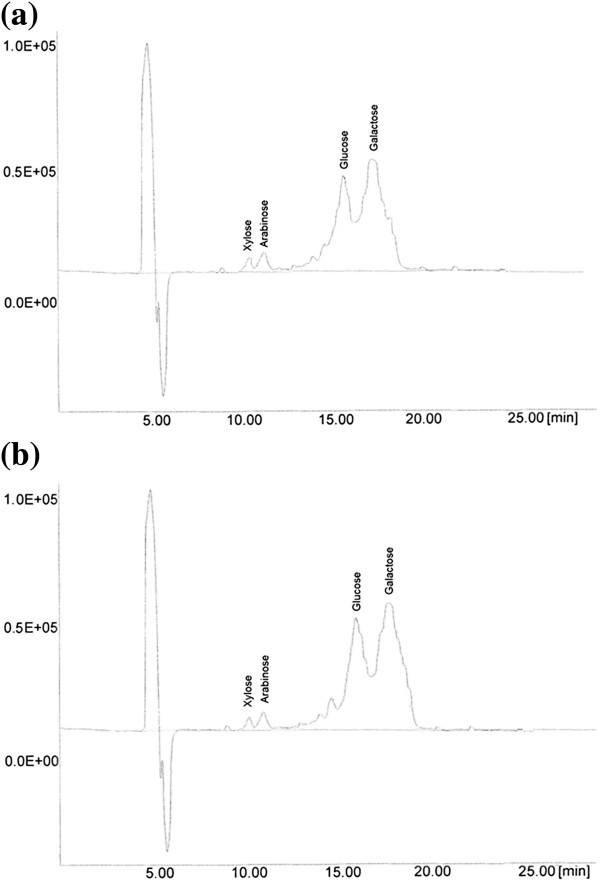
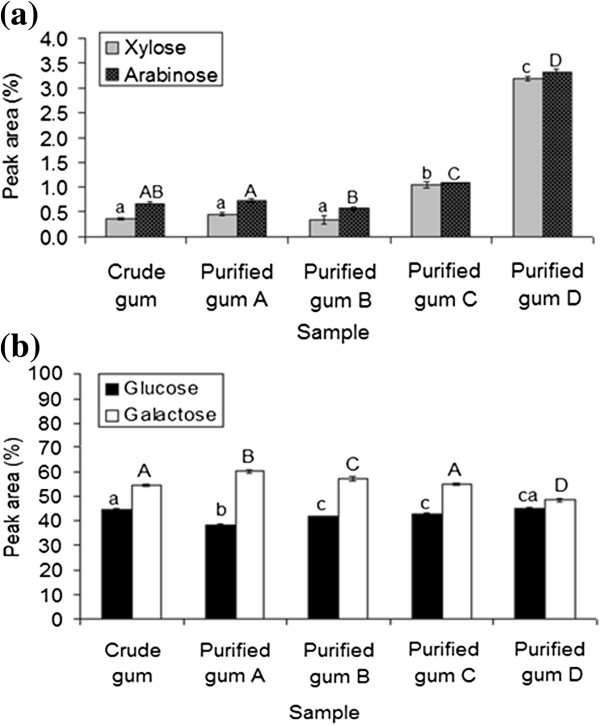
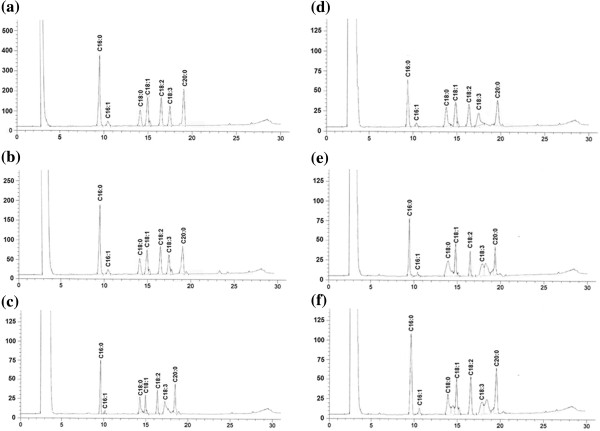
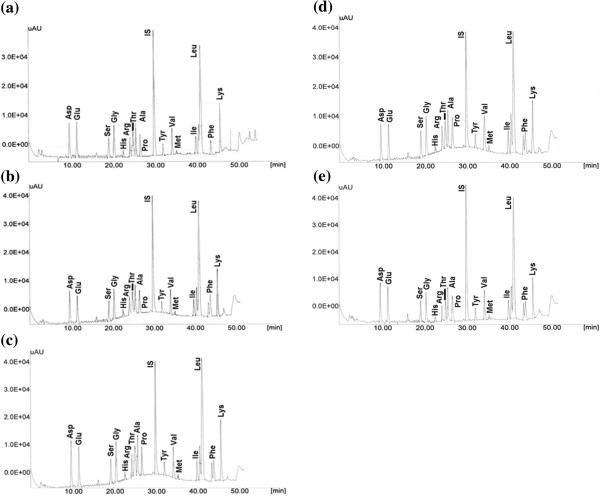
Results: The most abundant monosaccharide in the carbohydrate composition of durian seed gum were galactose (48.6-59.9%), glucose (37.1-45.1%), arabinose (0.58-3.41%), and xylose (0.3-3.21%). The predominant fatty acid of the lipid fraction from the durian seed gum were palmitic acid (C16:0), palmitoleic acid (C16:1), stearic acid (C18:0), oleic acid (C18:1), linoleic acid (C18:2), and linolenic acid (C18:2). The most abundant amino acids of durian seed gum were: leucine (30.9-37.3%), lysine (6.04-8.36%), aspartic acid (6.10-7.19%), glycine (6.07-7.42%), alanine (5.24-6.14%), glutamic acid (5.57-7.09%), valine (4.5-5.50%), proline (3.87-4.81%), serine (4.39-5.18%), threonine (3.44-6.50%), isoleucine (3.30-4.07%), and phenylalanine (3.11-9.04%).
Conclusion: The presence of essential amino acids in the chemical structure of durian seed gum reinforces its nutritional value.
Figures
References
-
- Booncherm P, Siriphanich J. Postharvest physiology of durian pulp and husk. Kasetsart J. 1991;25:119–125.
-
- Brown MJ. In: Durio – A bibliographic review. Arora RK, Ramanathan Rao V, Rao AN, editor. International Plant Genetic Resources Institute, New Delhi; 1997.
-
- Adanson M. Familles des Plantes. Part 2. Publisher: Paris, Vincent, France; 399.
-
- Rana V, Rai P, Tiwary AK, Singh RS, Kennedy JF, Knill CJ. Modified gums: approaches and applications in drug delivery. Carbohydr Polym. 2011;83:1031–1047. doi: 10.1016/j.carbpol.2010.09.010. - DOI
LinkOut - more resources
Full Text Sources
