


Emerging role of the interleukin (IL)-33/ST2 axis in gut mucosal wound healing and fibrosis
- PMID: 23062310
- PMCID: PMC3514189
- DOI: 10.1186/1755-1536-5-18
Emerging role of the interleukin (IL)-33/ST2 axis in gut mucosal wound healing and fibrosis
Abstract
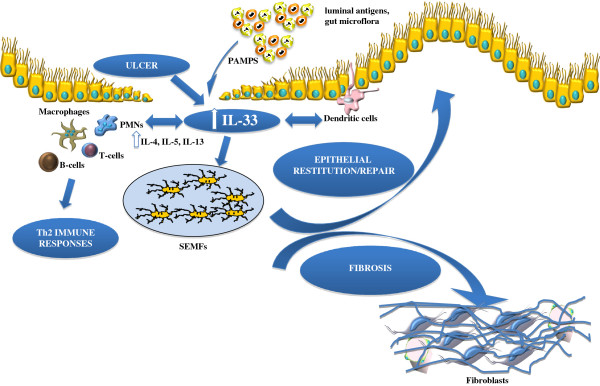
Interleukin (IL)-33 (IL-1F11) is the newest member of the IL-1Family of cytokines and has been best characterized as a potent inducer of T helper (Th)2 immune responses. Increasing evidence, however, indicates that IL-33 also represents an important mediator of mucosal healing and epithelial restoration and repair. As such, IL-33 follows the trend of several innate-type cytokines, including members of the IL-1Family (for example, IL-1α, IL-1β, and IL-18), that possess dichotomous roles of inducing a potent proinflammatory response, while also promoting protection and the return to immune homeostasis. This dual function is best depicted in the gut mucosa and is dependent upon the immunological/genetic status of the host and/or the type and phase of the ongoing inflammatory process. IL-33 has also been described as a prototypic 'alarmin' that has the ability to signal local, innate immune responses of trauma or infection in an effort to mount an effective, physiologic inflammatory reaction to induce mucosal healing and restore normal gut equilibrium. Finally, several recent studies have reported the role of IL-33 during fibrogenesis as fibrosis is commonly thought to occur as the end stage of dysregulated wound healing wherein chronic tissue damage is paired with uncontrolled activation of mesenchymal cells. Taken together, aside from its established function of promoting potent Th2 immune responses, IL-33 is emerging as an important cytokine for the induction of mucosal healing and restoration of intestinal homeostasis, as well as playing a central role in fibrosis and wound repair. The present review will focus on what is currently known regarding IL-33's role in gut mucosal wound healing and fibrosis, as well as touch on its potential contribution to tumorigenesis and GI-related cancer, an alternate outcome of dysregulated epithelial proliferation.
Figures
References
-
- Wood IS, Wang B, Trayhurn P. IL-33, a recently identified interleukin-1 gene family member, is expressed in human adipocytes. Biochem Biophys Res Commun. 2009;384:105–109. - PubMed
-
- Schmitz J, Owyang A, Oldham E, Song Y, Murphy E, McClanahan TK, Zurawski G, Moshrefi M, Qin J, Li X, Gorman DM, Bazan JF, Kastelein RA. IL-33, an interleukin-1-like cytokine that signals via the IL-1 receptor-related protein ST2 and induces T helper type 2-associated cytokines. Immunity. 2005;23:479–490. - PubMed
LinkOut - more resources
Full Text Sources
Research Materials
Miscellaneous
