


Emerging approaches in the management of patients with neuroendocrine liver metastasis: role of liver-directed and systemic therapies
- PMID: 23063263
- PMCID: PMC3538376
- DOI: 10.1016/j.jamcollsurg.2012.08.027
Emerging approaches in the management of patients with neuroendocrine liver metastasis: role of liver-directed and systemic therapies
Abstract
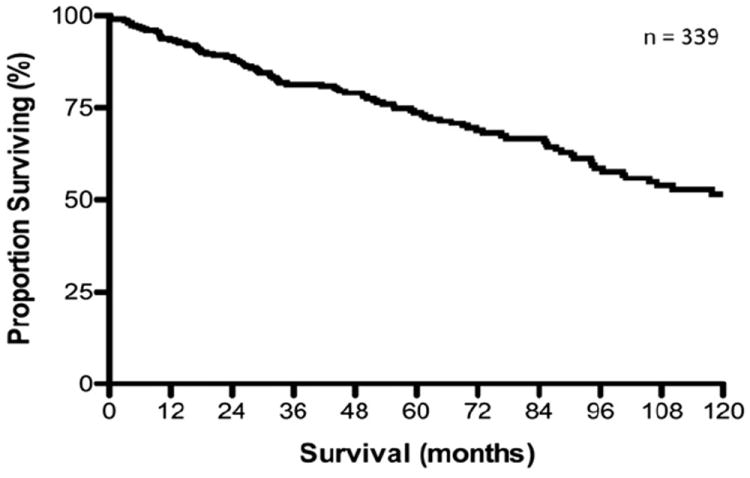
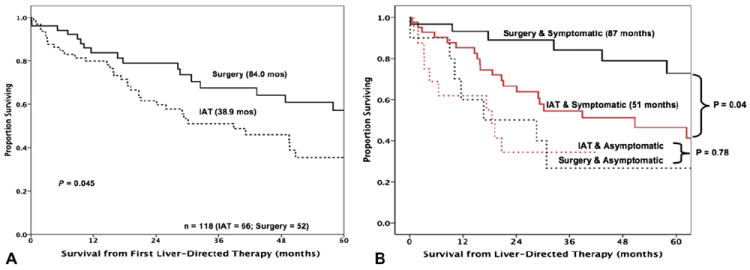
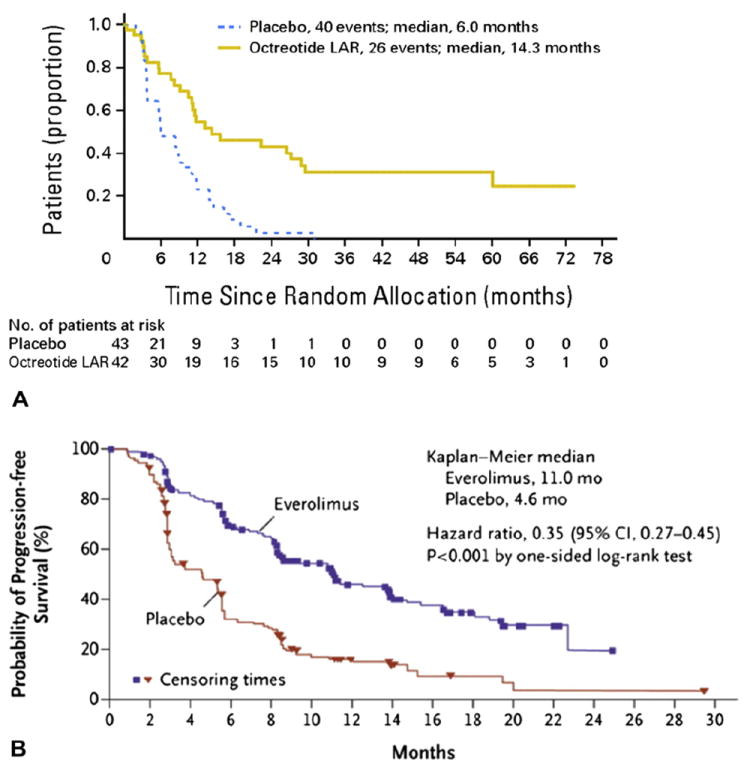
Neuroendocrine tumors (NETs) are rare neoplasms arising from cells of the neuroendocrine system in a multitude of anatomic locations, and representing a wide range of histologies. Compared with other malignancies from the same organ (eg, pancreatic NET vs pancreatic ductal adenocarcinoma), NETs are often indolent in both biology and disease progression. However, metastasis will develop in almost 40% of patients with NETs during the course of their disease, most commonly to the liver. In contrast to other malignancies, in a proportion of patients with neuroendocrine liver metastasis (NELM) disabling clinical symptoms can develop secondary to the production of specific biogenic amines and polypeptide hormones. Therefore, treatment of patients with NELM is focused on optimizing quality of life through reduction of such hormone-related symptoms, and improving survival in patients with disease amenable to liver-directed therapy, including hepatic resection, thermal ablation, and intra-arterial therapy (IAT).- To date, hepatic resection remains the only potentially curative option for patients with NELM, with 5-year survival after hepatectomy ranging from 60% to 80% in recent series.- Until recent reports of the use of somatostatin analogues in neuroendocrine tumors of mid-gut origin, and sunitinib and everolimus in patients with advanced pancreatic NETs (PNETs), there has been little success in the use of systemic therapy to treat patients with advanced NELM, with historic responses ranging from 15% to 20%.- As these systemic agents are not curative, there is still considerable interest in the use of liver-directed therapy to increase patient survival and address hormonally related symptoms. In addition to surgery, IAT has emerged as an alternative liver-directed approach to treat patients with NELM. We review the management of patients with NELM with an emphasis on clarifying the relative roles of surgery, IAT, as well as emerging systemic therapeutic agents. To accomplish this, we performed an extensive literature search in PubMed using medical subject headings (ie, neuroendocrine, carcinoid, liver metastasis, hepatic metastases, hepatectomy, liver resection, transplantation, intra-arterial therapy, radiation therapy, chemotherapy) to identify relevant articles for inclusion.
Figures
References
-
- Modlin IM, Lye KD, Kidd M. A 5-decade analysis of 13,715 carcinoid tumors. Cancer. 2003;97:934–959. - PubMed
-
- Chamberlain RS, Canes D, Brown KT, et al. Hepatic neuroendocrine metastases: does intervention alter outcomes? J Am Coll Surg. 2000;190:432–445. - PubMed
-
- Chen H, Hardacre JM, Uzar A, et al. Isolated liver metastases from neuroendocrine tumors: does resection prolong survival? J Am Coll Surg. 1998;187:88–92. discussion 92–93. - PubMed
-
- Knox CD, Anderson CD, Lamps LW, et al. Long-term survival after resection for primary hepatic carcinoid tumor. Ann Surg Oncol. 2003;10:1171–1175. - PubMed
-
- Nave H, Mossinger E, Feist H, et al. Surgery as primary treatment in patients with liver metastases from carcinoid tumors: a retrospective, unicentric study over 13 years. Surgery. 2001;129:170–175. - PubMed
Publication types
MeSH terms
Substances
Grants and funding
LinkOut - more resources
Full Text Sources
Other Literature Sources
Medical
Research Materials
