


Safety and toxicity of saw palmetto in the CAMUS trial
- PMID: 23063633
- PMCID: PMC3716255
- DOI: 10.1016/j.juro.2012.10.002
Safety and toxicity of saw palmetto in the CAMUS trial
Abstract
Purpose: Extracts of the saw palmetto berry are used by many men in the United States as self-treatment for lower urinary tract symptoms due to benign prostatic hyperplasia. While the most recent data from double-blind clinical trials do not support efficacy superior to that of placebo, there are sparse data on saw palmetto toxicity.
Materials and methods: A total of 369 patients were randomized in the CAMUS (Complementary and Alternative Medicine for Urological Symptoms) trial, of whom 357 were included in this modified intent to treat analysis. Participants were randomized to 320, 640 and 960 mg daily of an ethanolic saw palmetto extract or to an identical-appearing placebo in an escalating manner at 6-month intervals for a total of 18 months of followup. Adverse event assessments, vital signs, and blood and urine laboratory tests were obtained at regular intervals.
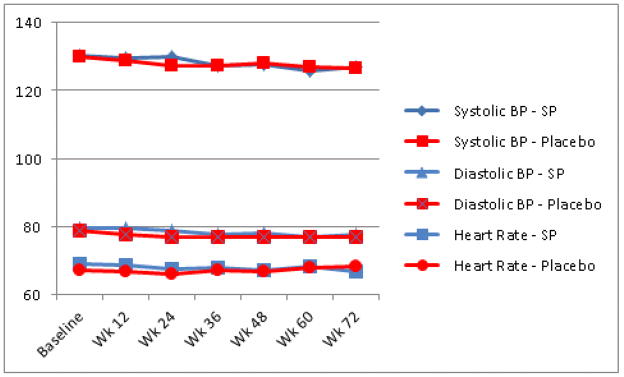
Results: There were no statistically significant differences between the groups in the rates of serious or nonserious adverse events, changes in vital signs, digital prostate examination findings or study withdrawal rates. Overall, there were no significant intergroup differences in laboratory test abnormalities, while differences in individual laboratory tests were rare and small in magnitude. No evidence of significant dose-response phenomena was identified.
Conclusions: The saw palmetto extract used in the CAMUS trial showed no evidence of toxicity at doses up to 3 times the usual clinical dose during an 18-month period.
Copyright © 2013 American Urological Association Education and Research, Inc. Published by Elsevier Inc. All rights reserved.
Figures
References
-
- Barnes PM, Bloom B, Nahin RL. Complementary and alternative medicine use among adults and children: United States, 2007. Natl Health Stat Report. 2008:1–23. - PubMed
-
- Avins AL, Bent S. Saw palmetto and lower urinary tract symptoms: what is the latest evidence? Curr Urol Reports. 2006;7:260–5. - PubMed
-
- Wilt TJ, Ishani A, Stark G, et al. Saw palmetto extracts for treatment of benign prostatic hyperplasia. JAMA. 1998;280:1604–9. - PubMed
-
- Wilt T, Ishani A, Mac Donald R. Serenoa repens for benign prostatic hyperplasia. Cochrane Database Syst Rev. 2002:CD001423. - PubMed
Publication types
MeSH terms
Substances
Grants and funding
- U01 DK063883/DK/NIDDK NIH HHS/United States
- U01 DK063797/DK/NIDDK NIH HHS/United States
- U01 DK063825/DK/NIDDK NIH HHS/United States
- U01 DK063831/DK/NIDDK NIH HHS/United States
- U01 DK063835/DK/NIDDK NIH HHS/United States
- U01 DK063795/DK/NIDDK NIH HHS/United States
- U01 DK063788/DK/NIDDK NIH HHS/United States
- U01 DK063840/DK/NIDDK NIH HHS/United States
- U01 DK063833/DK/NIDDK NIH HHS/United States
- U01 DK063778/DK/NIDDK NIH HHS/United States
- U01 DK063862/DK/NIDDK NIH HHS/United States
- U01 DK063866/DK/NIDDK NIH HHS/United States
LinkOut - more resources
Full Text Sources
Other Literature Sources
Medical
