


Effects of ginger and its constituents on airway smooth muscle relaxation and calcium regulation
- PMID: 23065130
- PMCID: PMC3604064
- DOI: 10.1165/rcmb.2012-0231OC
Effects of ginger and its constituents on airway smooth muscle relaxation and calcium regulation
Abstract
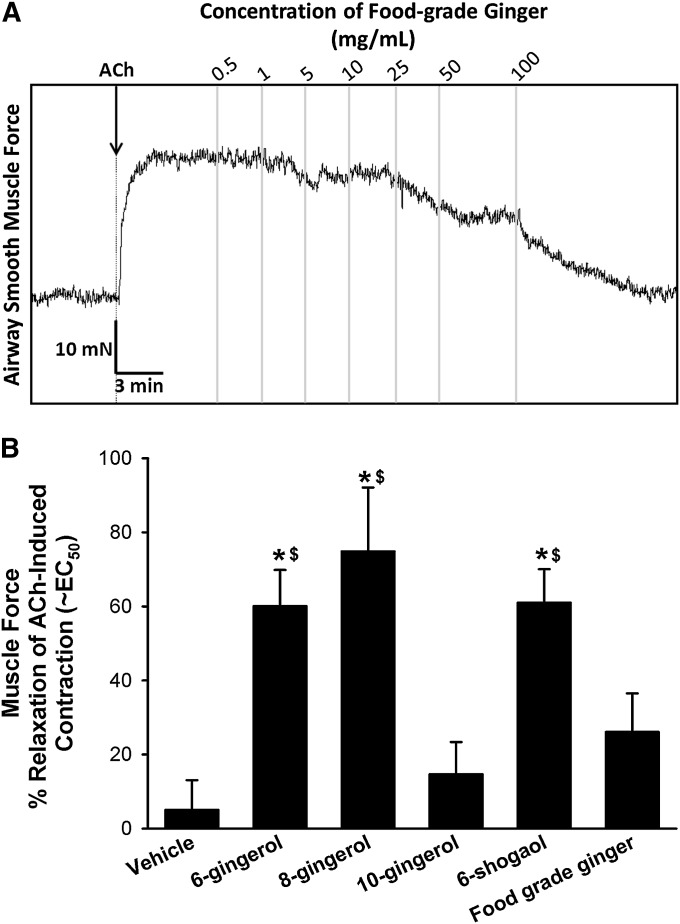
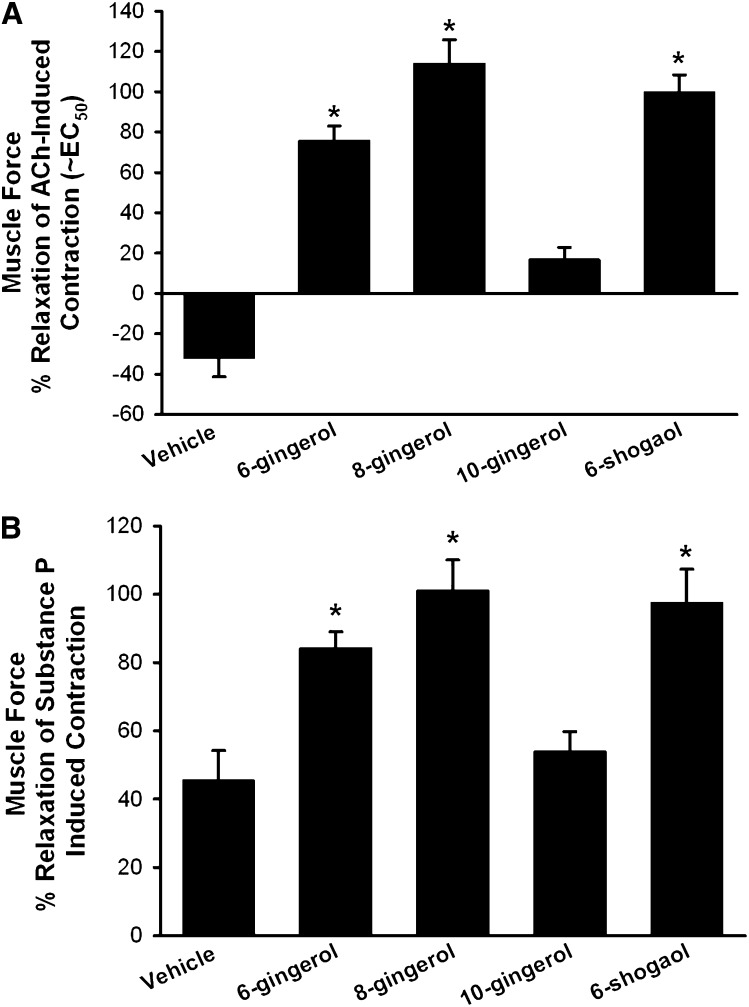
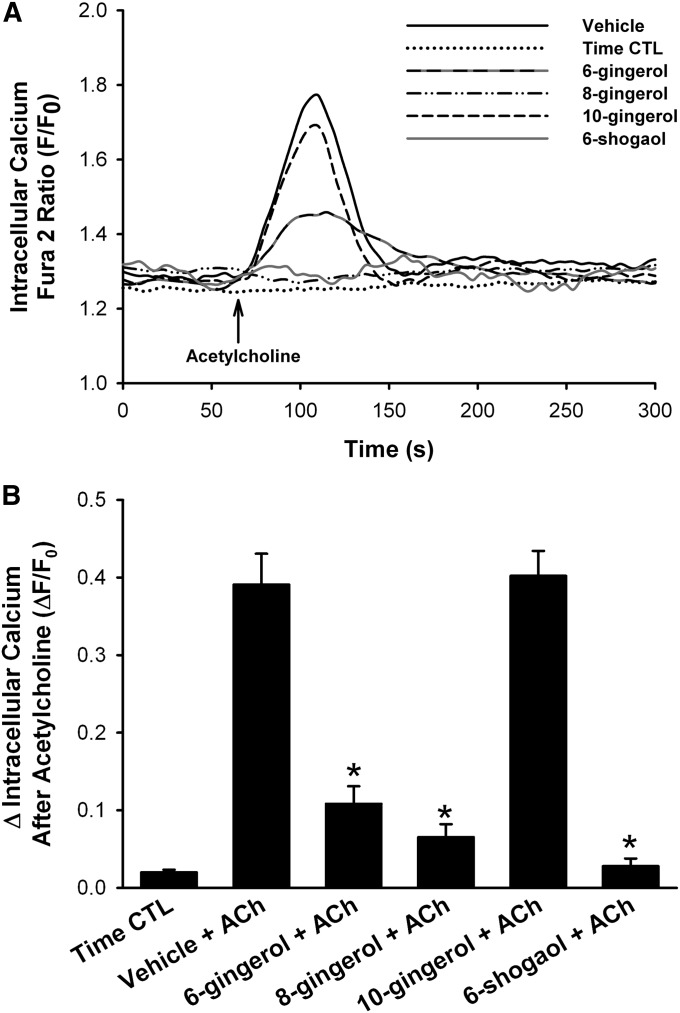
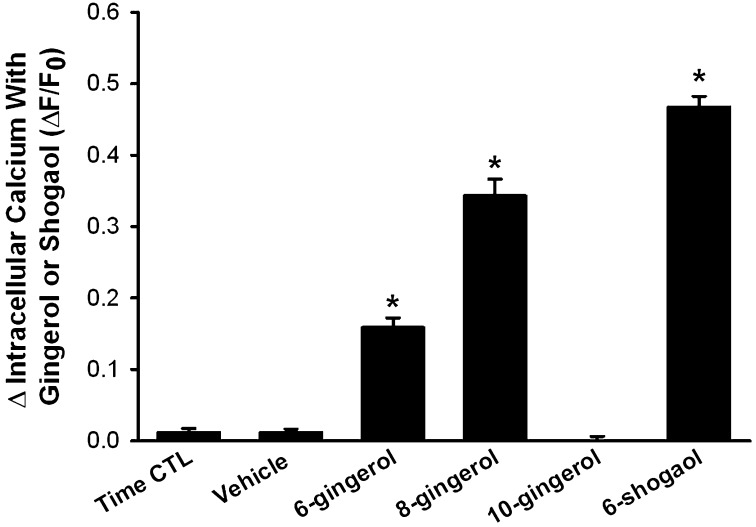
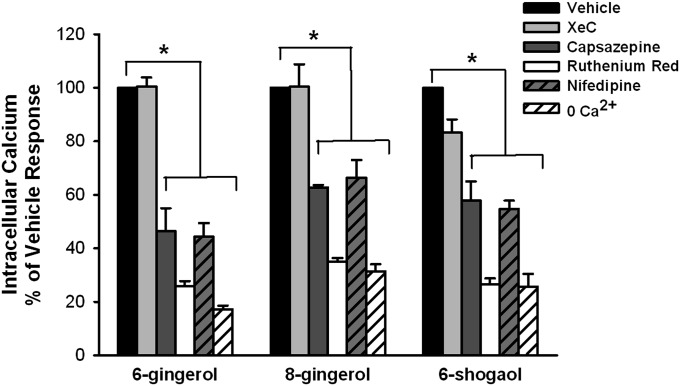
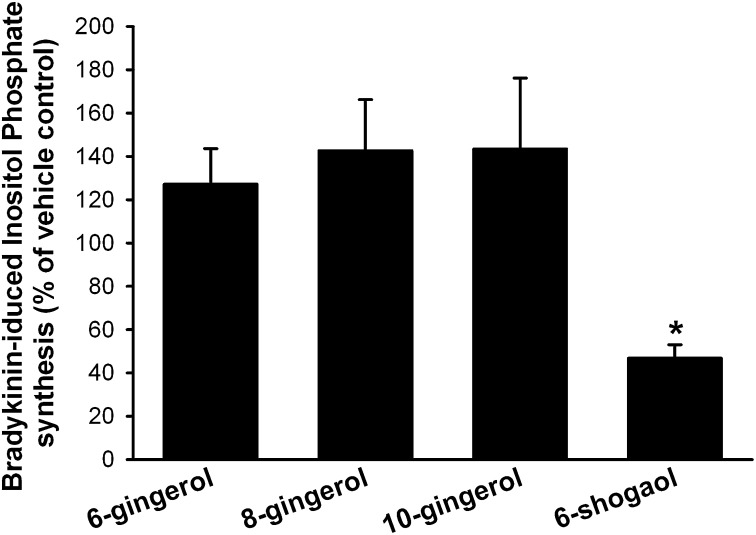
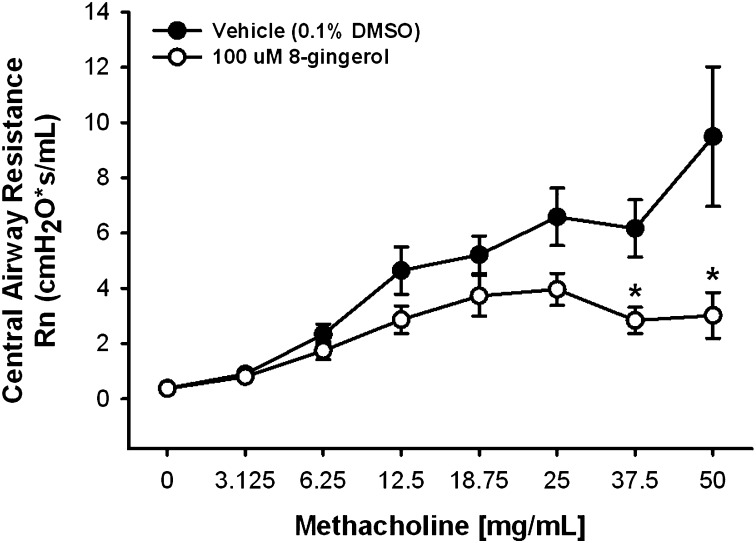
The prevalence of asthma has increased in recent years, and is characterized by airway hyperresponsiveness and inflammation. Many patients report using alternative therapies to self-treat asthma symptoms as adjuncts to short-acting and long-acting β-agonists and inhaled corticosteroids (ICS). As many as 40% of patients with asthma use herbal therapies to manage asthma symptoms, often without proven efficacy or known mechanisms of action. Therefore, investigations of both the therapeutic and possible detrimental effects of isolated components of herbal treatments on the airway are important. We hypothesized that ginger and its active components induce bronchodilation by modulating intracellular calcium ([Ca(2+)](i)) in airway smooth muscle (ASM). In isolated human ASM, ginger caused significant and rapid relaxation. Four purified constituents of ginger were subsequently tested for ASM relaxant properties in both guinea pig and human tracheas: [6]-gingerol, [8]-gingerol, and [6]-shogaol induced rapid relaxation of precontracted ASM (100-300 μM), whereas [10]-gingerol failed to induce relaxation. In human ASM cells, exposure to [6]-gingerol, [8]-gingerol, and [6]-shogaol, but not [10]-gingerol (100 μM), blunted subsequent Ca(2+) responses to bradykinin (10 μM) and S-(-)-Bay K 8644 (10 μM). In A/J mice, the nebulization of [8]-gingerol (100 μM), 15 minutes before methacholine challenge, significantly attenuated airway resistance, compared with vehicle. Taken together, these novel data show that ginger and its isolated active components, [6]-gingerol, [8]-gingerol, and [6]-shogaol, relax ASM, and [8]-gingerol attenuates airway hyperresponsiveness, in part by altering [Ca(2+)](i) regulation. These purified compounds may provide a therapeutic option alone or in combination with accepted therapeutics, including β(2)-agonists, in airway diseases such as asthma.
Figures
References
-
- Singh BB, Khorsan R, Vinjamury SP, Der-Martirosian C, Kizhakkeveettil A, Anderson TM. Herbal treatments of asthma: a systematic review. J Asthma 2007;44:685–698 - PubMed
-
- Kao ST, Chang CH, Chen YS, Chiang SY, Lin JG. Effects of Ding-Chuan-Tang on bronchoconstriction and airway leucocyte infiltration in sensitized guinea pigs. Immunopharmacol Immunotoxicol 2004;26:113–124 - PubMed
-
- Li A, Xie Y, Qi F, Li J, Wang P, Xu S, Zhao L. Anti-virus effect of traditional Chinese medicine Yi-Fu-Qing granule on acute respiratory tract infections. Biosci Trends. 2009;3:119–123 - PubMed
Publication types
MeSH terms
Substances
Grants and funding
LinkOut - more resources
Full Text Sources
Other Literature Sources
Research Materials
Miscellaneous
