


Irritable bowel syndrome: diagnosis and pathogenesis
- PMID: 23066308
- PMCID: PMC3468846
- DOI: 10.3748/wjg.v18.i37.5151
Irritable bowel syndrome: diagnosis and pathogenesis
Abstract
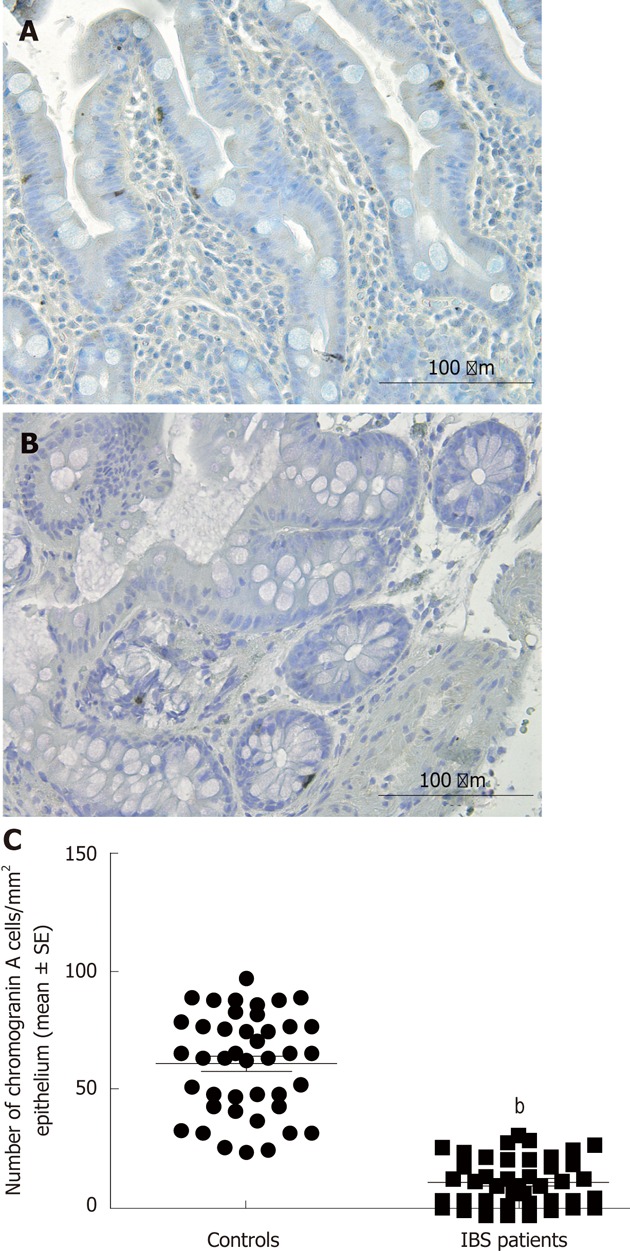
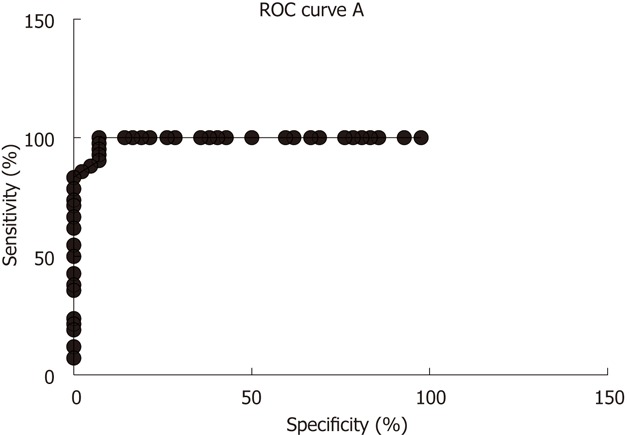
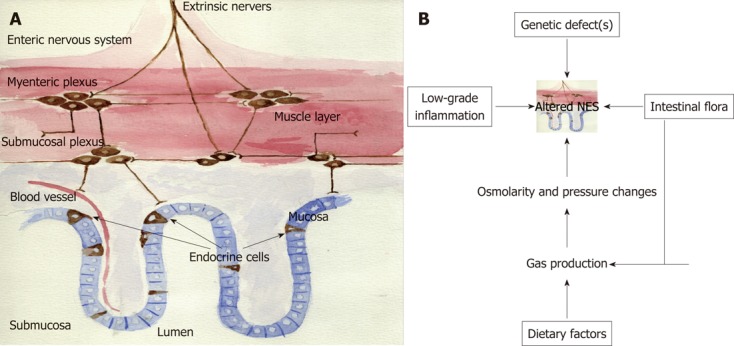
Irritable bowel syndrome (IBS) is a common gastrointestinal (GI) disorder that considerably reduces the quality of life. It further represents an economic burden on society due to the high consumption of healthcare resources and the non-productivity of IBS patients. The diagnosis of IBS is based on symptom assessment and the Rome III criteria. A combination of the Rome III criteria, a physical examination, blood tests, gastroscopy and colonoscopy with biopsies is believed to be necessary for diagnosis. Duodenal chromogranin A cell density is a promising biomarker for the diagnosis of IBS. The pathogenesis of IBS seems to be multifactorial, with the following factors playing a central role in the pathogenesis of IBS: heritability and genetics, dietary/intestinal microbiota, low-grade inflammation, and disturbances in the neuroendocrine system (NES) of the gut. One hypothesis proposes that the cause of IBS is an altered NES, which would cause abnormal GI motility, secretions and sensation. All of these abnormalities are characteristic of IBS. Alterations in the NES could be the result of one or more of the following: genetic factors, dietary intake, intestinal flora, or low-grade inflammation. Post-infectious IBS (PI-IBS) and inflammatory bowel disease-associated IBS (IBD-IBS) represent a considerable subset of IBS cases. Patients with PI- and IBD-IBS exhibit low-grade mucosal inflammation, as well as abnormalities in the NES of the gut.
Keywords: Cholecystokinin; Chromogranin A; Diagnosis; Diet; Endocrine cells; Hereditary; Intestinal flora; Low-grade inflammation; Peptide YY; Serotonin.
Figures
References
-
- El-Salhy M, Gundersen D, Hatlebakk JG, Hausken T. Irritable bowel syndrome. New York: Nova scientific Publisher; 2012.
-
- Quigley EM, Locke GR, Mueller-Lissner S, Paulo LG, Tytgat GN, Helfrich I, Schaefer E. Prevalence and management of abdominal cramping and pain: a multinational survey. Aliment Pharmacol Ther. 2006;24:411–419. - PubMed
-
- Vandvik PO, Lydersen S, Farup PG. Prevalence, comorbidity and impact of irritable bowel syndrome in Norway. Scand J Gastroenterol. 2006;41:650–656. - PubMed
-
- Drossman DA, Li Z, Andruzzi E, Temple RD, Talley NJ, Thompson WG, Whitehead WE, Janssens J, Funch-Jensen P, Corazziari E. U.S. householder survey of functional gastrointestinal disorders. Prevalence, sociodemography, and health impact. Dig Dis Sci. 1993;38:1569–1580. - PubMed
-
- Saito YA, Talley NJ, J Melton L, Fett S, Zinsmeister AR, Locke GR. The effect of new diagnostic criteria for irritable bowel syndrome on community prevalence estimates. Neurogastroenterol Motil. 2003;15:687–694. - PubMed
Publication types
MeSH terms
Substances
LinkOut - more resources
Full Text Sources
Medical
Research Materials
Miscellaneous
