


Translation inhibition of the developmental cycle protein HctA by the small RNA IhtA is conserved across Chlamydia
- PMID: 23071807
- PMCID: PMC3469542
- DOI: 10.1371/journal.pone.0047439
Translation inhibition of the developmental cycle protein HctA by the small RNA IhtA is conserved across Chlamydia
Abstract
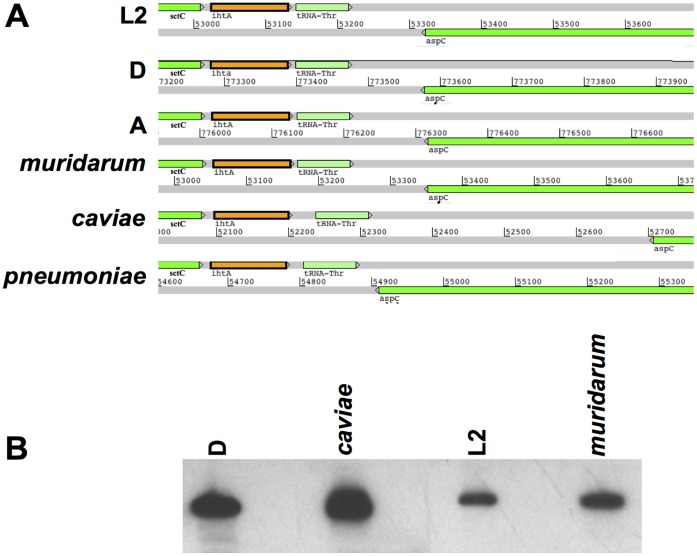
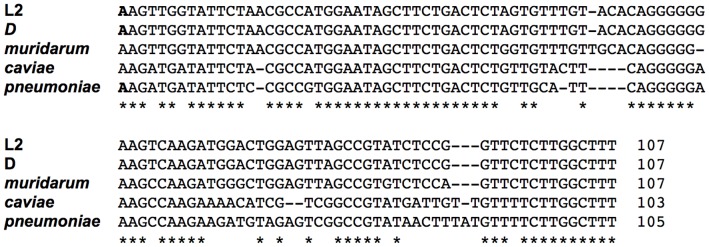
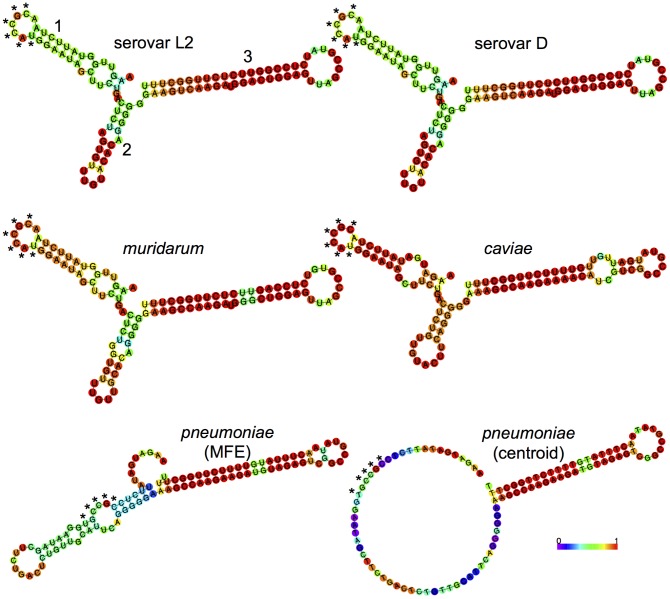
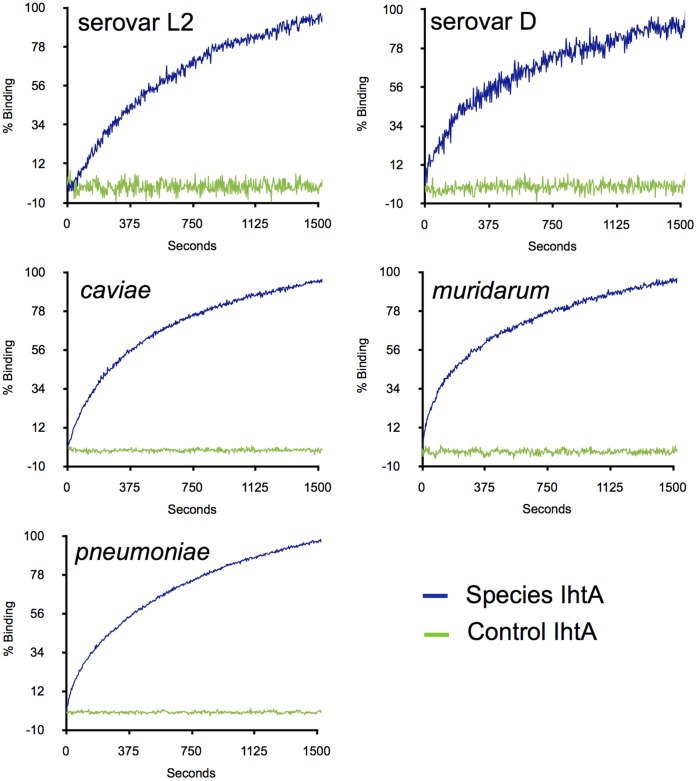
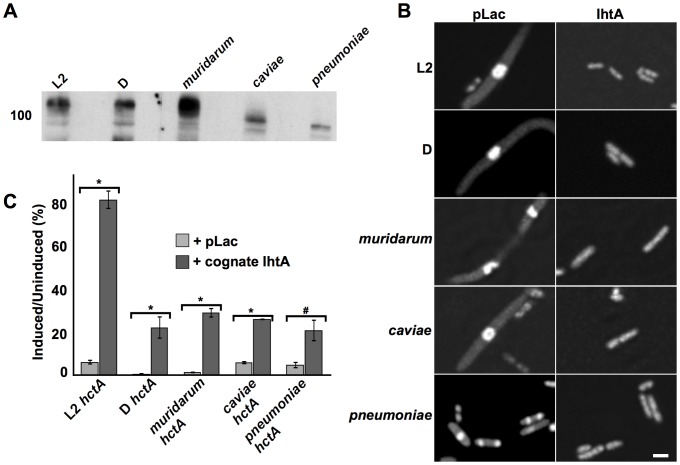
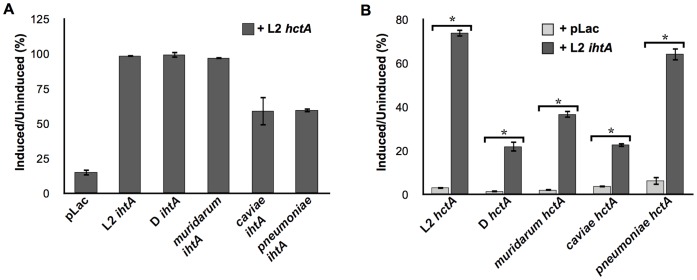
The developmental cycle of the obligate intracellular pathogen Chlamydia trachomatis serovar L2 is controlled in part by the small non-coding RNA (sRNA), IhtA. All Chlamydia alternate in a regulated fashion between the infectious elementary body (EB) and the replicative reticulate body (RB) which asynchronously re-differentiates back to the terminal EB form at the end of the cycle. The histone like protein HctA is central to RB:EB differentiation late in the cycle as it binds to and occludes the genome, thereby repressing transcription and translation. The sRNA IhtA is a critical component of this regulatory loop as it represses translation of hctA until late in infection at which point IhtA transcription decreases, allowing HctA expression to occur and RB to EB differentiation to proceed. It has been reported that IhtA is expressed during infection by the human pathogens C. trachomatis serovars L2, D and L2b and C. pneumoniae. We show in this work that IhtA is also expressed by the animal pathogens C. caviae and C. muridarum. Expression of HctA in E. coli is lethal and co-expression of IhtA relieves this phenotype. To determine if regulation of HctA by IhtA is a conserved mechanism across pathogenic chlamydial species, we cloned hctA and ihtA from C. trachomatis serovar D, C. muridarum, C. caviae and C. pneumoniae and assayed for rescue of growth repression in E. coli co-expression studies. In each case, co-expression of ihtA with the cognate hctA resulted in relief of growth repression. In addition, expression of each chlamydial species IhtA rescued the lethal phenotype of C. trachomatis serovar L2 HctA expression. As biolayer interferometry studies indicate that IhtA interacts directly with hctA message for all species tested, we predict that conserved sequences of IhtA are necessary for function and/or binding.
Conflict of interest statement
Figures
References
-
- World Health Organization (2001) Global prevalence and incidence of selected curable sexually transmitted infections: overview and estimates. - PubMed
-
- Cates W, Wasserheit JN (1991) Genital chlamydial infections: epidemiology and reproductive sequelae. Am J Obstet Gynecol 164: 1771–1781. - PubMed
-
- Barron AL, White HJ, Rank RG, Soloff BL, Moses EB (1981) A new animal model for the study of Chlamydia trachomatis genital infections: infection of mice with the agent of mouse pneumonitis. J Infect Dis 143: 63–66. - PubMed
Publication types
MeSH terms
Substances
Grants and funding
LinkOut - more resources
Full Text Sources
Research Materials
