


Separating Fluid Shear Stress from Acceleration during Vibrations in Vitro: Identification of Mechanical Signals Modulating the Cellular Response
- PMID: 23074384
- PMCID: PMC3466610
- DOI: 10.1007/s12195-012-0231-1
Separating Fluid Shear Stress from Acceleration during Vibrations in Vitro: Identification of Mechanical Signals Modulating the Cellular Response
Abstract
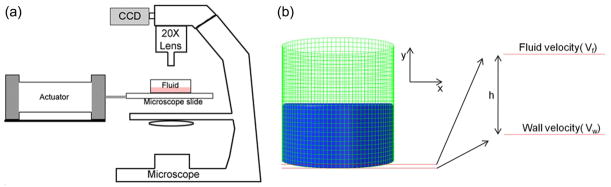
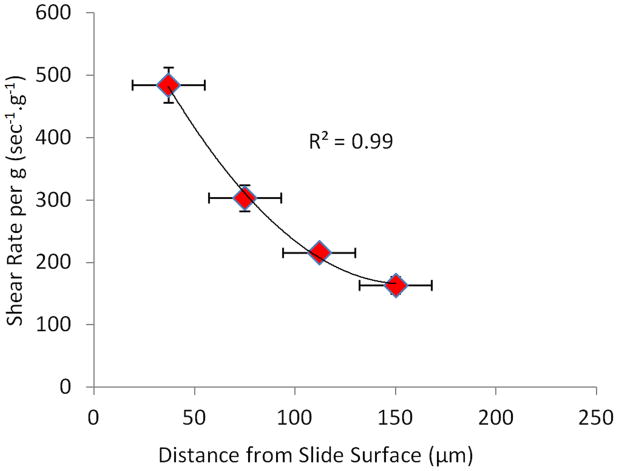
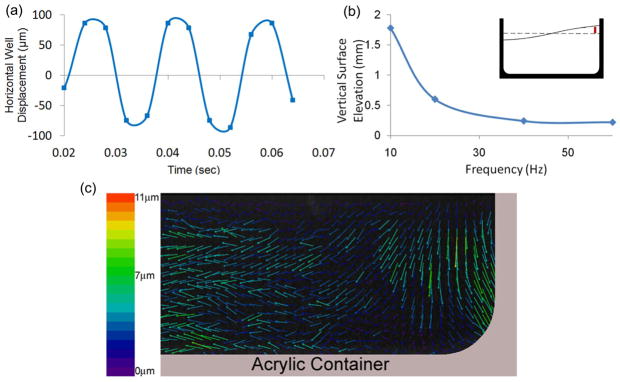
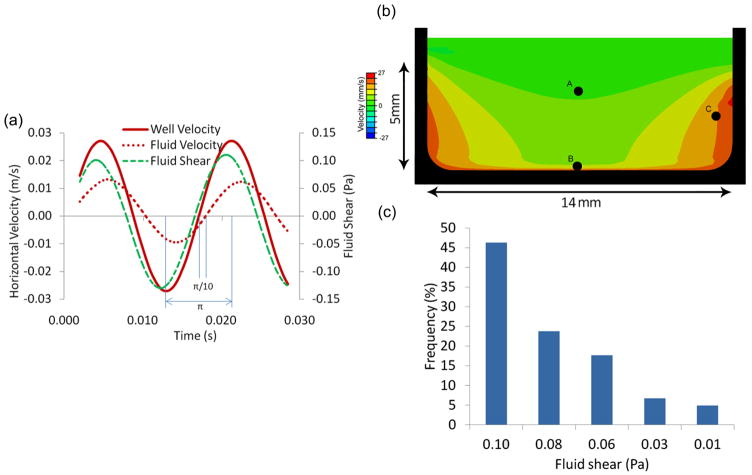
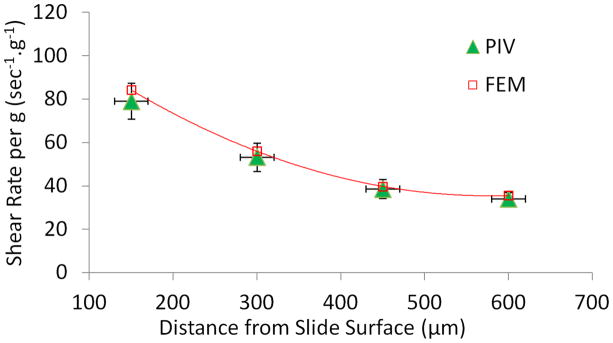
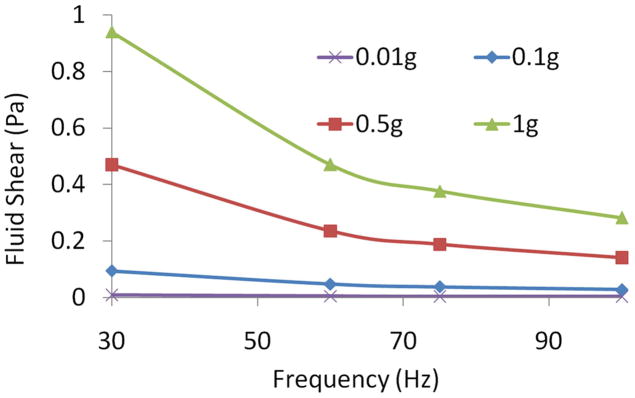
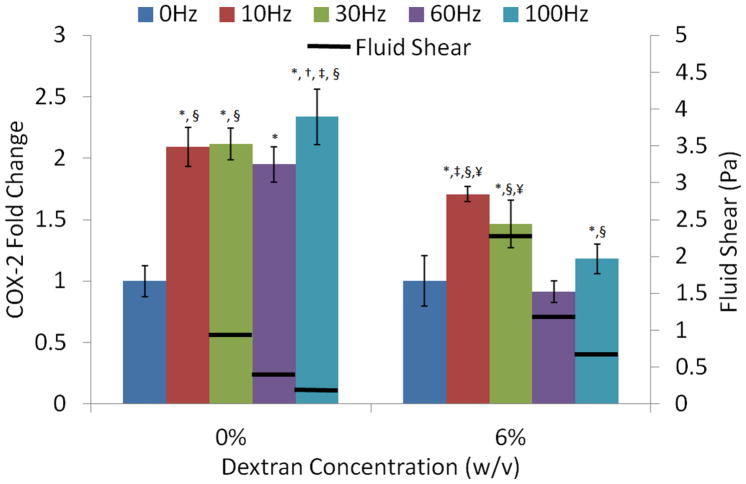
The identification of the physical mechanism(s) by which cells can sense vibrations requires the determination of the cellular mechanical environment. Here, we quantified vibration-induced fluid shear stresses in vitro and tested whether this system allows for the separation of two mechanical parameters previously proposed to drive the cellular response to vibration - fluid shear and peak accelerations. When peak accelerations of the oscillatory horizontal motions were set at 1g and 60Hz, peak fluid shear stresses acting on the cell layer reached 0.5Pa. A 3.5-fold increase in fluid viscosity increased peak fluid shear stresses 2.6-fold while doubling fluid volume in the well caused a 2-fold decrease in fluid shear. Fluid shear was positively related to peak acceleration magnitude and inversely related to vibration frequency. These data demonstrated that peak shear stress can be effectively separated from peak acceleration by controlling specific levels of vibration frequency, acceleration, and/or fluid viscosity. As an example for exploiting these relations, we tested the relevance of shear stress in promoting COX-2 expression in osteoblast like cells. Across different vibration frequencies and fluid viscosities, neither the level of generated fluid shear nor the frequency of the signal were able to consistently account for differences in the relative increase in COX-2 expression between groups, emphasizing that the eventual identification of the physical mechanism(s) requires a detailed quantification of the cellular mechanical environment.
Figures
References
-
- Bacabac RG, et al. Bone cell responses to high-frequency vibration stress: does the nucleus oscillate within the cytoplasm? FASEB J. 2006;20:858. - PubMed
-
- Bauer HF, Eidel W. Oscillations of a viscous liquid in a cylindrical container. Aerospace Science and Technology. 1997;1:519.
-
- Chen DJ, Chiang FP, Tan YS, Don HS. Digital Speckle-Displacement Measurementt Using a Complex Spectrum Method. Applied Optics. 1993;32:1839. - PubMed
-
- Chen W, Haroun MA, Liu F. Large amplitude liquid sloshing in seismically excited tanks. Earthq Eng Struct Dyn. 1996;25:653.
Grants and funding
LinkOut - more resources
Full Text Sources
Research Materials
