


Innate immunity and alcoholic liver disease
- PMID: 23075869
- PMCID: PMC6412139
- DOI: 10.1159/000341126
Innate immunity and alcoholic liver disease
Abstract
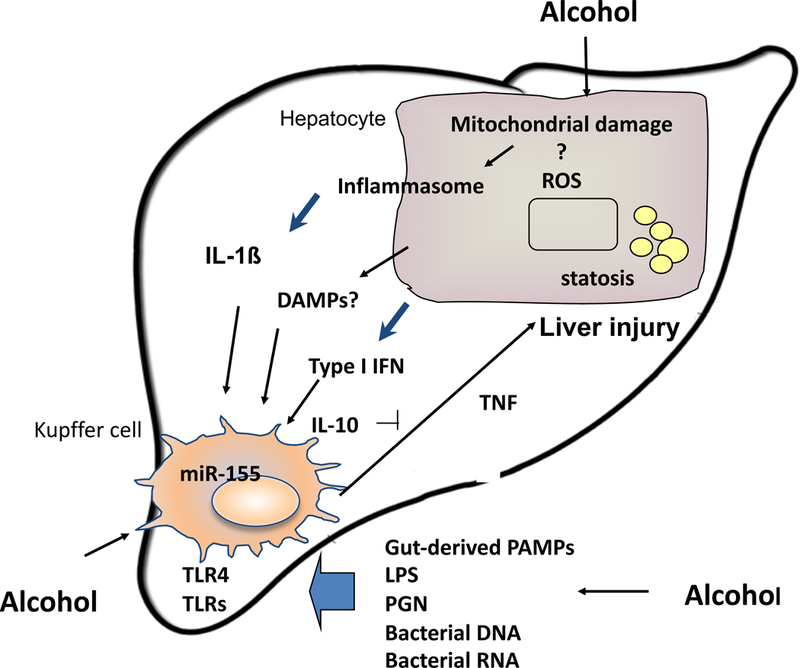
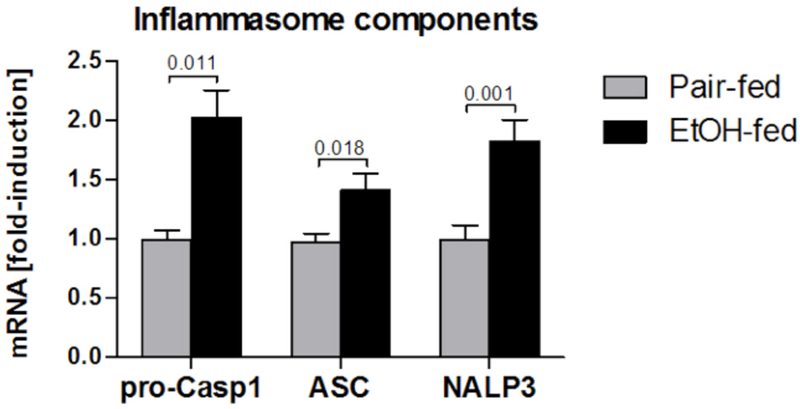
Innate immunity provides the primary response to danger signals from pathogens or injured host cells and tissues. The cells of the innate immune system include monocytes, macrophages, dendritic cells, neutrophils, NK cells and NKT cells that orchestrate innate immune and initiate adaptive immune responses via cell interactions, cytokines, chemokines and other mediators. The most robust and common response of the innate immune system to danger signals is inflammation. In the multifactorial pathophysiology of alcoholic liver disease (ALD), activation of innate immune cells and the inflammatory cascade play a central role. Recent studies have demonstrated that Toll-like receptors (TLRs), the sensors of microbial and endogenous danger signals, are expressed and activated in innate immune cells as well as in parenchymal cells in the liver, and thereby contribute to ALD. The importance of gut-derived endotoxin and its recognition by TLR4 expressed on innate immune cells and liver parenchymal cells and the specificity of TLR4-induced downstream signaling via the interferon regulator factor 3 (IRF3) has recently been investigated. We have shown that mice deficient in IRF3 or TLR4 expression are protected from alcohol-induced liver steatosis, inflammation and hepatocyte injury. In addition to pathogen-derived danger molecules, the inflammatory cascade can also be activated by endogenous danger signals released from damaged cells. The inflammasome, a multiprotein complex, senses endogenous danger molecules to result in caspase-1-mediated cleavage of IL-1β. Our recent results suggest that inflammasome and caspase-1 activation occur in ALD and that IL-1 significantly contributes to both steatosis and inflammation in the liver in ALD.
Copyright © 2012 S. Karger AG, Basel.
Figures
References
-
- Rehm J, Mathers C, Popova S, Thavorncharoensap M, Teerawattananon Y, Patra J. Global burden of disease and injury and economic cost attributable to alcohol use and alcohol-use disorders. Lancet 2009;373:2223–2233. - PubMed
-
- Shaheen NJ, Hansen RA, Morgan DR, Gangarosa LM, Ringel Y, Thiny MT, Russo MW, Sandler RS. The burden of gastrointestinal and liver diseases, 2006. Am J Gastroenterol 2006;101:2128–2138. - PubMed
-
- Kawai T, Akira S. TLR signaling. Cell Death Differ 2006;13:816–825. - PubMed
-
- O’Neill LA, Sheedy FJ, McCoy CE. MicroRNAs: the fine-tuners of Toll-like receptor signalling. Nat Rev Immunol 2011;11:163–175. - PubMed
Publication types
MeSH terms
Substances
Grants and funding
LinkOut - more resources
Full Text Sources
Other Literature Sources
