


Prospective cohort study of spinal muscular atrophy types 2 and 3
- PMID: 23077013
- PMCID: PMC3525313
- DOI: 10.1212/WNL.0b013e318271f7e4
Prospective cohort study of spinal muscular atrophy types 2 and 3
Abstract
Objective: To characterize the natural history of spinal muscular atrophy type 2 and type 3 (SMA 2/3) beyond 1 year and to report data on clinical and biological outcomes for use in trial planning.
Methods: We conducted a prospective observational cohort study of 79 children and young adults with SMA 2/3 who participated in evaluations for up to 48 months. Clinically, we evaluated motor and pulmonary function, quality of life, and muscle strength. We also measured SMN2 copy number, hematologic and biochemical profiles, muscle mass by dual x-ray absorptiometry (DXA), and the compound motor action potential (CMAP) in a hand muscle. Data were analyzed for associations between clinical and biological/laboratory characteristics cross-sectionally, and for change over time in outcomes using all available data.
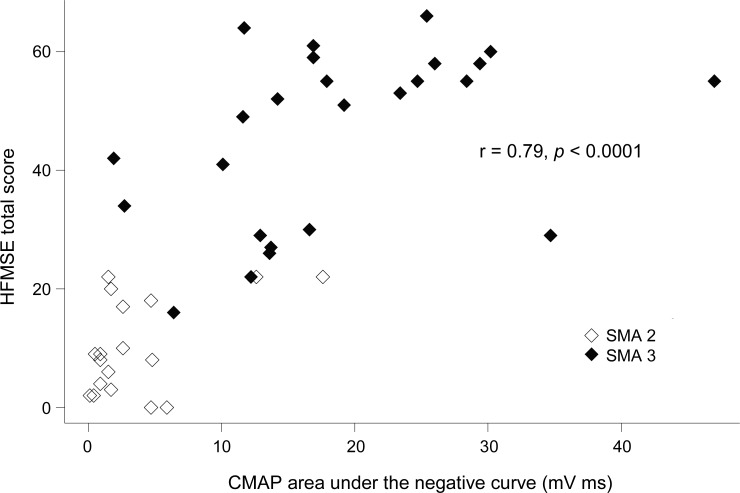
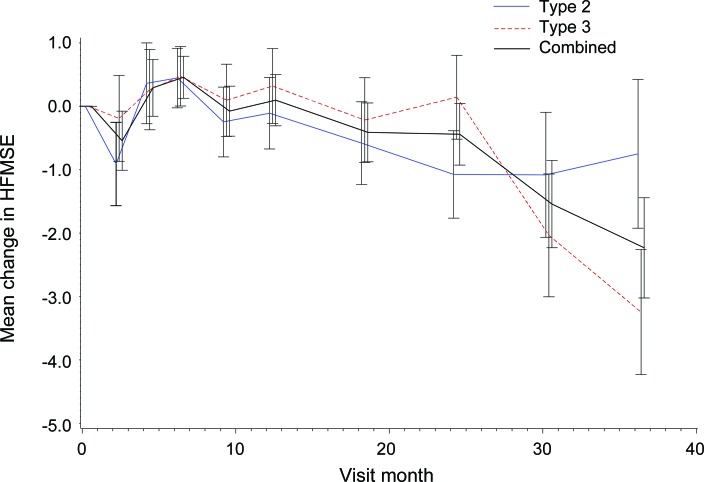
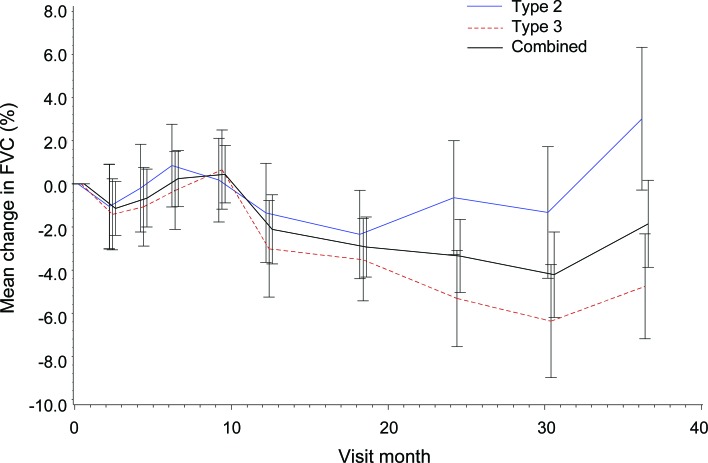
Results: In cross-sectional analyses, certain biological measures (specifically, CMAP, DXA fat-free mass index, and SMN2 copy number) and muscle strength measures were associated with motor function. Motor and pulmonary function declined over time, particularly at time points beyond 12 months of follow-up.
Conclusion: The intermediate and mild phenotypes of SMA show slow functional declines when observation periods exceed 1 year. Whole body muscle mass, hand muscle compound motor action potentials, and muscle strength are associated with clinical measures of motor function. The data from this study will be useful for clinical trial planning and suggest that CMAP and DXA warrant further evaluation as potential biomarkers.
Figures
References
-
- Crawford TO. Spinal muscular atrophies. In: Jones RH, De Vivo DC, Darras BT, eds. Neuromuscular Disorders of Infancy, Childhood and Adolescence: A Clinician's Approach. Philadelphia, PA: Butterworth Heinemann; 2003.
-
- Melki J, Lefebvre S, Burglen L, et al. De novo and inherited deletions of the 5q13 region in spinal muscular atrophies. Science 1994; 264: 1474– 1477 - PubMed
-
- Wirth B, Brichta L, Schrank B, et al. Mildly affected patients with spinal muscular atrophy are partially protected by an increased SMN2 copy number. Hum Genet 2006; 119: 422– 428 - PubMed
-
- Grzeschik SM, Ganta M, Prior TW, Heavlin WD, Wang CH. Hydroxyurea enhances SMN2 gene expression in spinal muscular atrophy cells. Ann Neurol 2005; 58: 194– 202 - PubMed
Publication types
MeSH terms
Grants and funding
LinkOut - more resources
Full Text Sources
Other Literature Sources
