


Mechanisms of itch evoked by β-alanine
- PMID: 23077038
- PMCID: PMC3491570
- DOI: 10.1523/JNEUROSCI.3509-12.2012
Mechanisms of itch evoked by β-alanine
Abstract
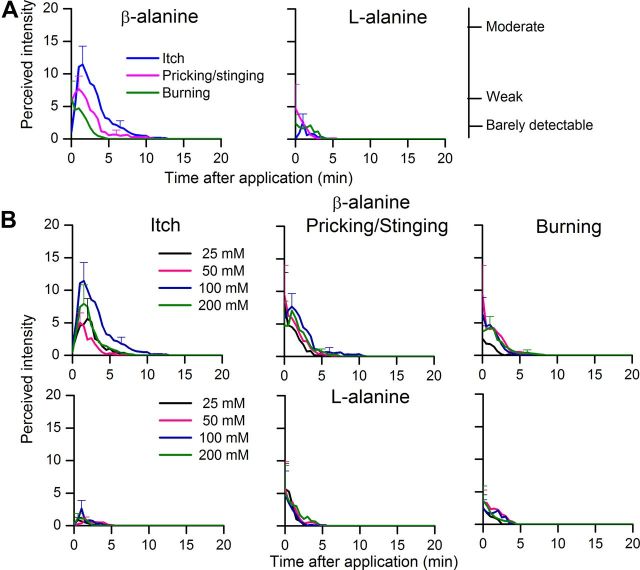
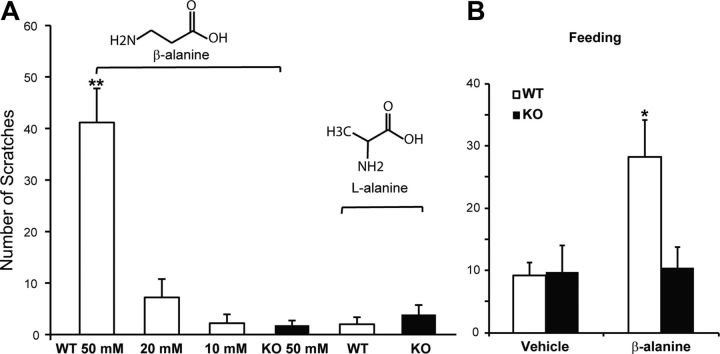
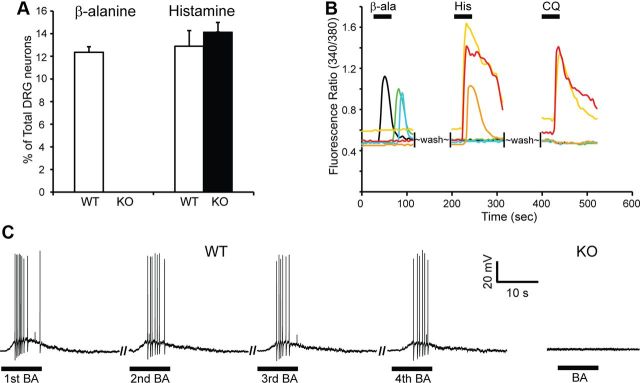
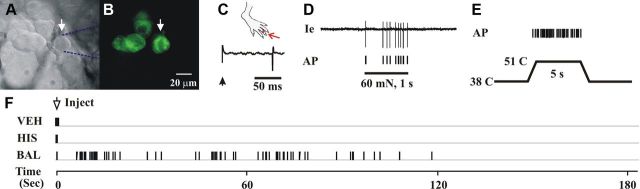
β-Alanine, a popular supplement for muscle building, induces itch and tingling after consumption, but the underlying molecular and neural mechanisms are obscure. Here we show that, in mice, β-alanine elicited itch-associated behavior that requires MrgprD, a G-protein-coupled receptor expressed by a subpopulation of primary sensory neurons. These neurons exclusively innervate the skin, respond to β-alanine, heat, and mechanical noxious stimuli but do not respond to histamine. In humans, intradermally injected β-alanine induced itch but neither wheal nor flare, suggesting that the itch was not mediated by histamine. Thus, the primary sensory neurons responsive to β-alanine are likely part of a histamine-independent itch neural circuit and a target for treating clinical itch that is unrelieved by anti-histamines.
Figures
References
-
- Baguet A, Koppo K, Pottier A, Derave W. Beta-alanine supplementation reduces acidosis but not oxygen uptake response during high-intensity cycling exercise. Eur J Appl Physiol. 2010;108:495–503. - PubMed
-
- Crush KG. Carnosine and related substances in animal tissues. Comp Biochem Physiol. 1970;34:3–30. - PubMed
-
- Décombaz J, Beaumont M, Vuichoud J, Bouisset F, Stellingwerff T. Effect of slow-release β-alanine tablets on absorption kinetics and paresthesia. Amino Acids. 2012;43:67–76. - PubMed
-
- Dong X, Han S, Zylka MJ, Simon MI, Anderson DJ. A diverse family of GPCRs expressed in specific subsets of nociceptive sensory neurons. Cell. 2001;106:619–632. - PubMed
Publication types
MeSH terms
Substances
Grants and funding
LinkOut - more resources
Full Text Sources
Other Literature Sources
Medical
Molecular Biology Databases
Research Materials
