. 2012;7(10):e47624.
doi: 10.1371/journal.pone.0047624. Epub 2012 Oct 15.

Decay of genes encoding the oomycete flagellar proteome in the downy mildew Hyaloperonospora arabidopsidis

Affiliations

Decay of genes encoding the oomycete flagellar proteome in the downy mildew Hyaloperonospora arabidopsidis

Howard S Judelson et al. PLoS One. 2012.

Abstract

Zoospores are central to the life cycles of most of the eukaryotic microbes known as oomycetes, but some genera have lost the ability to form these flagellated cells. In the plant pathogen Phytophthora infestans, genes encoding 257 proteins associated with flagella were identified by comparative genomics. These included the main structural components of the axoneme and basal body, proteins involved in intraflagellar transport, regulatory proteins, enzymes for maintaining ATP levels, and others. Transcripts for over three-quarters of the genes were up-regulated during sporulation, and persisted to varying degrees in the pre-zoospore stage (sporangia) and motile zoospores. Nearly all of these genes had orthologs in other eukaryotes that form flagella or cilia, but not species that lack the organelle. Orthologs of 211 of the genes were also absent from a sister taxon to P. infestans that lost the ability to form flagella, the downy mildew Hyaloperonospora arabidopsidis. Many of the genes retained in H. arabidopsidis were also present in other non-flagellates, suggesting that they play roles both in flagella and other cellular processes. Remnants of the missing genes were often detected in the H. arabidopsidis genome. Degradation of the genes was associated with local compaction of the chromosome and a heightened propensity towards genome rearrangements, as such regions were less likely to share synteny with P. infestans.


Conflict of interest statement

Competing Interests: The authors have declared that no competing interests exist.

Figures

Figure 1
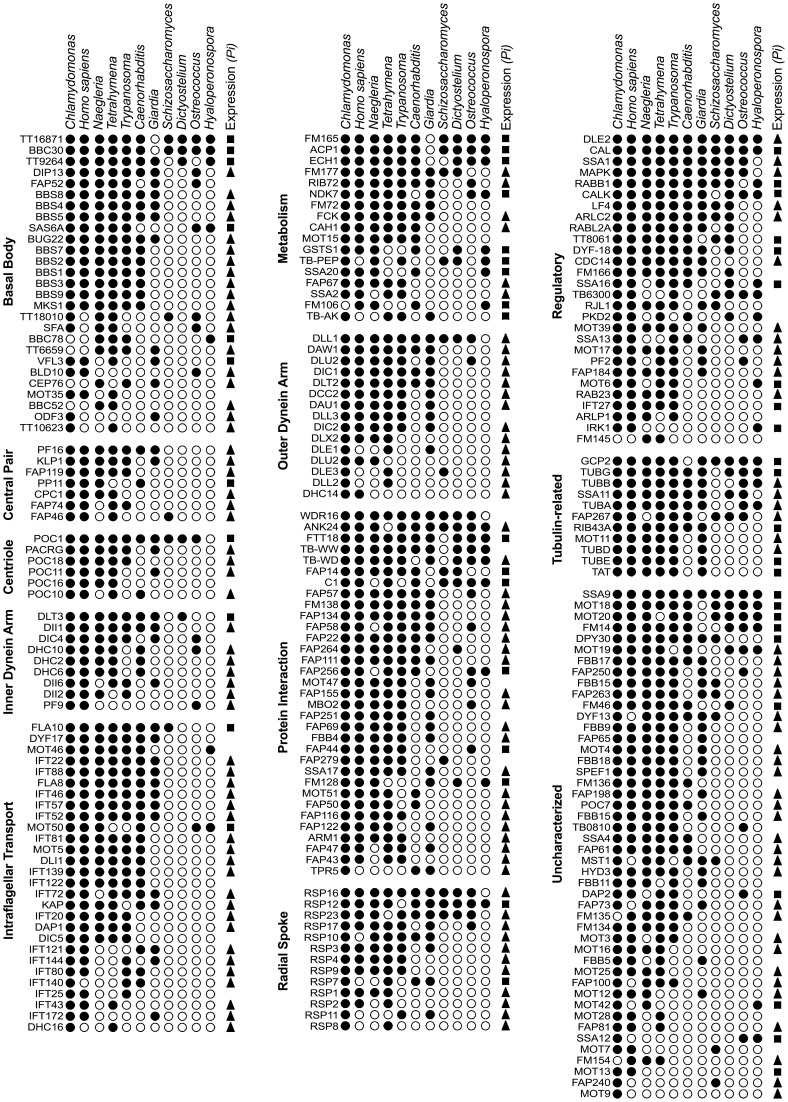
Figure 1. Phylogenetic distribution of flagella-associated components detected in P. infestans.
Orthologs (black circles) were identified from seven eukaryotes capable of forming flagella or cilia (C. reinhardtii, H. sapiens, N. gruberi, T. thermophila, C. elegans, G. lamblia) and four that do not make the organelle (S. pombe, D. discoideum, O. tauri, H. arabidopsidis) using P. infestans, C. reinhardtii, and N. gruberi proteins as query sequences. Searches were performed using OrthoMCL and supplemented with the reciprocal best hit approach. Genes are grouped by functional categories, although some categories may overlap.
Figure 2
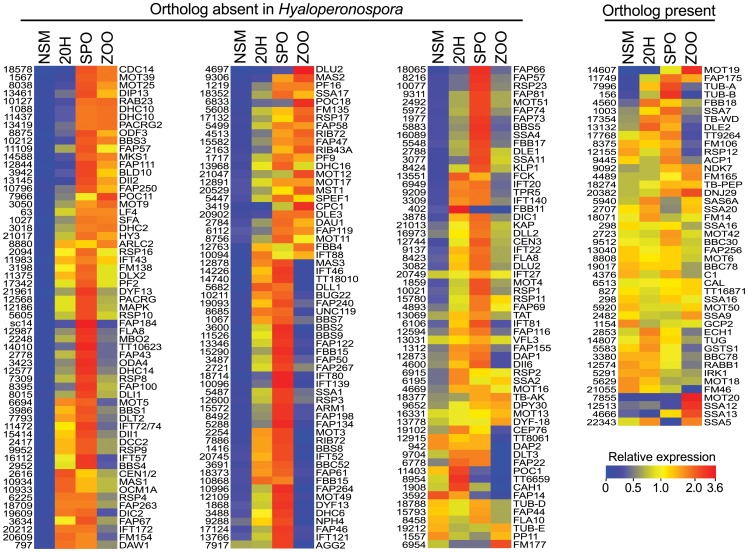
Figure 2. Expression of predicted flagella-associated genes from P. infestans.
RNA levels were measured in nonsporulating mycelia (NSM), cultures 20 hours after being induced to sporulate (20H), purified ungerminated sporangia (SPO), and swimming zoospores (ZOO). Panels are split based on the presence or absence of orthologs in H. arabidopsidis. Numbers to the left of each image represent the accession number from the Broad Institute database (trimmed of the PITG prefix), and lettering to the right of each image represents the common names of the gene products as listed in Table S1.
Figure 3
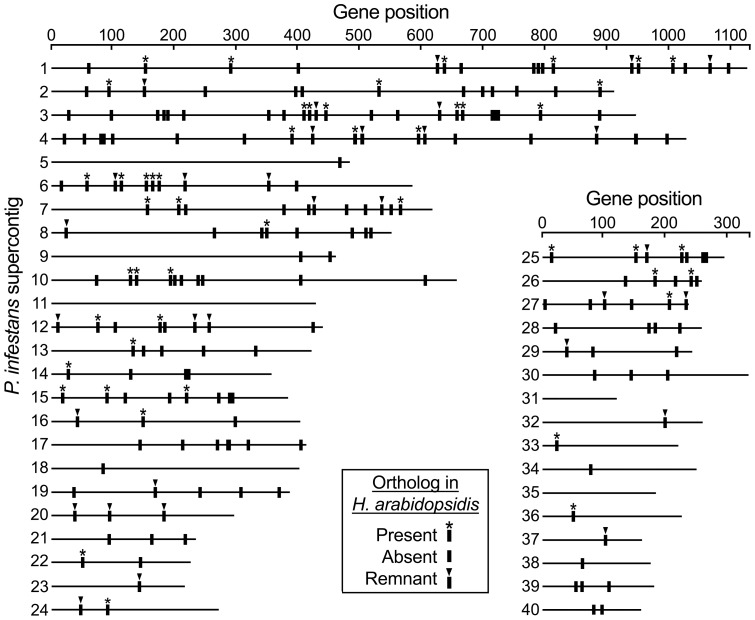
Figure 3. Location of predicted flagella-associated genes from P. infestans.
Shown are maps of the 40 largest supercontigs from the assembly, with positions of genes marked by vertical bars. An asterisk above the bar indicates that the gene is intact in H. arabidopsidis, and an arrow denotes the presence of a gene remnant in H. arabidopsidis.
Figure 4
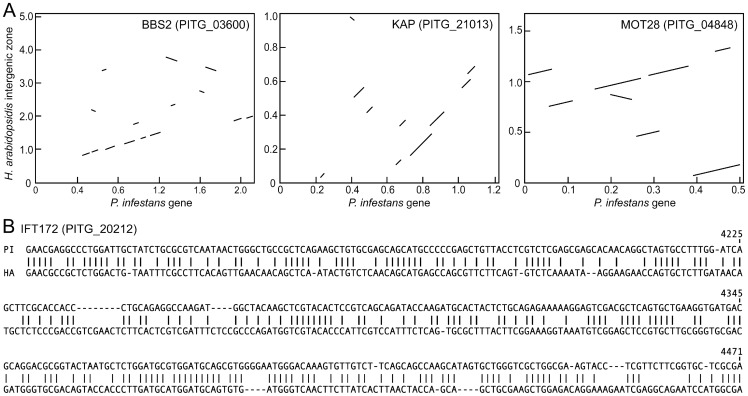
Figure 4. Examples of gene remnants in H. arabidopsidis.
A, Comparisons of three P. infestans genes representing orthologs of C. reinhardtii BBS2, KAP, and MOT28 and the three corresponding intergenic regions from H. arabidopsidis. The images are redrawn from the dot matrix output of NCBI Blast 2.2.26, with diagonals representing regions of similarity. B, Alignment of portion of remnant of IFT172 gene from H. arabidopsidis (HA) with P. infestans gene PITG_20212 (PI). Numbers at right indicate the position within the P. infestans gene. The H. arabidopsidis sequences correspond to Scaffold 1, positions 1119536 to 1119160, of assembly version 8.3. The total aligned segment spanned 1597 nt, but only 373 nt is shown.
Figure 5
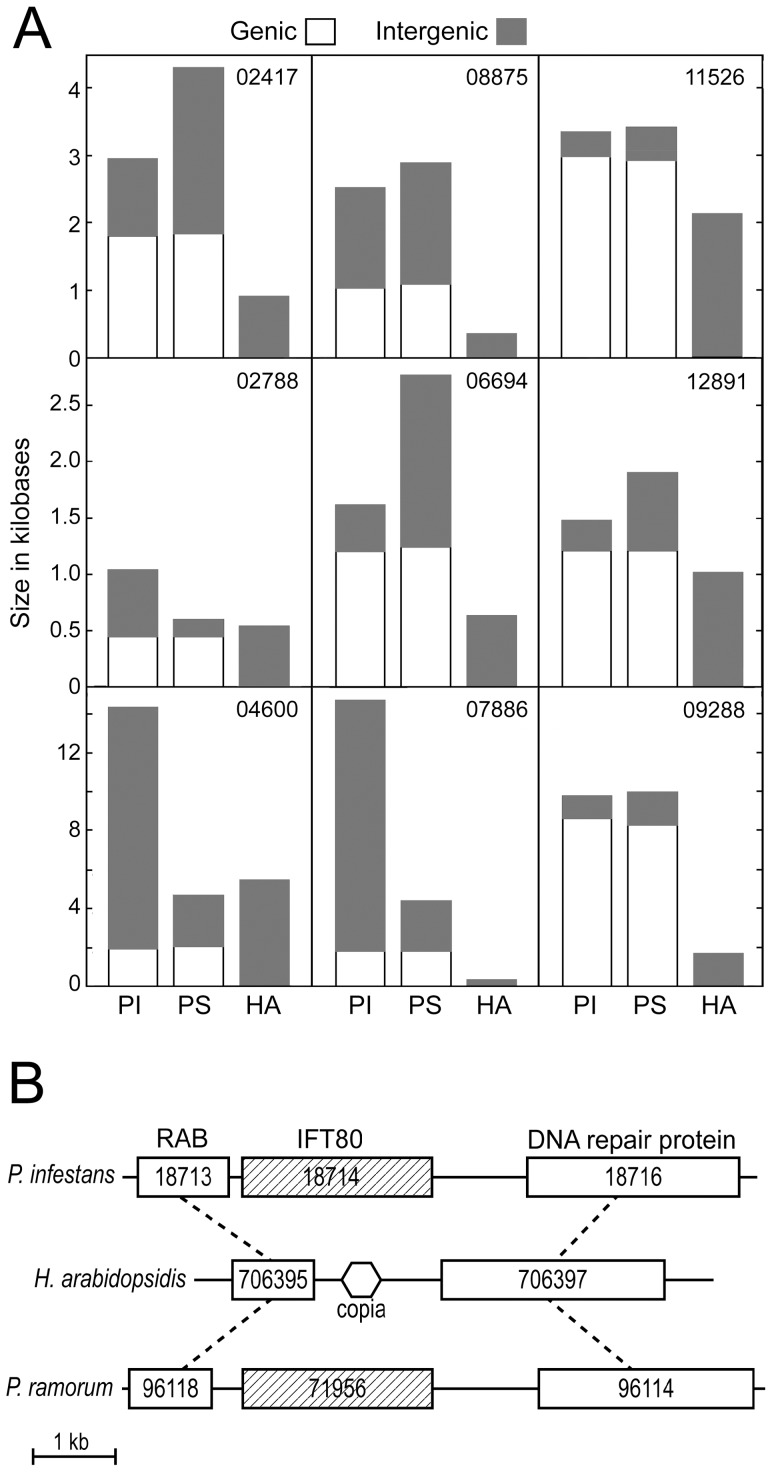
Figure 5. Examples of loci experiencing gene loss in the downy mildew.
A, Sizes of genic (white bars) and intergenic (dark bars) regions in H. arabidopsidis (HA), P. infestans (PI), and P. sojae (PS). Genic regions include the entire predicted primary transcript, and the number of the corresponding P. infestans gene is marked in the upper right-hand corner of each panel. B, H. arabidopsidis locus experiencing loss of IFT80 gene, compaction, and transposable element insertion. Dashed lines indicate flanking orthologs in P. infestans and P. ramorum, boxes represent genes (with database number indicated), and the hexagon in the H. arabidopsidis map represents the location of a Copia-like sequence. Maps are drawn to scale using corrected gene models, and illustrate how the region between the RAB and DNA repair protein genes is reduced from 3.5 kb in Phytophthora to 1.5 kb in H. arabidopsidis.

References

    1. Carvalho-Santos Z, Azimzadeh J, Pereira-Leal JB, Bettencourt-Dias M (2011) Evolution: Tracing the origins of centrioles, cilia, and flagella. Journal of Cell Biology 194: 165–175. - PMC - PubMed
    1. Erickson HP (2007) Evolution of the cytoskeleton. Bioessays 29: 668–677. - PMC - PubMed
    1. Jekely G, Arendt D (2006) Evolution of intraflagellar transport from coated vesicles and autogenous origin of the eukaryotic cilium. Bioessays 28: 191–198. - PubMed
    1. Liu YJ, Hodson MC, Hall BD (2006) Loss of the flagellum happened only once in the fungal lineage: phylogenetic structure of kingdom Fungi inferred from RNA polymerase II subunit genes. BMC Evolutionary Biology 6: 74. - PMC - PubMed
    1. Dick MW (2001) Straminipilous Fungi. Dordrecht: Kluwer Academic Publishers. 670 p.

Publication types