A novel look at racial health disparities: the interaction between social disadvantage and environmental health
- PMID: 23078461
- PMCID: PMC3519308
- DOI: 10.2105/AJPH.2012.300774
A novel look at racial health disparities: the interaction between social disadvantage and environmental health
Abstract
Objectives: We explored the notion that social disadvantage increases vulnerability to the health effects of environmental hazards. Specifically, we examined (1) whether race modifies the association between blood lead and blood pressure and (2) whether socioeconomic status (SES) plays a role in this modifying effect.
Methods: Using the National Health and Nutrition Examination Survey (2001-2008) and linear regression, we estimated the association between blood lead and blood pressure. Using interactions among race, SES, and lead, we estimated this association by levels of social disadvantage.
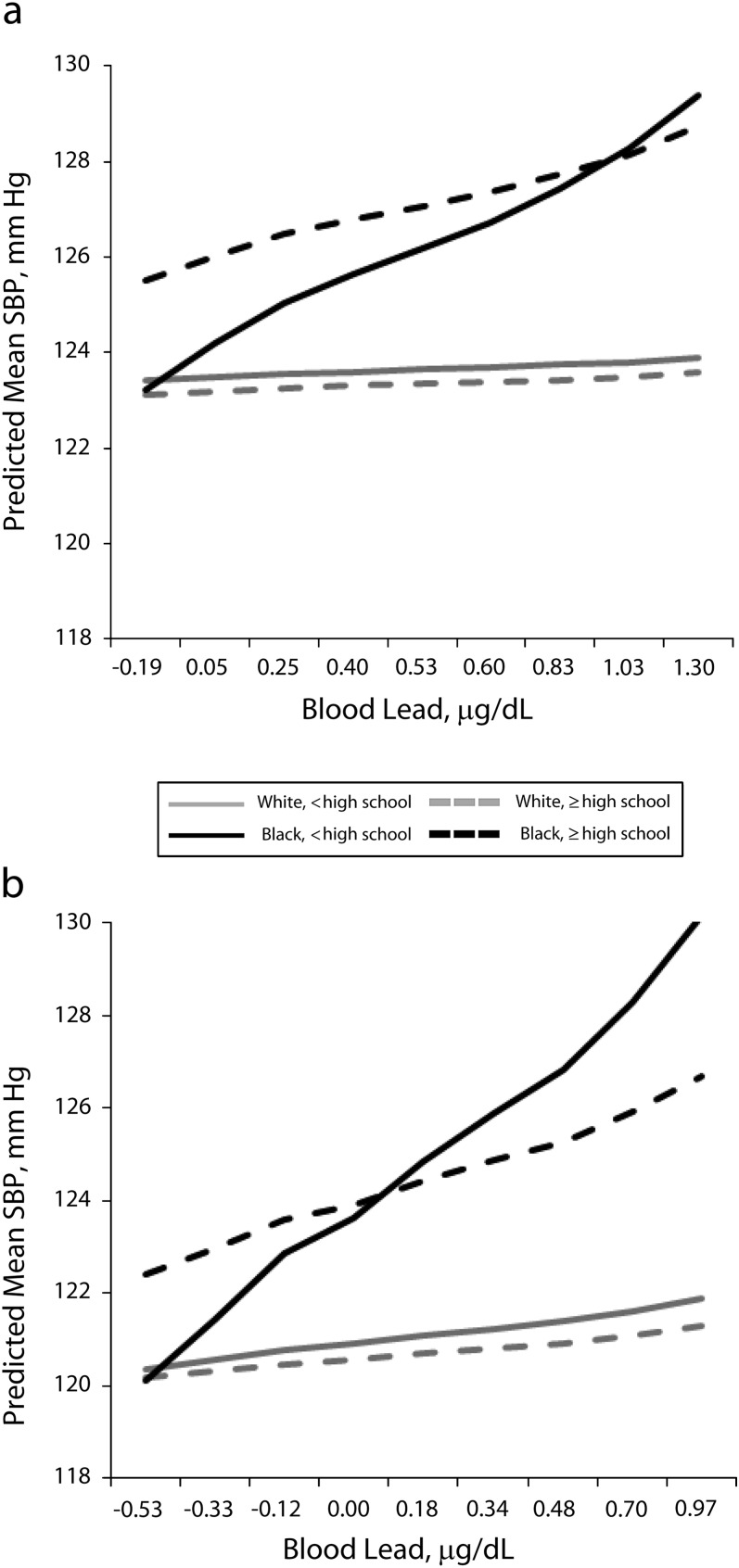
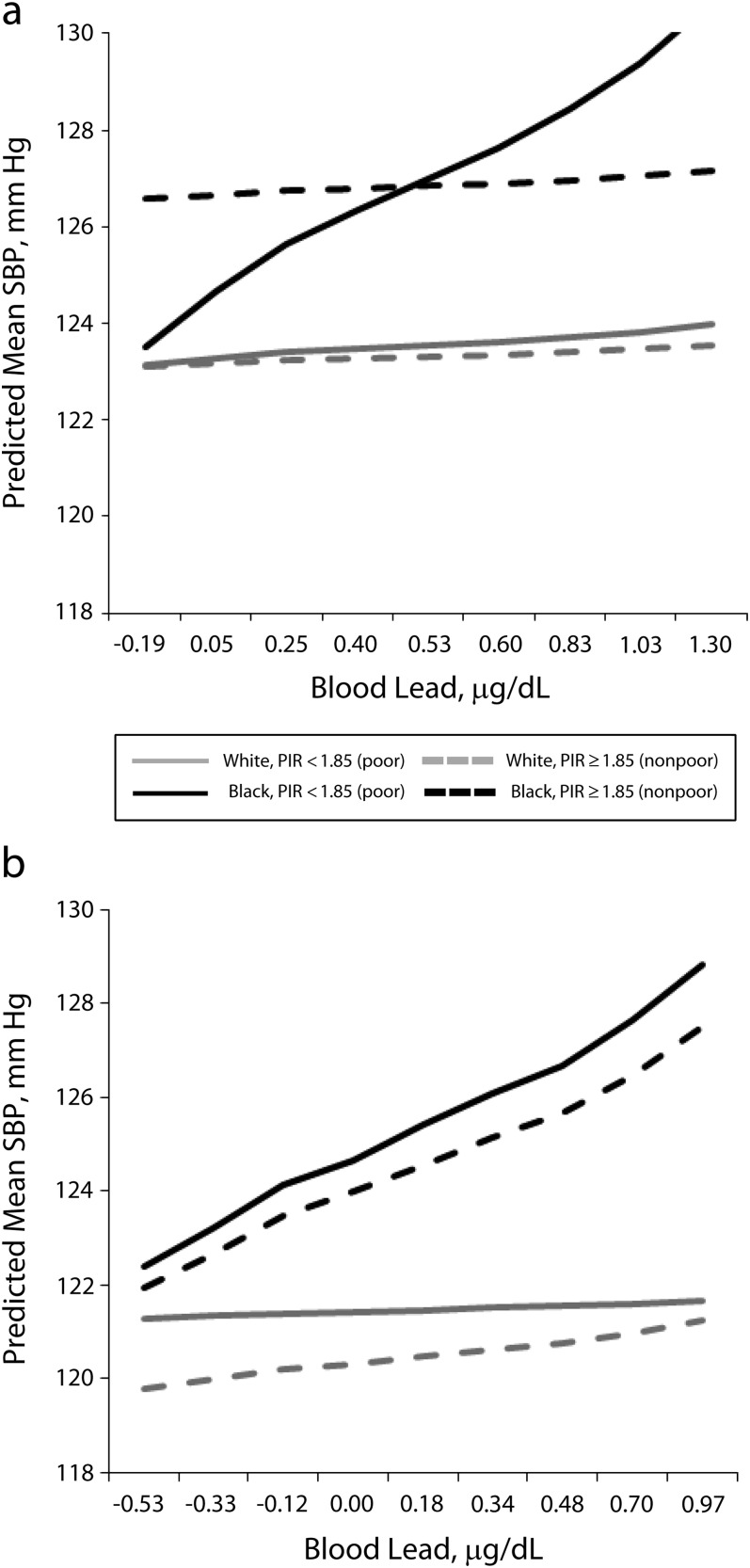
Results: Black men and women showed a 2.8 (P < .001) and 4.0 (P < .001) millimeters mercury increase in SBP, respectively, for each doubling of blood lead. White adults showed no association. This lead-SBP association exhibited by Blacks was primarily isolated to Blacks of low SES. For example, poor but not nonpoor Black men showed a 4.8 millimeters mercury (P < .001) increase in SBP for each doubling of blood lead.
Conclusions: Our results suggest that social disadvantage exacerbates the deleterious health effects of lead. Our work provides evidence that social and environmental factors must be addressed together to eliminate health disparities.
Figures
References
-
- Lennard HL, Glock CY. Studies in hypertension. VI. Differences in the distribution of hypertension in Negroes and whites; an appraisal. J Chronic Dis. 1957;5(2):186–196 - PubMed
-
- Mensah GA, Mokdad AH, Ford ES, Greenlund KJ, Croft JB. State of disparities in cardiovascular health in the United States. Circulation. 2005;111(10):1233–1241 - PubMed
-
- Heymsfield S, Kraus J, Lee ES, McDill M, Stamler R, Watson R. Race, education and prevalence of hypertension. Am J Epidemiol. 1977;106(5):351–361 - PubMed
-
- Lloyd-Jones D, Adams RJ, Brown TMet al. Heart disease and stroke statistics–2010 update. Circulation. 2010;121:e46–e215 - PubMed
-
- Waidmann T. Estimating the Cost of Racial and Ethnic Health Disparities. Washington, D.C.: The Urban Institute; 2009
Publication types
MeSH terms
Substances
Grants and funding
LinkOut - more resources
Full Text Sources
Medical