


Energy intake from restaurants: demographics and socioeconomics, 2003-2008
- PMID: 23079172
- PMCID: PMC3479669
- DOI: 10.1016/j.amepre.2012.07.041
Energy intake from restaurants: demographics and socioeconomics, 2003-2008
Abstract
Background: Eating food away from home and restaurant consumption have increased over the past few decades.
Purpose: To examine recent changes in calories from fast-food and full-service restaurant consumption and to assess characteristics associated with consumption.
Methods: Analyses of 24-hour dietary recalls from children, adolescents, and adults using nationally representative data from the 2003-2004 through 2007-2008 National Health and Nutrition Examination Surveys, including analysis by gender, ethnicity, income, and location of consumption. Multivariate regression analyses of associations between demographic and socioeconomic characteristics and consumption prevalence and average daily caloric intake from fast-food and full-service restaurants.
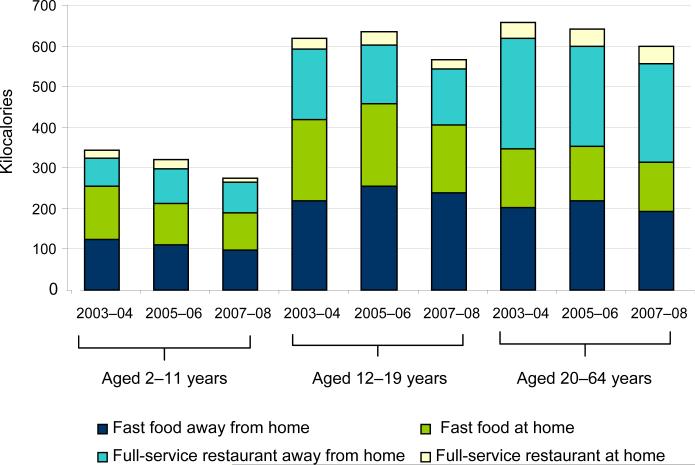
Results: In 2007-2008, 33%, 41%, and 36% of children, adolescents, and adults, respectively, consumed foods and/or beverages from fast-food restaurant sources and 12%, 18%, and 27% consumed from full-service restaurants. Their respective mean daily caloric intake from fast food was 191, 404, and 315 kcal, down by 25% (p ≤ 0.05), 3%, and 9% from 2003-2004; and among consumers, intake was 576, 988, and 877 kcal, respectively, down by 12% (p ≤ 0.05), 2%, and 7%. There were no changes in daily calories consumed from full-service restaurants. Consumption prevalence and average daily caloric intake from fast-food (adults only) and full-service restaurants (all age groups) were higher when consumed away from home versus at home. There were some demographic and socioeconomic associations with the likelihood of fast-food consumption, but characteristics generally were not associated with the extent of caloric intake among those who consumed from fast-food or from full-service restaurants.
Conclusions: In 2007-2008, fast-food and full-service restaurant consumption remained prevalent and a source of substantial energy intake.
Copyright © 2012 American Journal of Preventive Medicine. Published by Elsevier Inc. All rights reserved.
Figures
Comment in
-
The public health implications of fast-food menu labeling.Am J Prev Med. 2012 Nov;43(5):569-70. doi: 10.1016/j.amepre.2012.08.006. Am J Prev Med. 2012. PMID: 23079183 No abstract available.
References
-
- French SA, Harnack L, Jeffery RW. Fast food restaurant use among women in the Pound of Prevention study: dietary, behavioral and demographic correlates. Int J Obes. 2000;24(10):1353–9. - PubMed
-
- French SA, Story M, Neumark-Sztainer D, Fulkerson JA, Hannan P. Fast food restaurant use among adolescents: associations with nutrient intake, food choices and behavioral and psychosocial variables. International Journal of Obesity. 2001;25(12):1823–1833. - PubMed
-
- Paeratakul S, Ferdinand DP, Champagne CM, Ryan DH, Bray GA. Fast-food consumption among U.S. adults and children: dietary and nutrient intake profile. J Am Diet Assoc. 2003;103(10):1332–8. - PubMed
-
- Bowman SA, Gortmaker SL, Ebbeling CB, Pereira MA, Ludwig DS. Effects of fast-food consumption on energy intake and diet quality among children in a national household survey. Pediatrics. 2004;113(1 Pt 1):112–8. - PubMed
-
- Bowman SA, Vinyard BT. Fast food consumption of U.S. adults: impact on energy and nutrient intakes and overweight status. J Am Coll Nutr. 2004;23(2):163–168. - PubMed
Publication types
MeSH terms
Grants and funding
LinkOut - more resources
Full Text Sources
Miscellaneous
