


BMP signaling protects telencephalic fate by repressing eye identity and its Cxcr4-dependent morphogenesis
- PMID: 23079599
- PMCID: PMC7116079
- DOI: 10.1016/j.devcel.2012.09.006
BMP signaling protects telencephalic fate by repressing eye identity and its Cxcr4-dependent morphogenesis
Abstract
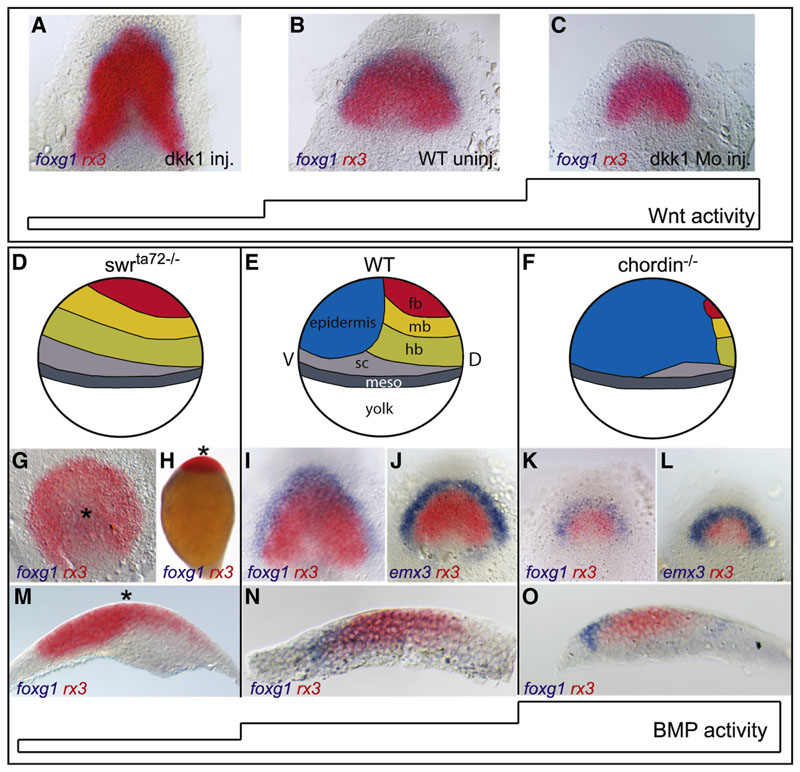
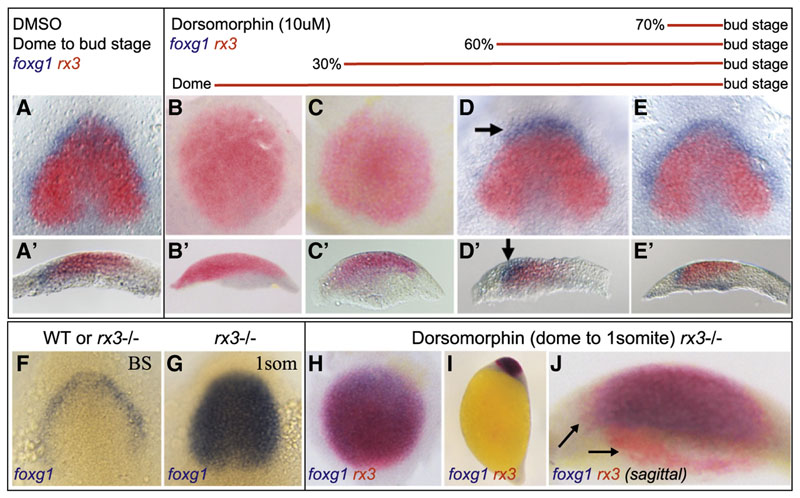
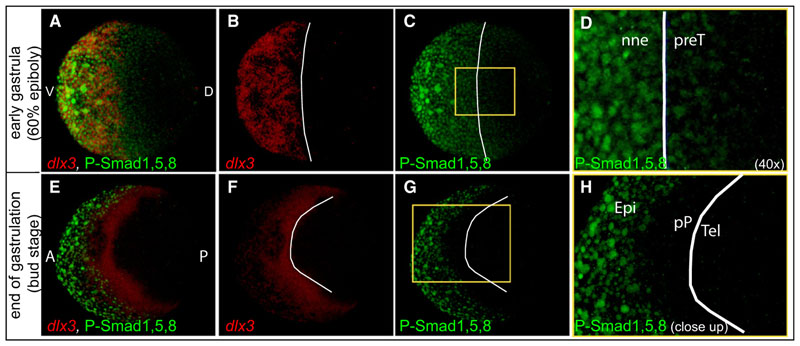
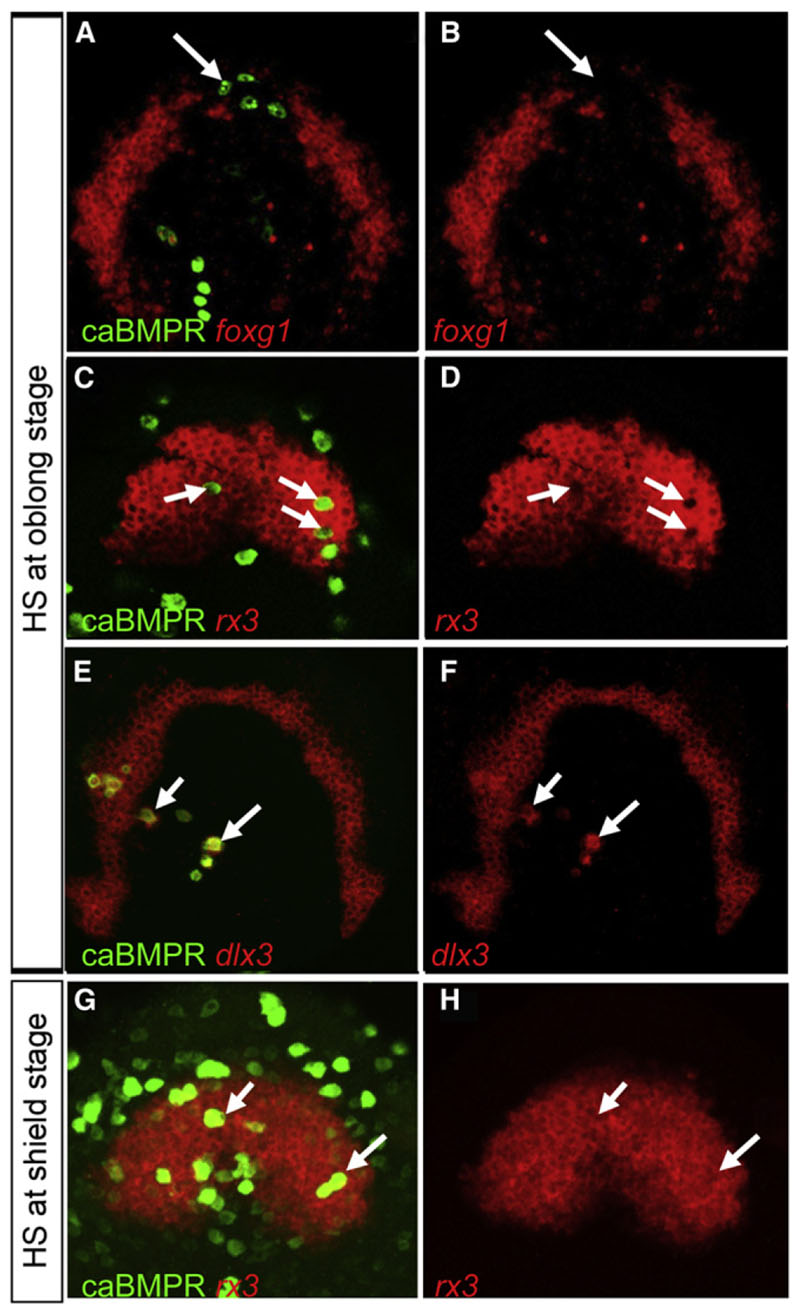
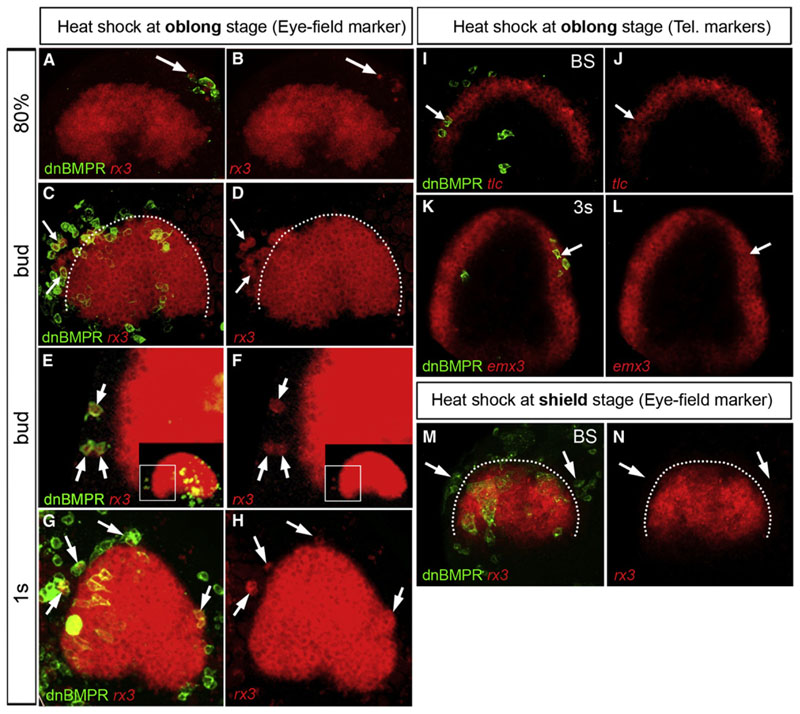
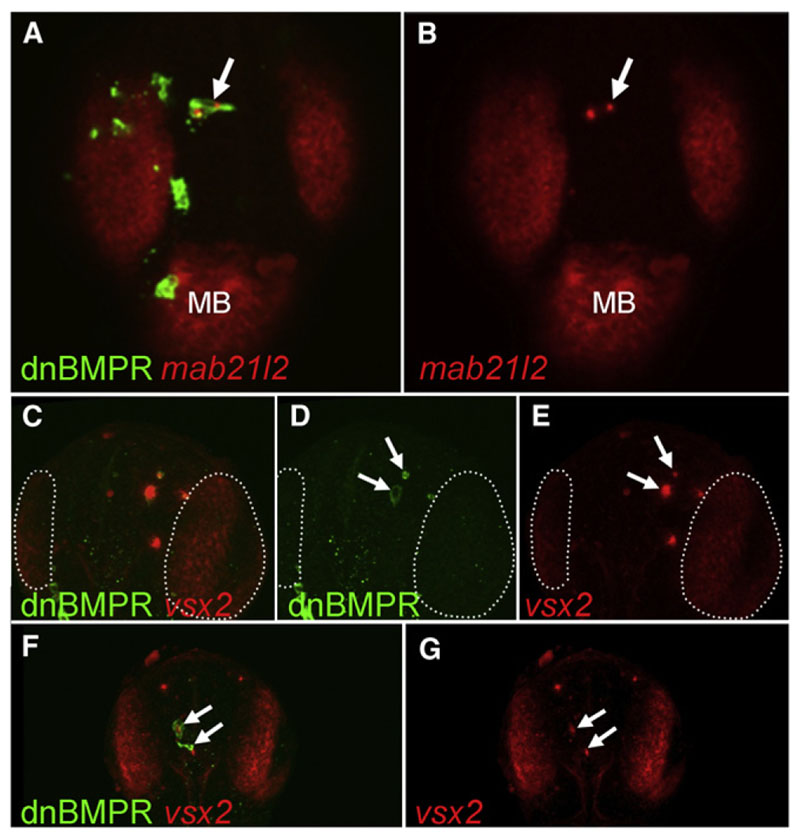
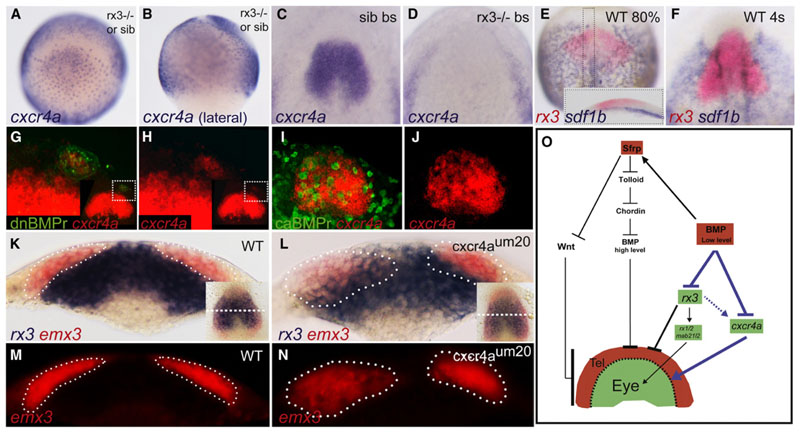
Depletion of Wnt signaling is a major requirement for the induction of the anterior prosencephalon. However, the molecular events driving the differential regionalization of this area into eye-field and telencephalon fates are still unknown. Here we show that the BMP pathway is active in the anterior neural ectoderm during late blastula to early gastrula stage in zebrafish. Bmp2b mutants and mosaic loss-of-function experiments reveal that BMP acts as a repressor of eye-field fate through inhibition of its key transcription factor Rx3, thereby protecting the future telencephalon from acquiring eye identity. This BMP-driven mechanism initiates the establishment of the telencephalon prior to the involvement of Wnt antagonists from the anterior neural border. Furthermore, we demonstrate that Rx3 and BMP are respectively required to maintain and restrict the chemokine receptor cxcr4a, which in turn contributes to the morphogenetic separation of eye-field and telencephalic cells during early neurulation.
Copyright © 2012 Elsevier Inc. All rights reserved.
Figures
References
-
- Bailey AP, Streit A. Sensory organs: making and breaking the pre-placodal region. Curr Top Dev Biol. 2006;72:167–204. - PubMed
-
- Barth KA, Kishimoto Y, Rohr KB, Seydler C, Schulte-Merker S, Wilson SW. Bmp activity establishes a gradient of positional information throughout the entire neural plate. Development. 1999;126:4977–4987. - PubMed
-
- Danesin C, Peres JN, Johansson M, Snowden V, Cording A, Papalopulu N, Houart C. Integration of telencephalic Wnt and hedgehog signaling center activities by Foxg1. Dev Cell. 2009;16:576–587. - PubMed
Publication types
MeSH terms
Substances
Grants and funding
LinkOut - more resources
Full Text Sources
Other Literature Sources
Molecular Biology Databases
