


Long-term quality of life in patients with acute respiratory distress syndrome requiring extracorporeal membrane oxygenation for refractory hypoxaemia
- PMID: 23082772
- PMCID: PMC3682304
- DOI: 10.1186/cc11811
Long-term quality of life in patients with acute respiratory distress syndrome requiring extracorporeal membrane oxygenation for refractory hypoxaemia
Abstract
Introduction: The purpose of the study was to assess the long term outcome and quality of life of patients with acute respiratory distress syndrome (ARDS) receiving extracorporeal membrane oxygenation (ECMO) for refractory hypoxemia.
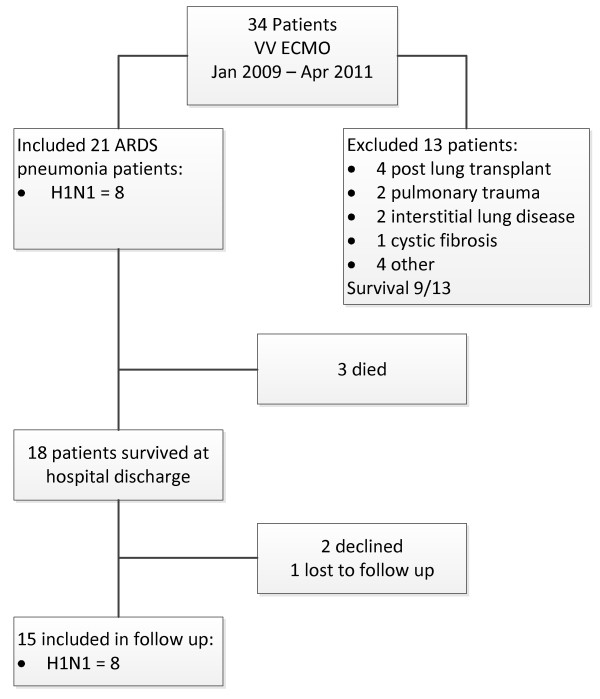
Methods: A retrospective observational study with prospective health related quality of life (HRQoL) assessment was conducted in ARDS patients who had ECMO as a rescue therapy for reversible refractory hypoxemia from January 2009 until April 2011 in a tertiary Australian centre. Survival and long-term quality of life assessment, using the Short-Form 36 (SF-36) and the EuroQol health related quality of life questionnaire (EQ5D) were assessed and compared to international data from other research groups.
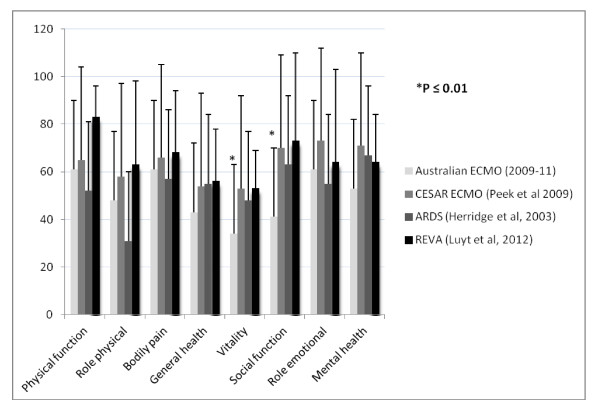
Results: Twenty-one patients (mean age 36.3 years) with ARDS receiving ECMO for refractory hypoxemia were studied. Eighteen (86%) patients were retrieved from external intensive care units (ICUs) by a dedicated ECMO retrieval team. Eleven (55%) had H1N1 influenza A-associated pneumonitis. Eighteen (86%) patients survived to hospital discharge. Of the 18 survivors, ten (56%) were discharged to other hospitals and 8 (44%) were discharged directly home. Sequelae and health related quality of life were evaluated for 15 of the 18 (71%) long-term survivors (assessment at median 8 months). Mean SF-36 scores were significantly lower across all domains compared to age and sex matched Australian norms. Mean SF-36 scores were lower (minimum important difference at least 5 points) than previously described ARDS survivors in the domains of general health, mental health, vitality and social function. One patient had long-term disability as a result of ICU acquired weakness. Only 26% of survivors had returned to previous work levels at the time of follow-up.
Conclusions: This ARDS cohort had a high survival rate (86%) after use of ECMO support for reversible refractory hypoxemia. Long term survivors had similar physical health but decreased mental health, general health, vitality and social function compared to other ARDS survivors and an unexpectedly poor return to work.
Figures
References
-
- Herridge MS, Tansey CM, Matte A, Tomlinson G, Diaz-Granados N, Cooper A, Guest CB, Mazer CD, Mehta S, Stewart TE, Kudlow P, Cook D, Slutsky AS, Cheung AM. Functional disability 5 years after acute respiratory distress syndrome. New Engl J Med. 2011;16:1293–1304. doi: 10.1056/NEJMoa1011802. - DOI - PubMed
Publication types
MeSH terms
LinkOut - more resources
Full Text Sources
Medical
Miscellaneous
