


Cyclooxygenase-1 inhibition reduces amyloid pathology and improves memory deficits in a mouse model of Alzheimer's disease
- PMID: 23083210
- PMCID: PMC3780364
- DOI: 10.1111/jnc.12059
Cyclooxygenase-1 inhibition reduces amyloid pathology and improves memory deficits in a mouse model of Alzheimer's disease
Abstract
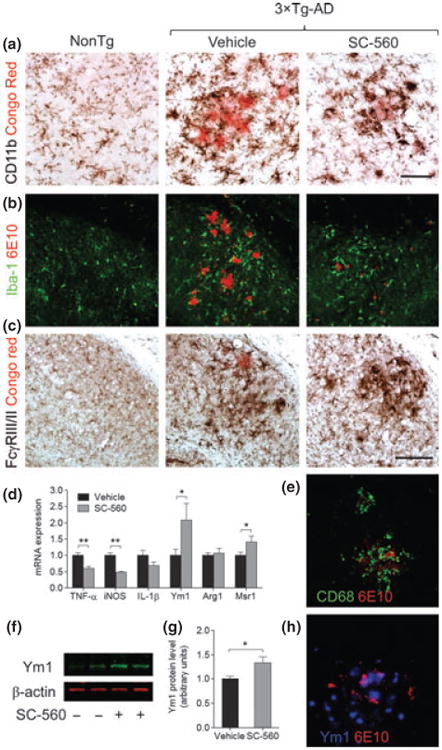
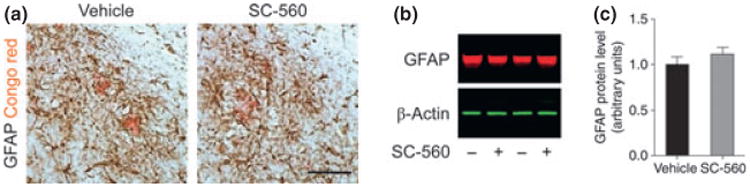
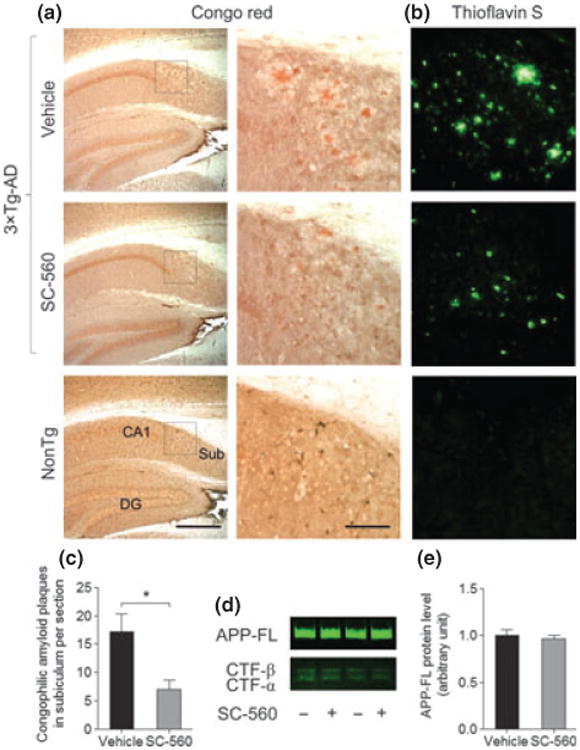
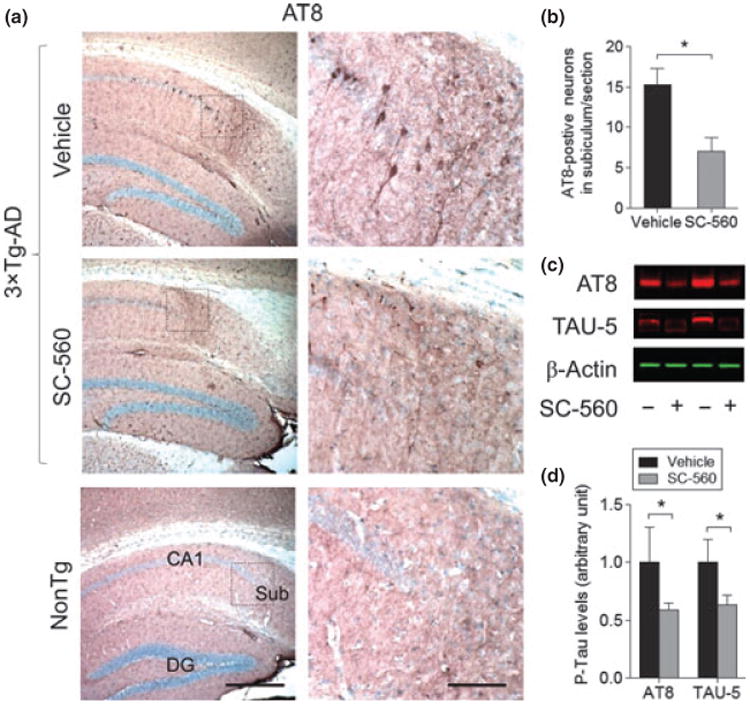
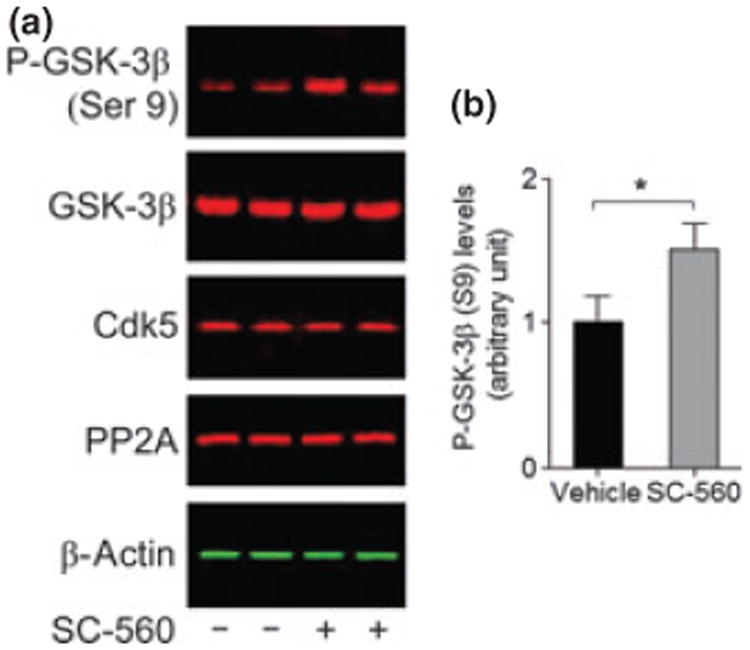
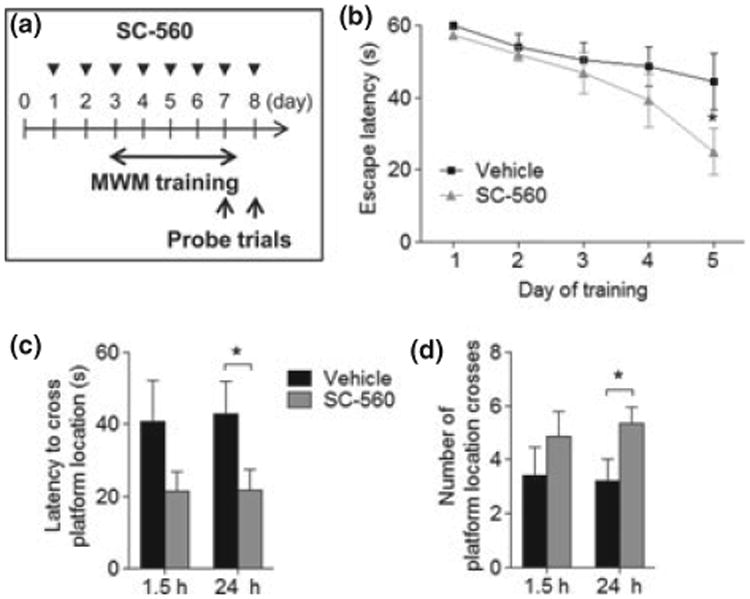
Several epidemiological and preclinical studies suggest that non-steroidal anti-inflammatory drugs (NSAIDs), which inhibit cyclooxygenase (COX), reduce the risk of Alzheimer's disease (AD) and can lower β-amyloid (Aβ) production and inhibit neuroinflammation. However, follow-up clinical trials, mostly using selective cyclooxygenase (COX)-2 inhibitors, failed to show any beneficial effect in AD patients with mild to severe cognitive deficits. Recent data indicated that COX-1, classically viewed as the homeostatic isoform, is localized in microglia and is actively involved in brain injury induced by pro-inflammatory stimuli including Aβ, lipopolysaccharide, and interleukins. We hypothesized that neuroinflammation is critical for disease progression and selective COX-1 inhibition, rather than COX-2 inhibition, can reduce neuroinflammation and AD pathology. Here, we show that treatment of 20-month-old triple transgenic AD (3 × Tg-AD) mice with the COX-1 selective inhibitor SC-560 improved spatial learning and memory, and reduced amyloid deposits and tau hyperphosphorylation. SC-560 also reduced glial activation and brain expression of inflammatory markers in 3 × Tg-AD mice, and switched the activated microglia phenotype promoting their phagocytic ability. The present findings are the first to demonstrate that selective COX-1 inhibition reduces neuroinflammation, neuropathology, and improves cognitive function in 3 × Tg-AD mice. Thus, selective COX-1 inhibition should be further investigated as a potential therapeutic approach for AD.
Published 2012. This article is a US Government work and is in the public domain in the USA.
Figures
References
-
- Albensi BC, Mattson MP. Evidence for the involvement of TNF and NF-kappaB in hippocampal synaptic plasticity. Synapse. 2000;35:151–159. - PubMed
-
- Aronoff DM, Canetti C, Peters-Golden M. Prostaglandin E2 inhibits alveolar macrophage phagocytosis through an E-prostanoid 2 receptor-mediated increase in intracellular cyclic AMP. J Immunol. 2004;173:559–565. - PubMed
Publication types
MeSH terms
Substances
Grants and funding
LinkOut - more resources
Full Text Sources
Medical
Research Materials
Miscellaneous
