


Psychosocial issues facing lung transplant candidates, recipients and family caregivers
- PMID: 23084615
- PMCID: PMC3516399
- DOI: 10.1016/j.thorsurg.2012.08.001
Psychosocial issues facing lung transplant candidates, recipients and family caregivers
Abstract
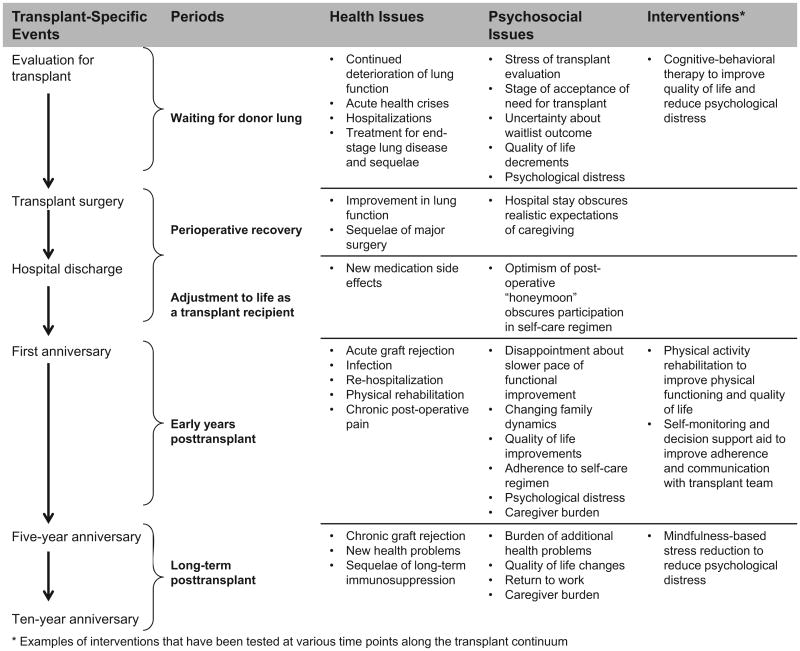
Although lung transplantation is an accepted treatment for many individuals with severe lung disease, transplant candidates and recipients experience a range of psychosocial stressors that begin at the initiation of the transplant evaluation and continue throughout patients' wait for donor lungs, their perioperative recovery, and their long-term adjustment to posttransplant life. Transplant programs should strive to incorporate evidence-based interventions that aim to improve physical functioning, psychological distress, global quality of life, and medical adherence as well as to integrate symptom management and palliative care strategies throughout the pre- and posttransplantation course.
Copyright © 2012 Elsevier Inc. All rights reserved.
Figures
References
-
- Yusen RD. Survival and quality of life of patients undergoing lung transplant. Clin Chest Med. 2011;32:253–64. - PubMed
-
- Dew MA, DiMartini AF, Kormos RL. Stress of organ transplantation. In: Fink G, editor. Encyclopedia of stress. 2nd. Oxford, UK: Academic Press (Elsevier); 2007. pp. 35–44.
-
- Barbour KA, Blumenthal JA, Palmer SM. Psychosocial issues in the assessment and management of patients undergoing lung transplantation. Chest. 2006;129:1367–74. - PubMed
-
- Olbrisch ME, Benedict SM, Ashe K, et al. Psychological assessment and care of organ transplant patients. J Consult Clin Psychol. 2002;70:771–83. - PubMed
-
- Ivarsson B, Ekmehag B, Sjoberg T. Recently accepted for the waiting list for heart or lung transplantation - patients' experiences of information and support. Clin Transplant. 2011;25:E664–71. - PubMed
Publication types
MeSH terms
Grants and funding
LinkOut - more resources
Full Text Sources
Medical
