


Sheep models of polycystic ovary syndrome phenotype
- PMID: 23084976
- PMCID: PMC3568226
- DOI: 10.1016/j.mce.2012.10.005
Sheep models of polycystic ovary syndrome phenotype
Abstract
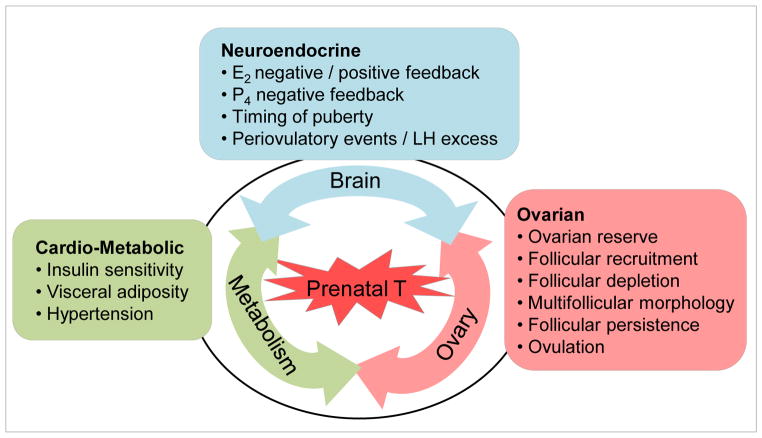
Polycystic ovary syndrome (PCOS) is a fertility disorder affecting 5-7% of reproductive-aged women. Women with PCOS manifest both reproductive and metabolic defects. Several animal models have evolved, which implicate excess steroid exposure during fetal life in the development of the PCOS phenotype. This review addresses the fetal and adult reproductive and metabolic consequences of prenatal steroid excess in sheep and the translational relevance of these findings to PCOS. By comparing findings in various breeds of sheep, the review targets the role of genetic susceptibility to fetal insults. Disruptions induced by prenatal testosterone excess are evident at both the reproductive and metabolic level with each influencing the other thus creating a self-perpetuating vicious cycle. The review highlights the need for identifying a common mediator of the dysfunctions at the reproductive and metabolic levels and developing prevention and treatment interventions targeting all sites of disruption in unison for achieving optimal success.
Copyright © 2012 Elsevier Ireland Ltd. All rights reserved.
Figures
References
-
- Abbott DH, Dumesic DA, Franks S. Developmental origin of polycystic ovary syndrome - a hypothesis. J Endocrinol. 2002;174:1–5. - PubMed
-
- Abbott DH, Dumesic DA, Levine JE, Dunaif A, Padmanabhan V. Animal models and fetal programming of PCOS. In: Azziz JE, Nestler JE, Dewailly D, editors. Contemporary endocrinology: androgen excess disorders in women: polycystic ovary syndrome and other disorders. Humana Press Inc; Totowa, NJ: 2006. pp. 259–272.
-
- Attal JA. Levels of testosterone, androstenedione, estrone and estradiol-17 beta in the testes of fetal sheep. Endocrinology. 1969;85:280–289. - PubMed
-
- Azziz R, Carmina E, Dewailly D, Diamanti-Kandarakis E, Escobar-Morreale HF, Futterweit W, Janssen OE, Legro RS, Norman RJ, Taylor AE, Witchel SF. Positions statement: criteria for defining polycystic ovary syndrome as a predominantly hyperandrogenic syndrome: an Androgen Excess Society guideline. J Clin Endocrinol Metab. 2006;91:4237–4245. - PubMed
Publication types
MeSH terms
Substances
Grants and funding
LinkOut - more resources
Full Text Sources
Other Literature Sources
Medical
