Reactivation of codogenic endogenous retroviral (ERV) envelope genes in human endometrial carcinoma and prestages: Emergence of new molecular targets
- PMID: 23085571
- PMCID: PMC3717959
- DOI: 10.18632/oncotarget.679
Reactivation of codogenic endogenous retroviral (ERV) envelope genes in human endometrial carcinoma and prestages: Emergence of new molecular targets
Abstract
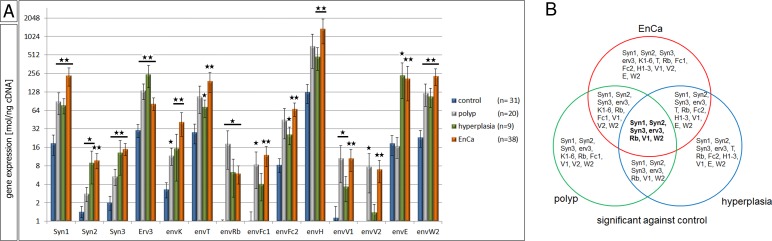
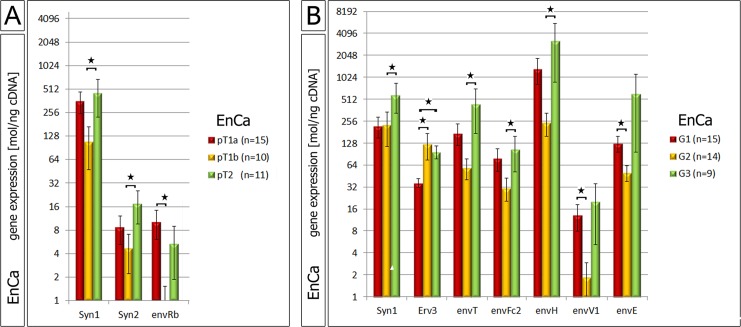
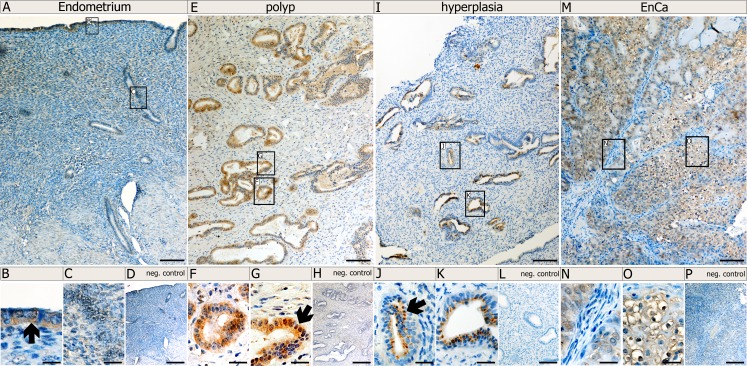
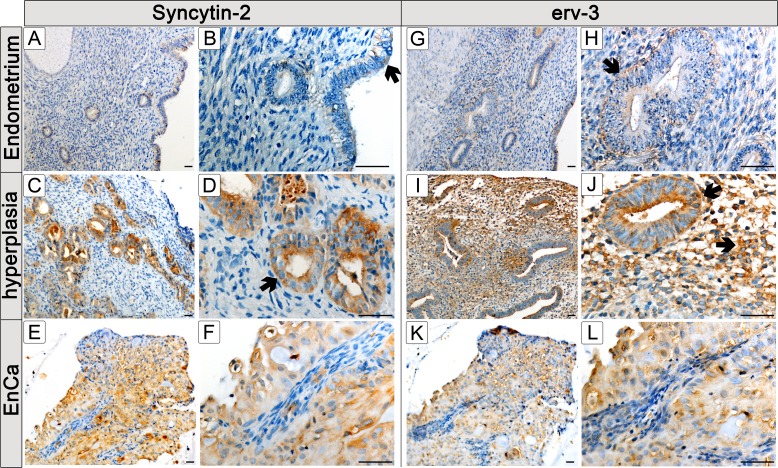
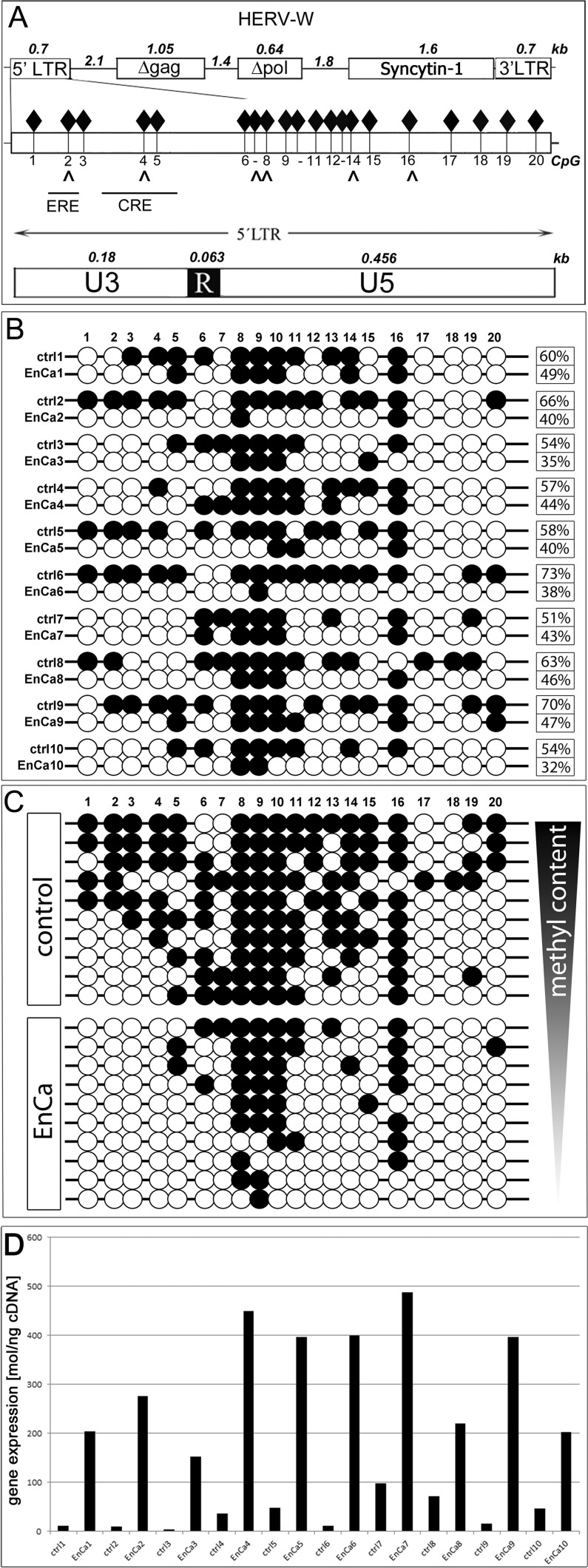
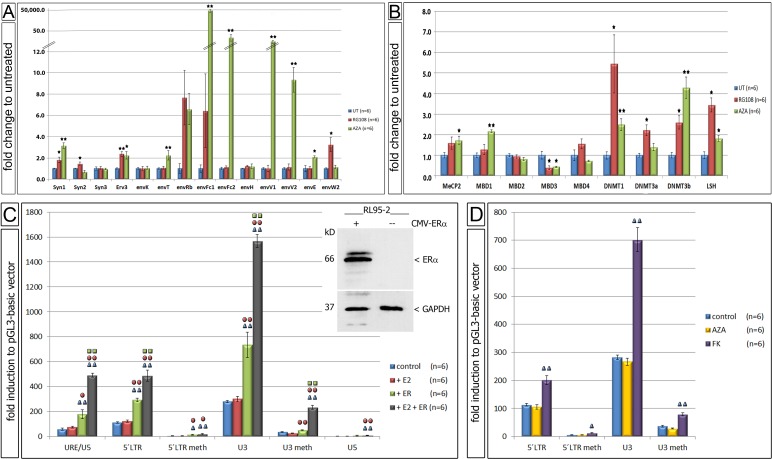
Endometrial carcinoma (EnCa) is the most common invasive gynaecologic carcinoma. Over 85% of EnCa are classified as endometrioid, expressing steroid hormone receptors and mostly involving pathological prestages. Human endogenous retroviruses (ERV) are chromosomally integrated genes, account for about 8% of the human genome and are implicated in the etiology of carcinomas. The majority of ERV envelope (env) coding genes are either not present or not consistently represented between common gene expression microarrays. The aim of this study was to analyse the absolute gene expression of all known 21 ERV env genes including 19 codogenic and two env genes with premature stop codons in EnCa, endometrium as well as in hyperplasia and polyps. For EnCa seven env genes had high expression with >200 mol/ng cDNA (e.g. envH1-3, Syncytin-1, envT), two middle >50 mol/ng cDNA (envFc2, erv-3) and 12 low less than 50 mol/ng cDNA (e.g. Syncytin-2, envV2). Regarding tumor parameters, Syncytin-1 and Syncytin-2 were significantly over-expressed in advanced stage pT2 compared to pT1b. In less differentiated EnCa Syncytin-1, erv-3, envT and envFc2 were significantly over-expressed. Syncytin-1, Syncytin-2 and erv-3 were specific to glandular epithelial cells of polyps, hyperplasia and EnCa using immunohistochemistry. An analysis of 10 patient-matched EnCa with endometrium revealed that the ERV-W 5' long terminal repeat regulating Syncytin-1 was hypomethylated, including the ERE and CRE overlapping MeCP2 sites. Functional analyses showed that 10 env genes were regulated by methylation in EnCa using the RL95-2 cell line. In conclusion, over-expressed env genes could serve as indicators for pathological pre-stages and EnCa.
Figures
References
-
- Jemal A, Bray F, Center MM, Ferlay J, Ward E, Forman D. Global cancer statistics. CA Cancer J Clin. 2011;61(2):69–90. - PubMed
-
- Sherman ME. Theories of endometrial carcinogenesis: a multidisciplinary approach. Mod Pathol. 2000;13(3):295–308. - PubMed
-
- Lacey JV, Jr., Chia VM. Endometrial hyperplasia and the risk of progression to carcinoma. Maturitas. 2009;63(1):39–44. - PubMed
-
- Horn LC, Schnurrbusch U, Bilek K, Einenkel J. Endometrial hyperplasia: The risk of progression to carcinoma in a series of 538 cases. Geburtshilfe Und Frauenheilkunde. 2001;61(7):501–506.
-
- Ben-Arie A, Goldchmit C, Laviv Y, Levy R, Caspi B, Huszar M, Dgani R, Hagay Z. The malignant potential of endometrial polyps. Eur J Obstet Gynecol Reprod Biol. 2004;115(2):206–210. - PubMed
Publication types
MeSH terms
Substances
LinkOut - more resources
Full Text Sources
Other Literature Sources