


Frequency, immunogenetics, and clinical characteristics of latent autoimmune diabetes in China (LADA China study): a nationwide, multicenter, clinic-based cross-sectional study
- PMID: 23086039
- PMCID: PMC3554388
- DOI: 10.2337/db12-0207
Frequency, immunogenetics, and clinical characteristics of latent autoimmune diabetes in China (LADA China study): a nationwide, multicenter, clinic-based cross-sectional study
Abstract
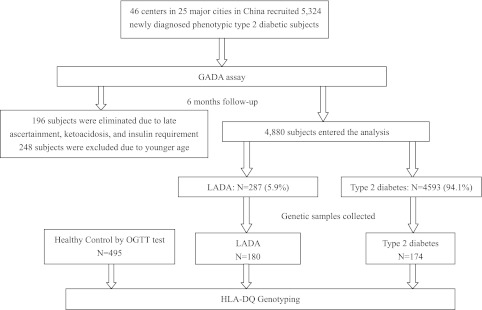
Adult non-insulin requiring diabetes includes latent autoimmune diabetes of adults (LADA), distinguished from type 2 diabetes by the presence of islet autoantibodies. LADA China determined the characteristics of Chinese LADA. This nationwide, multicenter, clinic-based cross-sectional study was conducted in 46 university-affiliated hospitals in 25 Chinese cities. All 4,880 ketosis-free diabetic patients (<1 year postdiagnosis, without insulin therapy for >6 months, aged ≥30 years) had GAD antibody (GADA) and HLA-DQ genotype measured centrally with clinical data collected locally. GADA-positive subjects were classified as LADA. Of the patients, 5.9% were GADA positive with LADA. LADA showed a north-south gradient. Compared with GADA-negative type 2 diabetes, LADA patients were leaner, with lower fasting C-peptide and less metabolic syndrome. Patients with high GADA titers are phenotypically different from those with low GADA titers, while only a higher HDL distinguished the latter from those with type 2 diabetes. HLA diabetes-susceptible haplotypes were more frequent in LADA, even in those with low-titer GADA. HLA diabetes-protective haplotypes were less frequent in LADA. Our study implicates universal immunogenetic effects, with some ethnic differences, in adult-onset autoimmune diabetes. Autoantibody positivity and titer could be important for LADA risk stratification and accurate therapeutic choice in clinical practice.
Figures
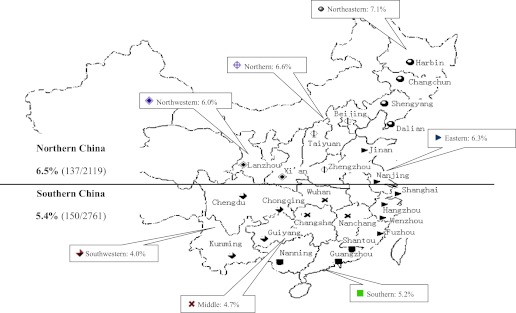
 , cities from the northeastern part of China;
  , cities from the northern part of China;
  , cities from northwestern China;
  , cities from eastern China;
  , cities from central China;
  , cities from southern China; and
  , cities from southwestern China. LADA frequency was higher in northern than southern China after age, sex, and BMI adjustment (P < 0.040). (A high-quality color representation of this figure is available in the online issue.)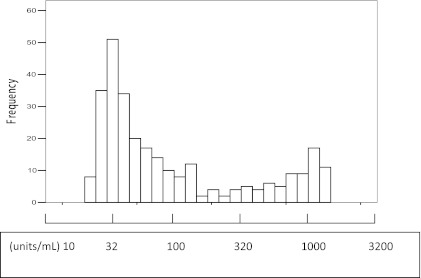
Comment in
-
LADA: time for a new definition.Diabetes. 2013 Feb;62(2):339-40. doi: 10.2337/db12-1171. Diabetes. 2013. PMID: 23349539 Free PMC article. No abstract available.
References
-
- Yang W, Lu J, Weng J, et al. China National Diabetes and Metabolic Disorders Study Group Prevalence of diabetes among men and women in China. N Engl J Med 2010;362:1090–1101 - PubMed
-
- Patterson CC, Dahlquist GG, Gyürüs E, Green A, Soltész G, EURODIAB Study Group Incidence trends for childhood type 1 diabetes in Europe during 1989-2003 and predicted new cases 2005-20: a multicentre prospective registration study. Lancet 2009;373:2027–2033 - PubMed
-
- Danaei G, Finucane MM, Lu Y, et al. Global Burden of Metabolic Risk Factors of Chronic Diseases Collaborating Group (Blood Glucose) National, regional, and global trends in fasting plasma glucose and diabetes prevalence since 1980: systematic analysis of health examination surveys and epidemiological studies with 370 country-years and 2·7 million participants. Lancet 2011;378:31–40 - PubMed
-
- Mbanya JC, Motala AA, Sobngwi E, Assah FK, Enoru ST. Diabetes in sub-Saharan Africa. Lancet 2010;375:2254–2266 - PubMed
-
- Rolandsson O, Palmer JP. Latent autoimmune diabetes in adults (LADA) is dead: long live autoimmune diabetes! Diabetologia 2010;53:1250–1253 - PubMed
Publication types
MeSH terms
Substances
LinkOut - more resources
Full Text Sources
Other Literature Sources
Medical
Research Materials
