


Bacteria differentially induce degradation of Bcl-xL, a survival protein, by human platelets
- PMID: 23086749
- PMCID: PMC3525025
- DOI: 10.1182/blood-2012-04-420661
Bacteria differentially induce degradation of Bcl-xL, a survival protein, by human platelets
Abstract
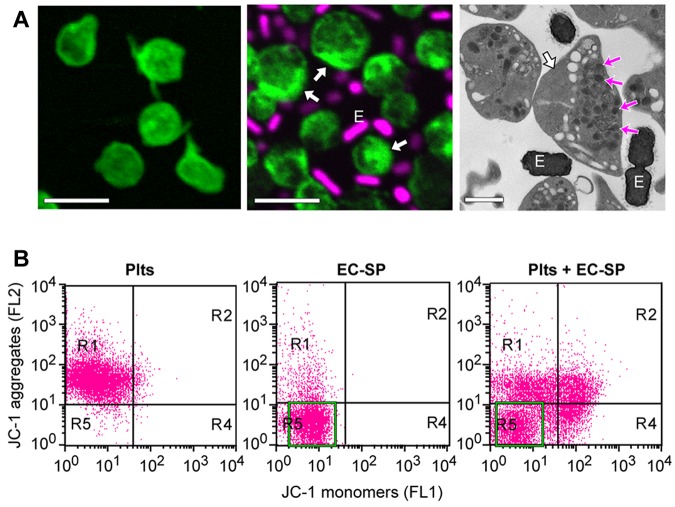
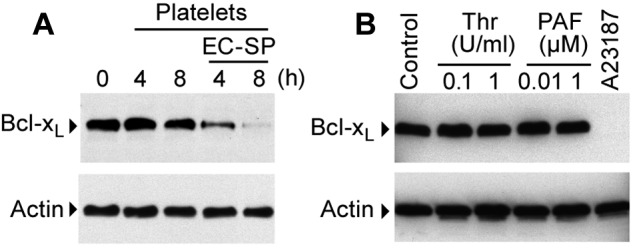
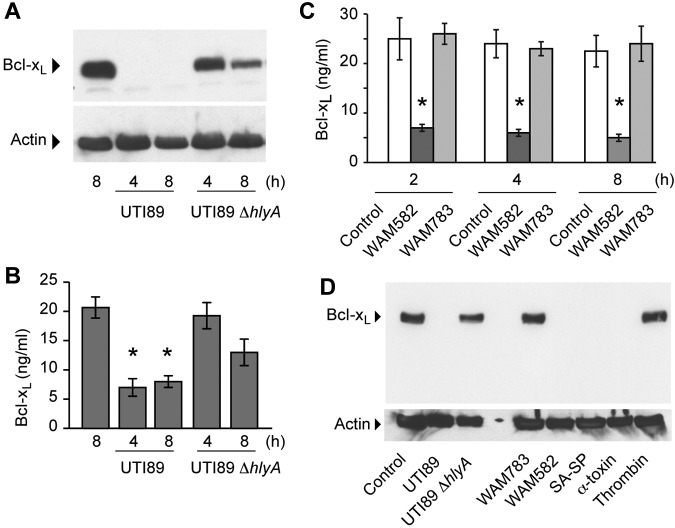
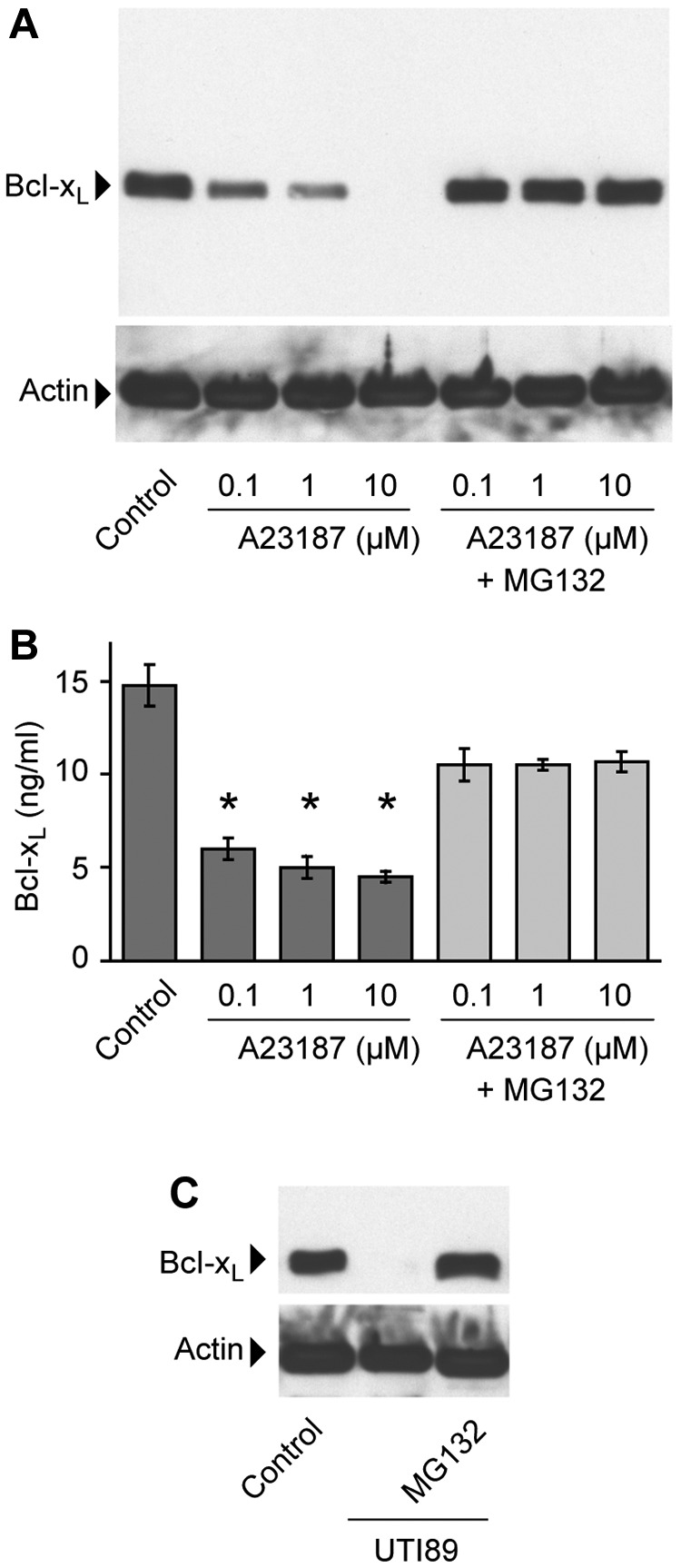
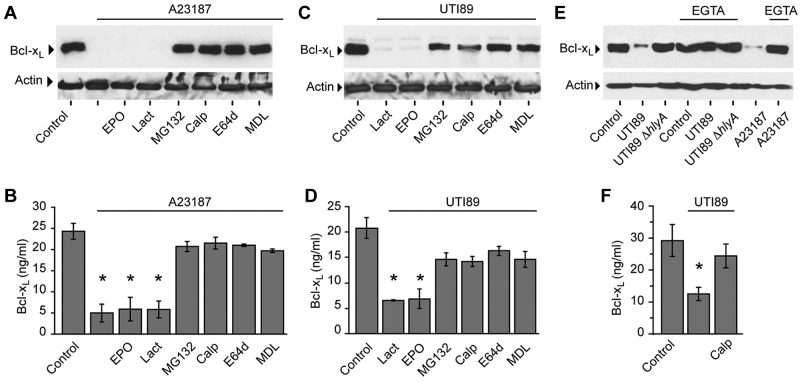
Bacteria can enter the bloodstream in response to infectious insults. Bacteremia elicits several immune and clinical complications, including thrombocytopenia. A primary cause of thrombocytopenia is shortened survival of platelets. We demonstrate that pathogenic bacteria induce apoptotic events in platelets that include calpain-mediated degradation of Bcl-x(L), an essential regulator of platelet survival. Specifically, bloodstream bacterial isolates from patients with sepsis induce lateral condensation of actin, impair mitochondrial membrane potential, and degrade Bcl-x(L) protein in platelets. Bcl-x(L) protein degradation is enhanced when platelets are exposed to pathogenic Escherichia coli that produce the pore-forming toxin α-hemolysin, a response that is markedly attenuated when the gene is deleted from E coli. We also found that nonpathogenic E coli gain degrading activity when they are forced to express α-hemolysin. Like α-hemolysin, purified α-toxin readily degrades Bcl-x(L) protein in platelets, as do clinical Staphylococcus aureus isolates that produce α-toxin. Inhibition of calpain activity, but not the proteasome, rescues Bcl-x(L) protein degradation in platelets coincubated with pathogenic E coli including α-hemolysin producing strains. This is the first evidence that pathogenic bacteria can trigger activation of the platelet intrinsic apoptosis program and our results suggest a new mechanism by which bacterial pathogens might cause thrombocytopenia in patients with bloodstream infections.
Figures
References
-
- Shorr AF, Tabak YP, Killian AD, Gupta V, Liu LZ, Kollef MH. Healthcare-associated bloodstream infection: a distinct entity? Insights from a large U.S. database. Crit Care Med. 2006;34(10):2588–2595. - PubMed
-
- Weber DJ, Rutala WA. Central line-associated bloodstream infections: prevention and management. Infect Dis Clin North Am. 2011;25(1):77–102. - PubMed
-
- Niven DJ, Fick GH, Kirkpatrick AW, Grant V, Laupland KB. Cost and outcomes of nosocomial bloodstream infections complicating major traumatic injury. J Hosp Infect. 2010;76(4):296–299. - PubMed
-
- Petti CA, Sanders LL, Trivette SL, Briggs J, Sexton DJ. Postoperative bacteremia secondary to surgical site infection. Clin Infect Dis. 2002;34(3):305–308. - PubMed
Publication types
MeSH terms
Substances
Grants and funding
- HL44525/HL/NHLBI NIH HHS/United States
- R03 AG040631/AG/NIA NIH HHS/United States
- R01 AI095647/AI/NIAID NIH HHS/United States
- HL66277/HL/NHLBI NIH HHS/United States
- R01 HL091754/HL/NHLBI NIH HHS/United States
- K23 HL092161/HL/NHLBI NIH HHS/United States
- R37 HL044525/HL/NHLBI NIH HHS/United States
- AI090369/AI/NIAID NIH HHS/United States
- R01 HL044525/HL/NHLBI NIH HHS/United States
- AI088086/AI/NIAID NIH HHS/United States
- R21 AI090369/AI/NIAID NIH HHS/United States
- HL91754/HL/NHLBI NIH HHS/United States
- UL1 TR001067/TR/NCATS NIH HHS/United States
- R01 HL066277/HL/NHLBI NIH HHS/United States
- U54HL112311/HL/NHLBI NIH HHS/United States
- 5T32DK007115-35/DK/NIDDK NIH HHS/United States
- R01 HL090870/HL/NHLBI NIH HHS/United States
- AI095647/AI/NIAID NIH HHS/United States
- K23 HL92161/HL/NHLBI NIH HHS/United States
- U54 HL112311/HL/NHLBI NIH HHS/United States
- T32 DK007115/DK/NIDDK NIH HHS/United States
- R21 AI088086/AI/NIAID NIH HHS/United States
- MOP-81208/CAPMC/ CIHR/Canada
- HL90870/HL/NHLBI NIH HHS/United States
LinkOut - more resources
Full Text Sources
Research Materials
