


Passive limb movement: evidence of mechanoreflex sex specificity
- PMID: 23086995
- PMCID: PMC3543682
- DOI: 10.1152/ajpheart.00532.2012
Passive limb movement: evidence of mechanoreflex sex specificity
Abstract
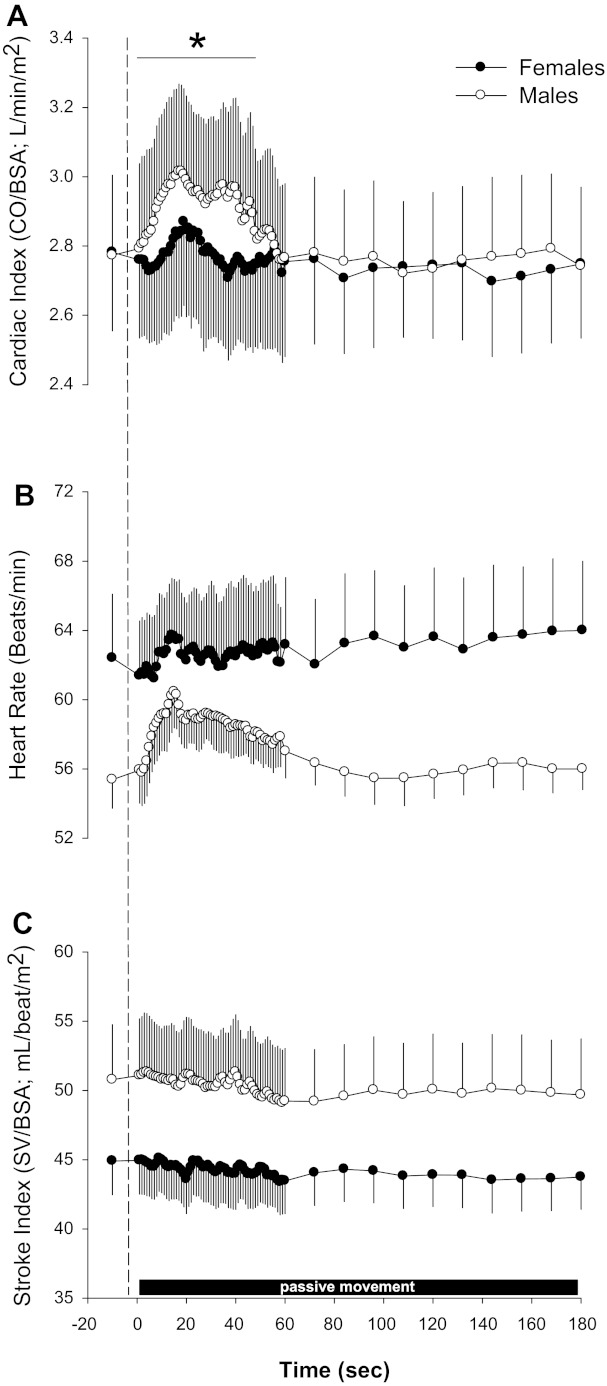
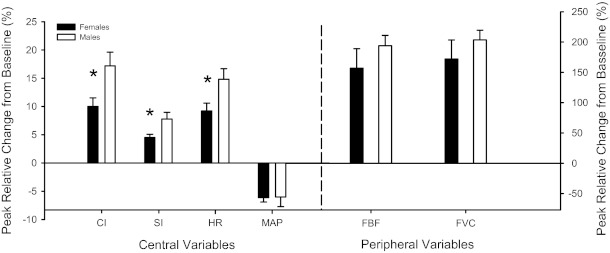
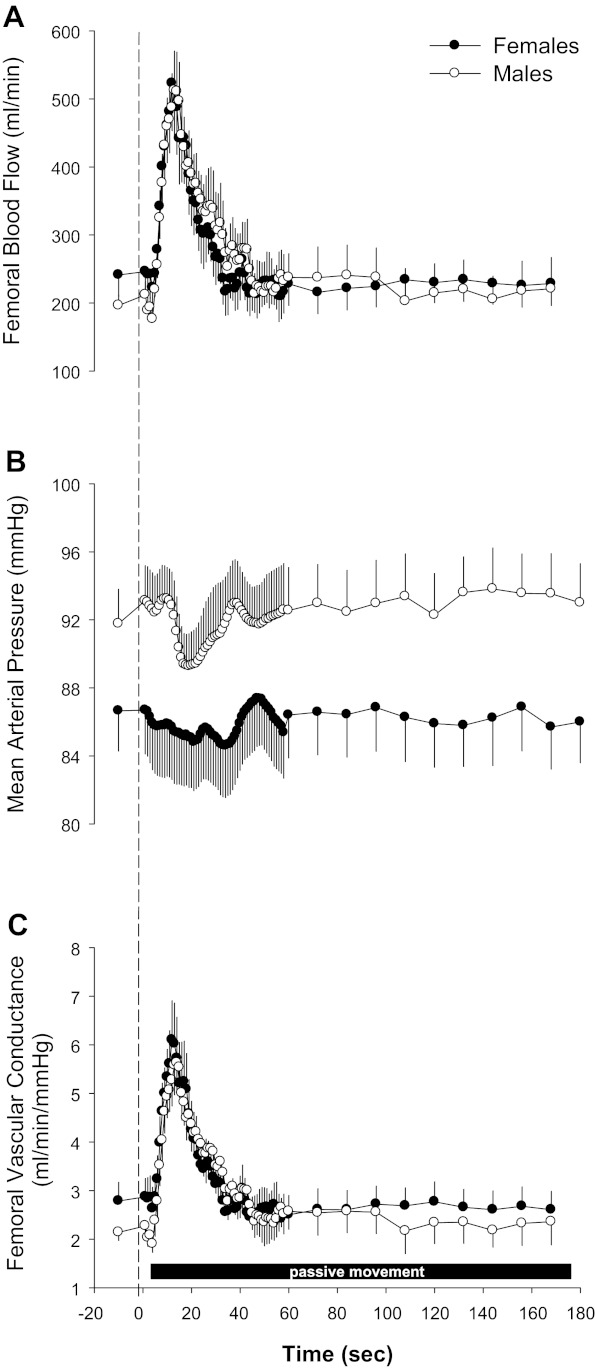
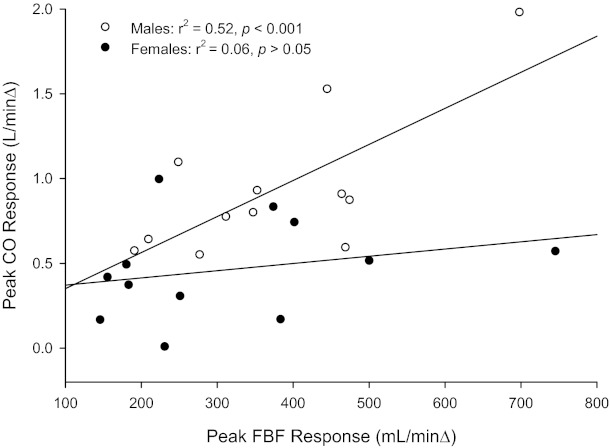
Previous studies have determined that premenopausal women exhibit an attenuated metaboreflex; however, little is known about sex specificity of the mechanoreflex. Thus, we sought to determine if sex differences exist in the central and peripheral hemodynamic responses to passive limb movement. Second-by-second measurements of heart rate, stroke volume, cardiac output (CO), mean arterial pressure, and femoral artery blood flow (FBF) were recorded during 3 min of supine passive knee extension in 24 young healthy subjects (12 women and 12 men). Normalization of CO and stroke volume to body surface area, expressed as cardiac index and stroke index, eliminated differences in baseline central hemodynamics, whereas, peripherally, basal FBF and femoral vascular conductance were similar between the sexes. In response to passive limb movement, women displayed significantly attenuated peak central hemodynamic responses compared with men (heart rate: 9.0 ± 1 vs. 14.8 ± 2% change, stroke index: 4.5 ± 0.6 vs. 7.8 ± 1.2% change, cardiac index: 9.6 ± 1 vs. 17.2 ± 2% change, all P < 0.05), whereas movement induced similar increases in peak FBF (167 ± 32 vs. 193 ± 17% change) and femoral vascular conductance (172 ± 31 vs. 203 ± 16% change) in both sexes (women vs. men, respectively). Additionally, there was a significant positive relationship between individual peak FBF and peak CO response to passive movement in men but not in women. Thus, although both sexes exhibited similar movement-induced hyperemia and peripheral vasodilatory function, the central hemodynamic response was blunted in women, implying an attenuated mechanoreflex. Therefore, this study reveals that, as already recognized with the metaboreflex, there is likely a sex-specific attenuation of the mechanoreflex in women.
Figures
References
-
- Azabji Kenfack M, Lador F, Licker M, Moia C, Tam E, Capelli C, Morel D, Ferretti G. Cardiac output by Modelflow method from intra-arterial and fingertip pulse pressure profiles. Clin Sci (Lond) 106: 365–369, 2004 - PubMed
-
- Baum K, Selle K, Leyk D, Essfeld D. Comparison of blood pressure and heart rate responses to isometric exercise and passive muscle stretch in humans. Eur J Appl Physiol 70: 240–245, 1995 - PubMed
-
- Bogert LW, van Lieshout JJ. Non-invasive pulsatile arterial pressure and stroke volume changes from the human finger. Exp Physiol 90: 437–446, 2005 - PubMed
-
- Celermajer D, Sorensen K, Spiegelhalter D, Georgakopoulos D, Robinson J, Deanfield J. Aging is associated with endothelial dysfunction in healthy men years before the age-related decline in women. J Am Coll Cardiol 24: 471, 1994 - PubMed
Publication types
MeSH terms
Grants and funding
LinkOut - more resources
Full Text Sources
Other Literature Sources
