Review
. 2012 Nov;14(11):794-803.
doi: 10.1177/1098612X12464461.

Ultrasonography of the feline kidney: Technique, anatomy and changes associated with disease

Affiliations
Review

Ultrasonography of the feline kidney: Technique, anatomy and changes associated with disease

Katrien Debruyn et al. J Feline Med Surg. 2012 Nov.

Abstract

Practical relevance: Ultrasonography is an important tool for the detection of kidney disorders, which are among the most common health problems suffered by cats. It is more accurate than radiography for this purpose and is considered to be the reference modality for imaging the feline kidney, providing excellent visualisation of renal size, shape and internal architecture. Compared with more advanced imaging modalities, such as computed tomography or magnetic resonance imaging, ultrasonography is more accessible, less expensive, does not require general anaesthesia and allows real-time procedures to be performed.

Clinical challenges: On ultrasound examination, focal or multifocal disorders may be readily identified, but diffuse changes are more challenging. B-mode ultrasonography is of limited use for differentiating between benign and malignant focal lesions. However, based on the presence and pattern of vascularity as an indicator of malignancy, contrast-enhanced ultrasonography allows distinction between benign and malignant focal renal lesions.

Audience: This review provides a framework for the ultrasonographic approach to feline renal and perirenal disorders for the general practitioner.

Evidence base: Drawing on current literature relating to ultrasonographic examination of feline kidneys, the aim is to summarise ultrasonographic technique, anatomy and changes associated with renal and perirenal diseases.


Conflict of interest statement

The authors do not have any potential conflicts of interest to declare.

Figures
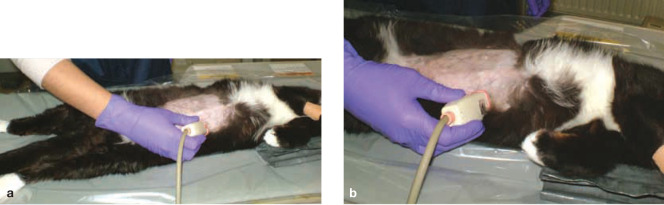
Figure 1
Figure 1
Positioning for ultrasound examination of the kidneys. The cat is lying in dorsal recumbency with the transducer held parallel to the long axis for the longitudinal image (a) and perpendicular to the spine for the transverse image (b)
Figure 2
Figure 2
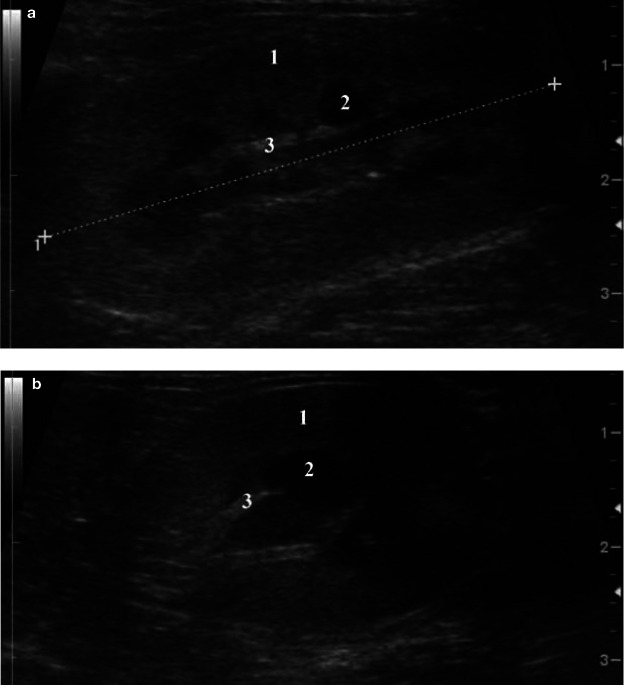
Sagittal (a) and transverse (b) scan of a normal kidney, showing cortex (1), medulla (2) and sinus (3)
Figure 3
Figure 3
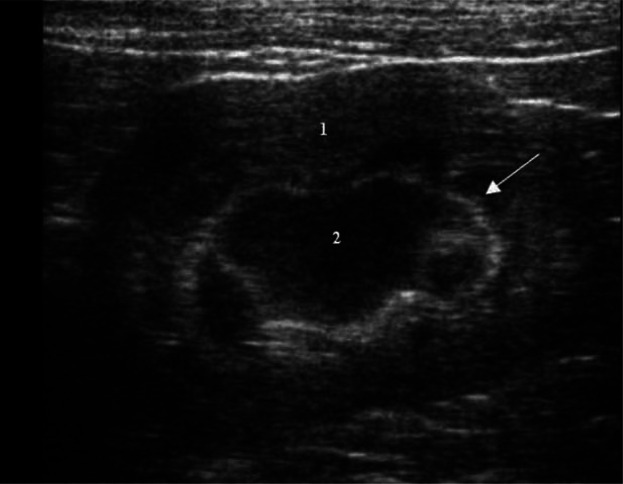
Dorsal ultrasound scan of a normal kidney, showing cortex (1), medulla (2) and a medullary rim sign (arrow)
Figure 4
Figure 4
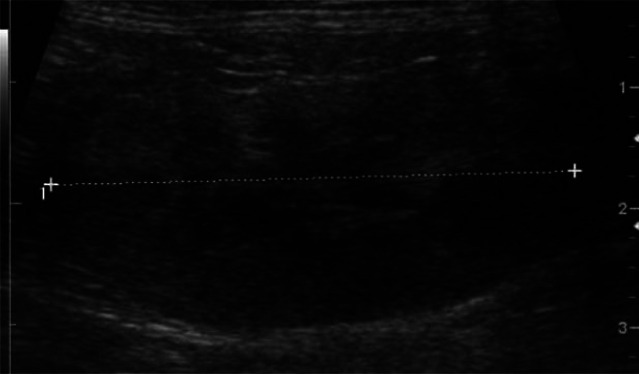
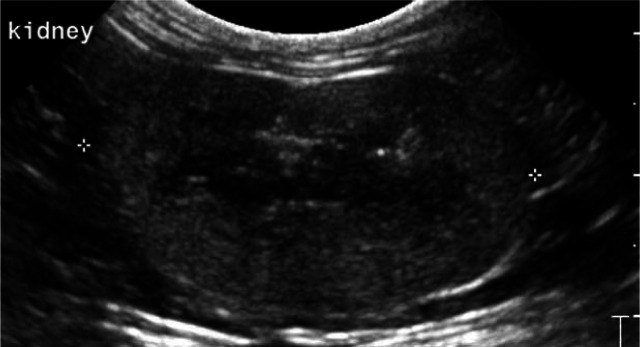
Sagittal ultrasound scan of the left kidney of a cat with feline infectious peritonitis showing renomegaly (5.1 cm), which was bilateral, and an irregular contour. The kidney is markedly increased in echogenicity and there is poor corticomedullary distinction. A thin, crescent-shaped, hypoechoic subcapsular rim is present
Figure 5
Figure 5
Irregular kidney contour and poor corticomedullary distinction, consistent with chronic kidney disease
Figure 6
Figure 6
Ultrasound image of the left kidney of a cat presented with hypercalcaemia of unknown origin. Note the irregular contour, hyperechoic cortices and reduced corticomedullary distinction, compatible with nephrocalcinosis
Figure 7
Figure 7
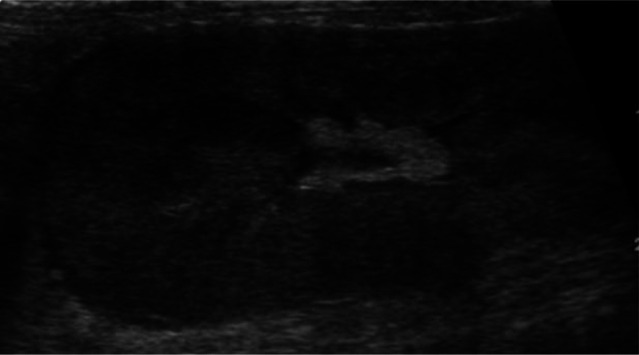
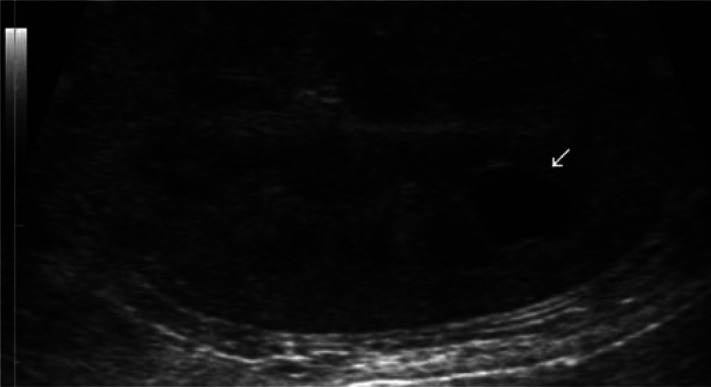
Sagittal ultrasound scan showing an anechoic cyst (arrow) and decreased corticomedullary distinction
Figure 8
Figure 8
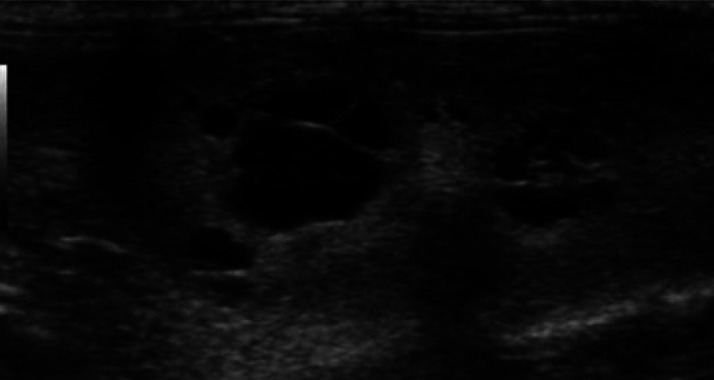
Polycystic kidney disease: multiple, variably sized, well-defined, rounded anechoic structures are present
Figure 9
Figure 9
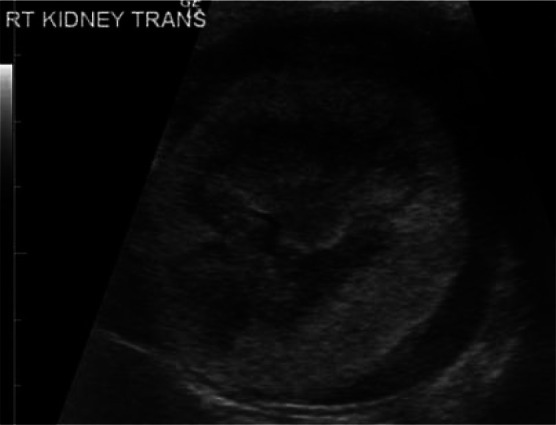
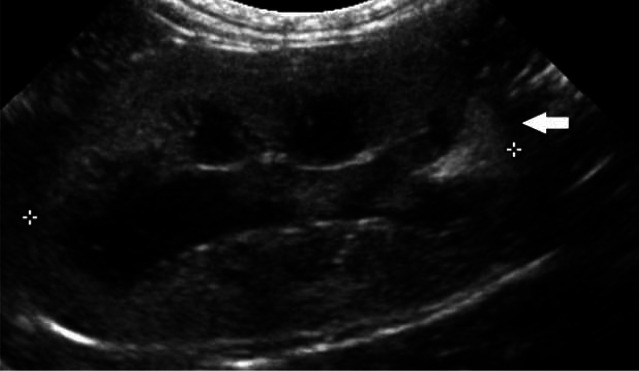
Transverse ultrasound scan showing a severely enlarged (6.5 cm) kidney. The cortex is hyperechoic and surrounded by a thick subcapsular hypoechoic rim, compatible with lymphoma
Figure 10
Figure 10
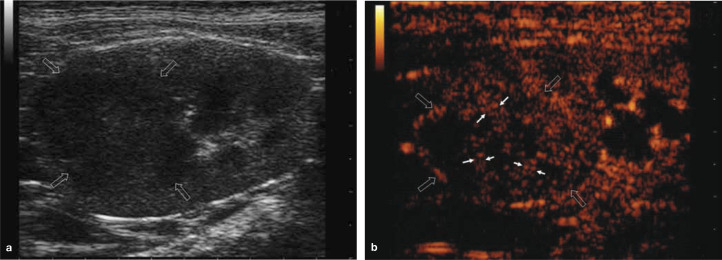
Renal cell carcinoma in a cat. (a) B-mode ultrasound scan showing a hypoechoic lesion with internal echoes (open arrows), which could represent malignant tissue or alternatively debris/haemorrhage in a benign lesion. (b) On CEUS, there is uptake of contrast in the arterial phase, with the presence of feeding vessels (small arrows) indicating malignancy
Figure 11
Figure 11
Renal infarct visible as a small hyperechoic triangular area (arrow) in the cortex at the caudal pole of the kidney
Figure 12
Figure 12
Transverse image of a kidney with secondary severe hydroureter and hydronephrosis (pelvis = 9 mm) due to bladder trigone neoplasia
Figure 13
Figure 13
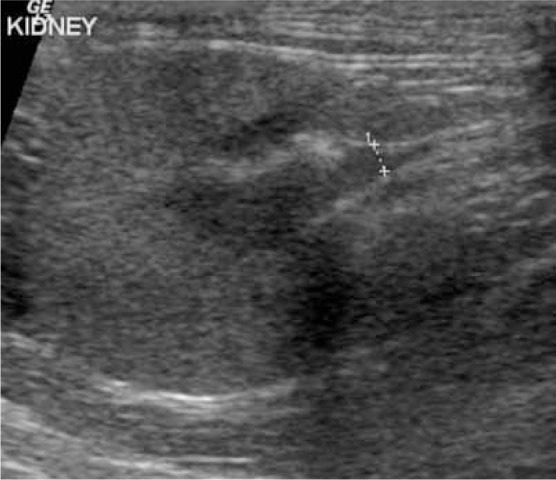
Pyelonephritis in a cat. Transverse scan showing an irregularly outlined kidney of normal size (3.6 cm). The cortex is thickened and hyperechoic. The pelvis is less than 2 mm in thickness but contains some hyperechoic material (crosses)
Figure 14
Figure 14
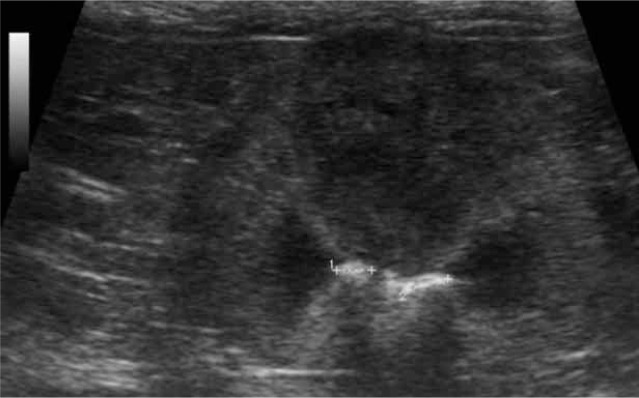
Dorsal scan of a left kidney showing two calculi (crosses), measuring 0.34 cm and 0.29 cm, with acoustic shadowing in the pelvis, compatible with nephrolithiasis
Figure 15
Figure 15
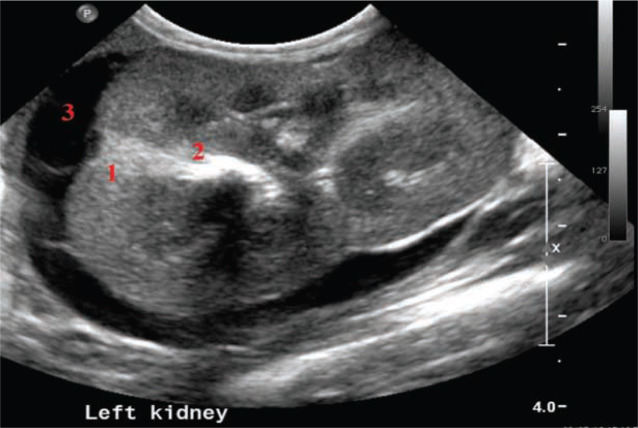
Image of the left kidney of a cat presented with an abdominal mass effect. The kidney is enlarged (4.5 cm), irregular in outline, and shows a hyperechoic cortex and a retained corticomedullary junction. One hyperechoic wedge-shaped area (1) is present in the cortex (infarct). Two large mineralisations (2) are visible in the medulla. A large anechoic accumulation of perirenal fluid (3) is present around the kidney contour

References

    1. Walter PA, Johnston GR, Feeney DA, O’Brien T. Applications of ultrasonography in the diagnosis of parenchymal kidney disease in cats: 24 cases (1981–1986). J Am Vet Med Assoc 1988; 192: 92–98. - PubMed
    1. Nyland TG, Mattoon JS, Herrgesell EJ, Wisner ER. Urinary tract. In: Nyland TG, Mattoon JS. (eds). Veterinary diagnostic ultrasound. 1st ed. Philadelphia: WB Saunders, 1995, pp 158–195.
    1. Seyrek-Intas D, Kramer M. Renal imaging in cats. Vet Focus 2008; 18: 23–30.
    1. Larson MM. The kidneys and ureters. In: O’Brien R, Barr F. (eds). BSAVA manual of canine and feline abdominal imaging. 1st ed. Gloucester: British Small Animal Veterinary Association, 2009, pp 185–204.
    1. Dennis R, McConnell F. Diagnostic imaging of the urinary tract. In: Elliott J, Grauer GF. (eds). BSAVA manual of canine and feline nephrology and urology. 2nd ed. Gloucester: British Small Animal Veterinary Association, 2007, pp 126–141.

LinkOut - more resources